


A job stopper tattoo is any placement that can't be covered by standard work clothing: the hands, neck, and face. The name came from an era when those placements were understood to close off most professional employment, and it stuck. Whether it still holds is a different question, and the answer depends heavily on what field you're in and what you want from your career. Here's what the term actually means, where the line sits today, and what to know before committing to a visible placement.
In this article
- What a job stopper tattoo is
- Where the term comes from
- Does it still apply today?
- Which fields are more and less tolerant
- The tattoo itself matters too
- Questions to ask before getting one
- The physical side: these placements are hard
- Frequently asked questions
What a Job Stopper Tattoo Is
The term job stopper refers specifically to placements in three areas: hands (including fingers and knuckles), neck, and face. What these have in common is that they're visible even in formal professional clothing. A sleeve under a dress shirt disappears. A neck tattoo does not. A hand tattoo is visible at every handshake and meeting for the rest of your career.
The label is about visibility and covering ability, not about content or size. A small fine-line piece on the back of the hand is a job stopper by this definition for the same reason a dense traditional skull on the neck is: neither can be hidden in a standard work context.
Where the Term Comes From
In tattoo culture, particularly in the American Traditional tradition, there was a long-standing informal rule: hands and neck come last. The expectation was that those placements were earned by people who were already heavily tattooed and had made peace with the social consequences. Getting a hand tattoo before having full sleeves was considered jumping ahead of where you'd put in the work, and it carried a cultural stigma on both sides.
For most of the 20th century, this rule had a practical basis. Heavily tattooed people worked outside mainstream employment by choice or necessity: as artists, in trades, in tattoo shops themselves. Visible tattoos in the professions were genuinely rare and genuinely penalized. The term job stopper was descriptive of a real situation.
Does It Still Apply Today?
The honest answer is: it depends on what you do, and it depends on where you are. The blanket "you won't get hired" framing is too broad for 2026. The "it has no effect" counter-framing is also too optimistic. The real picture is more specific.
Tattooed people work across virtually every industry now, including at the executive level. Visible tattoos are normal in creative industries, hospitality, the skilled trades, healthcare outside of patient-facing surgical roles, and a wide range of tech and media companies. The tattoo itself has become less of a disqualifier in more sectors than it used to be.
At the same time, visible face and neck tattoos still create friction in more conservative fields. Customer-facing roles at traditional financial institutions, certain government positions, client-facing legal work, and some corporate sales roles still carry unofficial expectations around visible body modification. The friction is less about explicit policy and more about implicit assumptions, which makes it harder to predict and harder to fight.
The clearest honest statement is this: a job stopper tattoo no longer stops most jobs, but it still stops some. Whether those jobs are ones you'll ever want is the question worth thinking through.
Which Fields Are More and Less Tolerant
Generally tolerant: Tech, design and creative industries, media and journalism, food and hospitality, skilled trades (plumbing, electrical, construction), healthcare (nursing and allied health more so than surgery and hospital administration), entertainment, music, fitness and personal training, retail outside of luxury, higher education in arts and humanities.
More conservative: Corporate law and finance, investment banking and wealth management, some government and law enforcement roles, luxury retail and high-end hospitality, certain areas of medicine (particularly surgical and administrative leadership), client-facing corporate consulting.
Geography matters too. Urban markets are generally more tolerant of visible tattoos than rural or suburban ones. Regional culture plays a real role in what reads as professional in a given context.
The Tattoo Itself Matters Too
Not all visible tattoos read the same way. A small, well-executed botanical piece on the side of the hand is understood differently than text across the knuckles or a face tattoo with aggressive subject matter. Quality matters enormously. A professionally done piece on a visible placement registers differently than a faded, blown-out, or poorly executed one.
Subject matter has an effect too, though it's hard to predict universally. Scripts, florals, fine-line work, and abstract pieces generally read as personal expression. Imagery associated with gang culture, extreme subject matter, or faces tattooed on visible areas draw more friction regardless of field or geography.
This isn't about whether the tattoo is objectively good art. It's about the social signals a given piece sends in a given context. An artist whose style you love may have work that reads perfectly in a creative industry and reads as a barrier in a conservative one.
Questions to Ask Before Getting One
Where do you want to be in ten years? Not just in terms of job title, but in terms of field and company culture. If you have a clear trajectory in a conservative industry, the calculus is different from someone freelancing or building a career in a field that celebrates visible self-expression.
Are you willing to manage the attention? Visible tattoos, especially face tattoos, will be one of the first things new people notice about you. Some people find that energizing; others find it exhausting. Both are valid reactions. The question is which one describes you.
Have you sat with the decision long enough? Visible placements are permanent and prominent. The consideration period for a hand or neck tattoo is worth extending beyond what you'd give most other placements. If you've wanted it for a year and still feel the same way, that's different from a decision made in two weeks.
Are you choosing the right artist? Visible placements get judged by everyone who meets you. The artist needs to have a healed portfolio in the specific placement area you're considering. Hands and necks have specific technical challenges: hand tattoos fade faster and touch up more often, neck work has to account for movement and skin tension. Ask to see healed work, not fresh photos.
The Physical Side: These Placements Are Hard
Beyond the social and professional considerations, hand, neck, and face tattoos are among the most technically and physically demanding placements to get. Thin skin over bone, dense nerve supply, and constant movement make these sessions harder to sit than most. Hand tattoos require the artist to work over the tendons and knuckle bones; neck work sits close to the cervical spine; face work covers areas the trigeminal nerve supplies heavily.
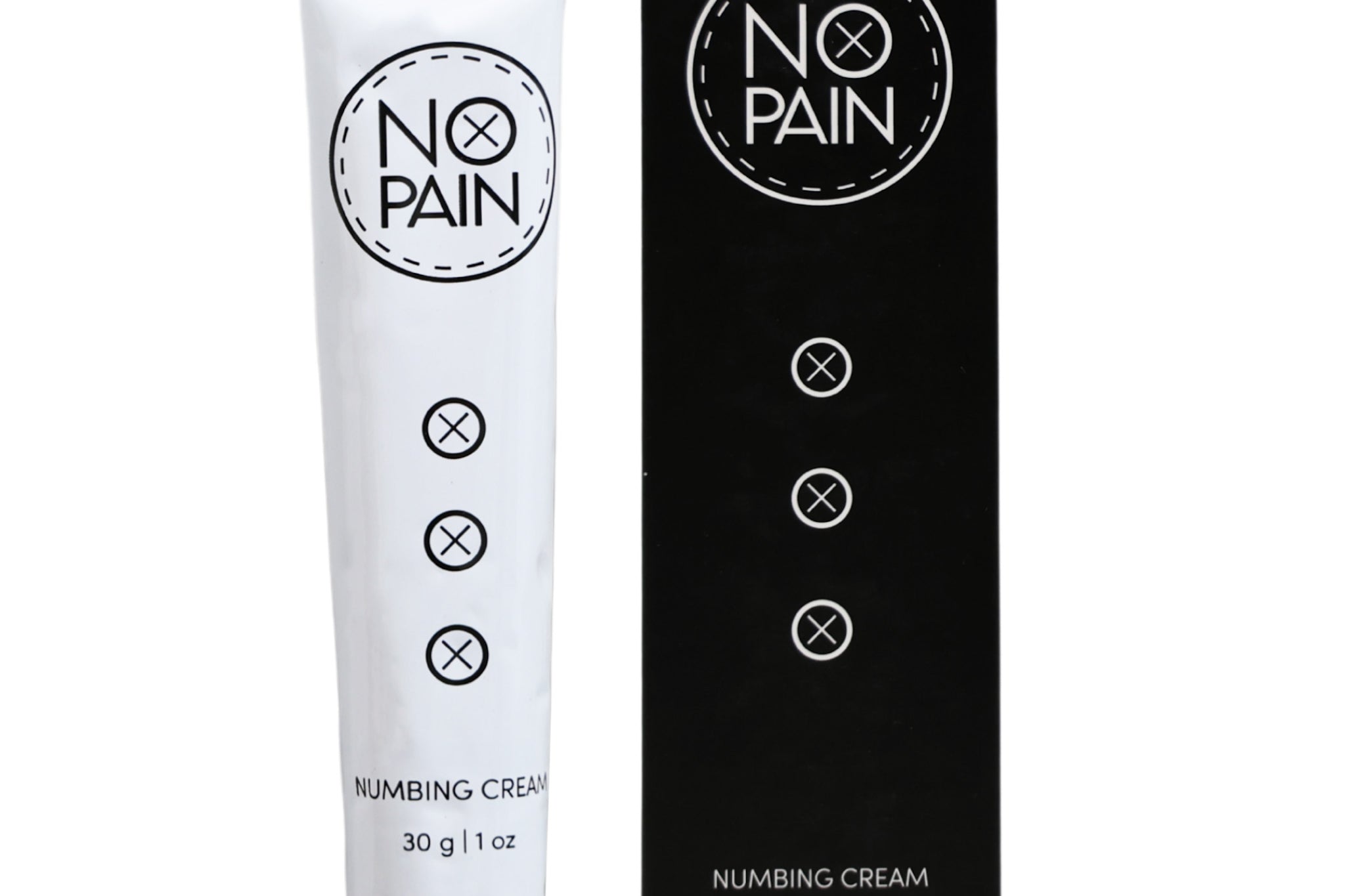
Numbing cream makes a real difference here. Apply two coats under cling film for 90 to 120 minutes before your appointment. The thick, slow-absorbing formula builds saturation deeper into the dermis than thinner creams at the same concentration, which matters on placements where thin skin and bone proximity make every pass feel sharper. For longer sessions covering the neck or hand fully, adding mid-session spray for broken skin extends the relief window. Tell your artist before they start.

A thick, slow-absorbing formula that penetrates deeper than thinner creams. Apply two coats under cling film for 90 to 120 minutes before hands, neck, or face work. The precision these placements demand is easier to hold when you're not fighting the pain.
Built for Longer, Harder Sessions
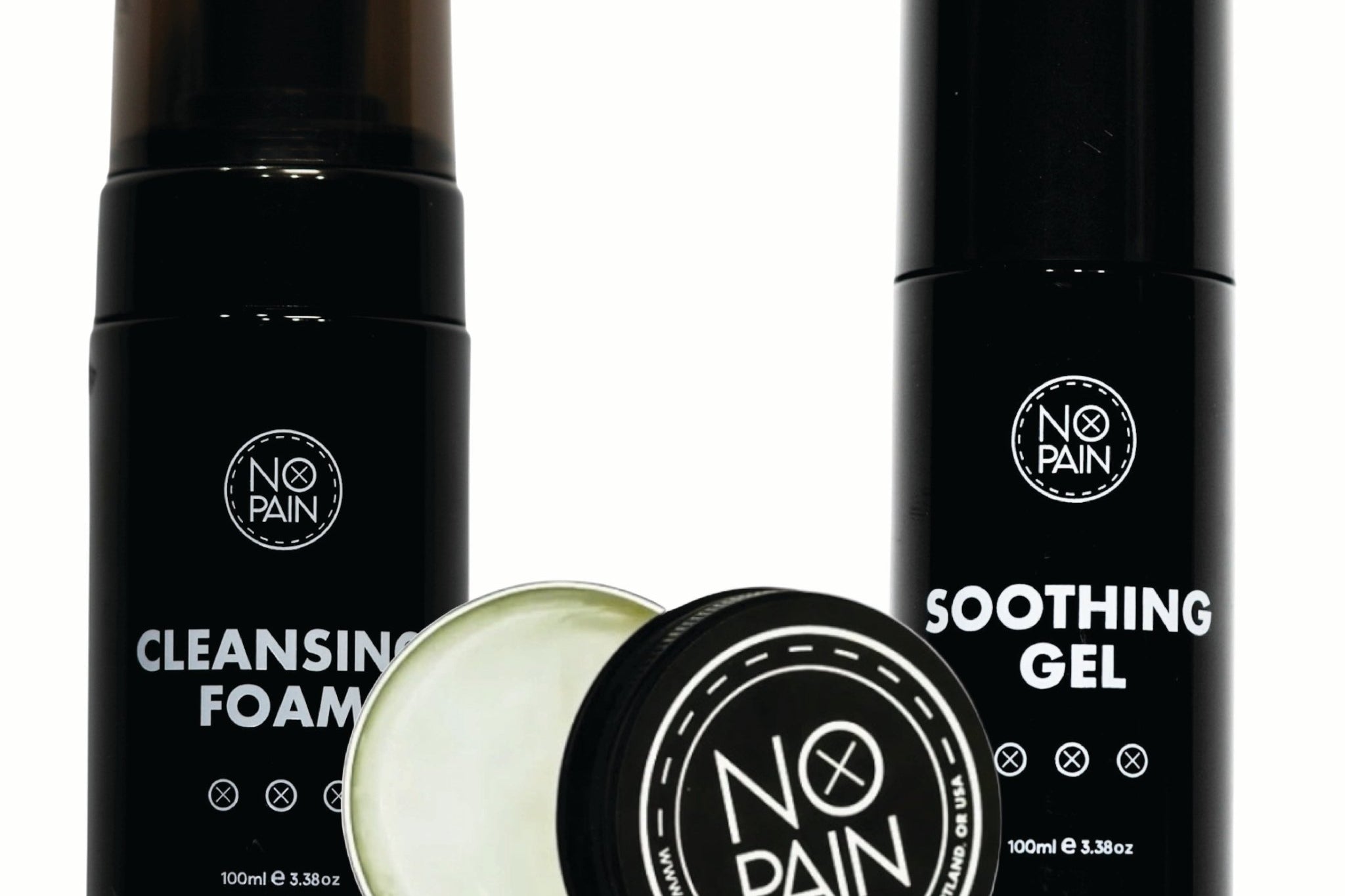
Hand, neck, and face sessions often run longer than expected, and the pain compounds. The Comfort Bundle pairs maximum strength numbing cream for the first two to four hours with a mid-session spray for broken skin. Designed for sessions where you need to stay still and hold a difficult placement.
Shop the Comfort Bundle →~~$54.00~~ $43.20 · Formulated at Historic Tattoo in Portland, Oregon. 100% money-back guarantee.
Frequently asked questions
What counts as a job stopper tattoo?
Traditionally, the term refers to tattoos on the hands, neck, and face, specifically because these placements can't be hidden by standard professional clothing. The name came from an era when those placements were understood to bar people from most mainstream employment. Today the term persists, though whether it accurately describes the employment impact depends heavily on the field and the tattoo.
Can you have hand or neck tattoos and still work a professional job?
Yes, in many fields. Tech, creative industries, hospitality, skilled trades, healthcare outside of certain surgical roles, and a wide range of other sectors have become accepting of visible tattoos, including on the neck and hands. The fields where friction remains are more conservative ones: corporate law and finance, certain government roles, and some client-facing professional services. The honest answer is field-specific rather than universal.
Are face tattoos still job stoppers?
Face tattoos carry more friction than hand or neck tattoos across most fields, including fields that have otherwise become tolerant of visible ink. The face is the most visible and most socially loaded placement. In industries where neck and hand tattoos are fully accepted, face tattoos may still draw more scrutiny. This varies by region, field, and the specific nature of the tattoo, but it's worth treating as the highest-friction category among visible placements.
Do tattoo workplace policies still exist?
Some organizations have explicit appearance policies that cover tattoos, but these have become less common and are harder to enforce as tattooing has become more mainstream. More common now are informal cultural expectations rather than written rules. The impact tends to come from hiring decisions and advancement rather than explicit policy, which makes it less predictable but not absent in conservative sectors.
Do hand tattoos fade faster than other placements?
Yes. The hands are among the fastest-fading placements because the skin renews quickly, the area is in constant use and sun exposure, and washing frequency is high. Hand tattoos typically need touch-ups within a year or two and will continue needing maintenance more often than most placements. This is part of why experienced artists often caution clients to be certain before committing to hand work.
Do visible tattoos hurt more to get?
Generally, yes. Hands, neck, and face are among the more painful placements because the skin is thin, the nerve supply is dense, and there's often bone close to the surface. Knuckles and the back of the hand sit directly over tendons and metacarpal bones. Neck and face work covers areas with high nerve density and little tissue buffer. Maximum strength numbing cream applied correctly before the session makes a real difference on all three placements.