


There are two situations where exfoliation and tattoos intersect: before a session, and on healed ink. In both cases the answer is yes, with conditions. Exfoliating a healed tattoo removes the layer of dead skin cells sitting between you and the ink, which makes colors look more vivid and lines appear sharper. Gentle exfoliation 24 to 48 hours before a tattoo appointment preps the skin. During healing, exfoliation causes real damage and should not happen at all. Here's the full picture.
In this article
- Why exfoliation makes healed tattoos look brighter
- How to exfoliate a healed tattoo
- The step that makes the biggest difference
- How often to exfoliate
- Exfoliating before a tattoo appointment
- Never exfoliate a healing tattoo
- Frequently asked questions
Why Exfoliation Makes Healed Tattoos Look Brighter
Tattoo ink sits in the dermis, the deeper layer of skin below the epidermis. The epidermis above it is constantly cycling: old surface cells die, dry out, and build up before eventually shedding. This process is continuous and mostly invisible, but the accumulation of those dead cells creates a dull, semi-opaque layer that sits between your eye and the ink underneath.
Think of it as a painting behind a pane of glass that gradually collects a film of dust. The painting hasn't changed. The ink is still there at the same depth, still the same color. But looking at it through a hazy surface makes it appear muted. Exfoliation removes that surface layer. The skin underneath is fresher, more hydrated, and more translucent, and the ink reads through it with more clarity. Colors look more vivid, lines look sharper, and the whole tattoo looks closer to how it looked newly healed.
This is especially noticeable on older tattoos that have been through years of sun exposure and neglect, and on dry skin in particular. A single proper exfoliation and moisturizing session can make a years-old tattoo look like it was done recently.
How to Exfoliate a Healed Tattoo
The goal is to remove the dead surface cells without irritating the skin underneath. This means gentle tools and light pressure.
What to use: A soft washcloth, a fine sugar scrub (sugar dissolves easily and doesn't leave abrasive particles behind), or a mild chemical exfoliant with glycolic or lactic acid. All of these remove surface cells effectively without the kind of friction that could irritate or damage the skin.
What to avoid: Salt scrubs, scrubs with large or irregular particles (crushed seeds, nut shells), dry brushing with firm bristles, or any product with high concentrations of active acids if your skin is sensitive. Harsh exfoliants remove more than dead cells and leave skin irritated and reactive.
How to do it: Start with clean skin. Wash the area first with a gentle, fragrance-free liquid soap. In the shower on damp skin, apply your scrub or use a damp washcloth. Work in gentle circular motions with light pressure for about 30 seconds over the tattooed area. You're polishing the surface, not scrubbing it.
The Step That Makes the Biggest Difference
Exfoliation alone gets you partway there. The step that completes the effect is immediate, deep moisturization. You've just removed the dry outer layer; the fresh skin cells you've exposed are thin and ready to absorb. Applying a nourishing balm right after exfoliation, while the skin is still slightly damp, locks in hydration at a moment when absorption is highest.
This is what makes the tattoo look noticeably brighter. The exfoliation clears the haze. The moisturizer plumps the fresh skin layer, making it more translucent and allowing the ink to read through it with more depth. Without that hydration step, you'll get improvement, but not the full effect. With it, the change is visible immediately.

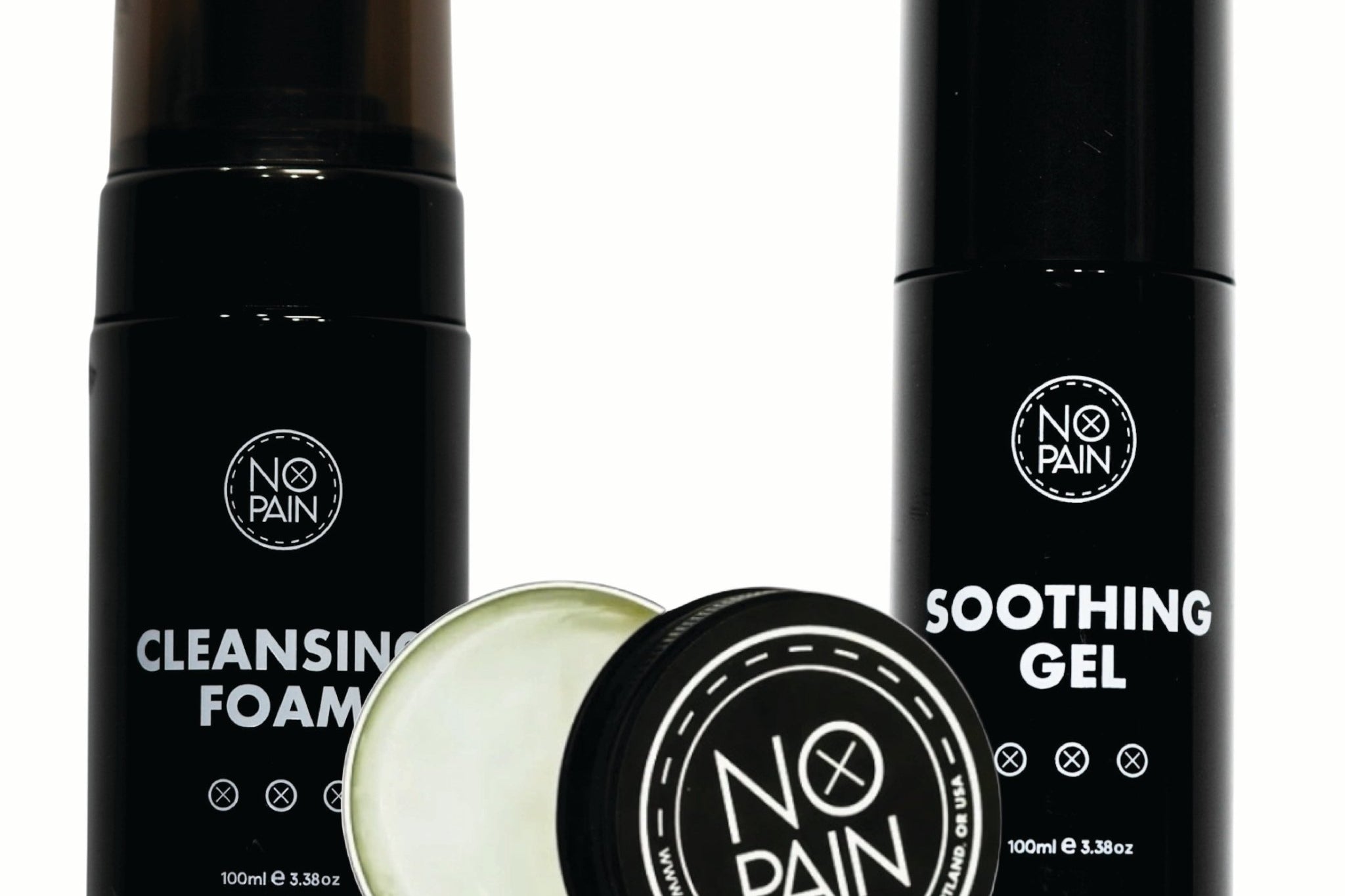
A deeply nourishing oil-and-butter formula without petroleum or fragrance. Apply immediately after exfoliating while skin is still slightly damp. The combination of exfoliation and this balm is the most effective at-home method for keeping healed ink looking vivid.
How Often to Exfoliate
Once or twice a week is enough. More frequent exfoliation doesn't improve the effect and starts to work against it: over-exfoliated skin gets irritated, reactive, and dry, which is the opposite of what you want. If your skin feels tight or looks red after exfoliating, you're doing it too often or with too much pressure.
For most people, once a week with a gentle scrub followed by balm is the right maintenance cadence. If your skin tends to be dry, twice a week may help. If you're sensitive, once every ten days or so is plenty.
Exfoliating Before a Tattoo Appointment
Gentle exfoliation 24 to 48 hours before your appointment is a legitimate part of skin prep. Clean, exfoliated skin is in better condition for tattooing: the surface is smoother, the artist's needles move more evenly, and there's no buildup of dead cells that can interfere with how the ink sits. It also makes numbing cream absorb more effectively, which matters if you're applying it before the session.
Do this the day before, not the day of. Freshly exfoliated skin can be slightly more sensitive in the hours immediately after. Give it a night to settle, moisturize well after exfoliating, and arrive with hydrated, well-prepped skin.
Keep it gentle. You're not trying to strip the skin, just clear the surface. A soft washcloth or a light sugar scrub is all you need. Don't use aggressive chemical exfoliants the day before a tattoo.
Never Exfoliate a Healing Tattoo
This is the hard rule. A healing tattoo is an open wound working through a structured repair process. The surface layers you'd be exfoliating are the same layers the skin is actively building to close and protect the wound. Exfoliating during healing pulls off forming scabs and fresh skin, removes ink that hasn't yet settled in the dermis, and creates a direct path for bacteria into a compromised wound.
Wait until the tattoo is fully healed before exfoliating anywhere near it. Full surface healing takes three to four weeks at minimum. Complete dermal healing takes two to six months. For safe exfoliation that won't disrupt anything, wait until the surface is completely smooth, the tattoo is no longer raised or sensitive, and you're past the milky phase. When in doubt, wait another few weeks.
Keep Your Tattoo Looking Its Best
The Aftercare Bundle covers both phases: a soothing gel for the first few days of healing, and a nourishing balm from day three onward. The balm is what you reach for after exfoliating to lock in the brightening effect.
Shop the Aftercare Bundle →Formulated at Historic Tattoo in Portland, Oregon. 100% money-back guarantee.
Frequently asked questions
Does exfoliating make tattoos look brighter?
Yes. Tattoo ink sits in the dermis, below the epidermis. Dead skin cells build up on the surface over time and create a dull, slightly opaque layer between you and the ink. Exfoliating removes that layer, revealing fresher, more translucent skin underneath. The result is that colors read more vividly and lines appear sharper. Following up immediately with a nourishing balm amplifies the effect by hydrating the fresh skin layer.
Should you exfoliate before getting a tattoo?
Gently, yes, and a day or two in advance. Clean, exfoliated skin is in better condition for tattooing and absorbs numbing cream more effectively. Do it 24 to 48 hours before your appointment, not the morning of. Use something gentle like a soft washcloth or light sugar scrub, moisturize afterward, and avoid aggressive chemical exfoliants in the days leading up to the session.
Can you exfoliate a new tattoo?
No. A healing tattoo is an open wound, and the surface layers you'd be removing are part of the active repair process. Exfoliating during healing disrupts scab formation, removes ink that hasn't yet settled in the dermis, and increases infection risk. Wait until the tattoo is fully healed, which means at least three to four weeks for surface healing and up to several months for full dermal settlement. When in doubt, wait longer.
How often should you exfoliate a healed tattoo?
Once or twice a week is plenty. Over-exfoliating dries out the skin and causes irritation, which works against the brightening effect you're trying to achieve. If your skin feels tight or looks red after exfoliating, cut back on frequency or pressure. One gentle session per week followed by a nourishing balm is a sustainable long-term maintenance routine.
What's the best exfoliant to use on a tattoo?
Gentle options work best: a soft washcloth, a fine sugar scrub, or a mild chemical exfoliant with glycolic or lactic acid. Avoid salt scrubs, scrubs with large irregular particles (crushed pits, nut shells), and aggressive dry brushing. The goal is to polish the surface, not abrade it. Harsh exfoliants remove more than dead cells and can irritate or dry out the tattooed skin.
Does moisturizing make tattoos look brighter?
Yes, on its own, and more noticeably when combined with exfoliation. A well-hydrated skin layer is more translucent than dry, flaky skin. Applying a nourishing balm regularly keeps the epidermis above the ink in better condition, which improves how the ink reads visually. The combination of exfoliation (removes dead surface cells) and immediate moisturization (hydrates the fresh layer) produces the most visible brightening effect.