
The best lotion for a healed tattoo is fragrance-free, alcohol-free, and absorbs without leaving a heavy residue. For a healing tattoo, lotion isn't actually the right category at all: oil-and-butter balms outperform water-heavy lotions at every stage because they form a breathable barrier that holds moisture longer without clogging pores. Here's what separates the products that help from the ones that don't, and what to look for at every phase.
In this article
- Healing vs. healed: different phases, different needs
- What makes a good tattoo moisturizer
- What to avoid
- Pharmacy lotion options
- When balm outperforms lotion
- Long-term routine for healed tattoos
- Frequently asked questions
Healing vs. Healed: Different Phases, Different Needs
A healing tattoo and a healed tattoo have different requirements, and the product that helps one phase can work against the other.
During the first two to three days, the tattoo is an open wound. The skin is weeping plasma and beginning to close. What the wound needs is a breathable barrier that prevents drying out while allowing airflow. A soothing gel works well here: it's lightweight, non-comedogenic, and won't suffocate the healing skin. Standard lotion is too water-heavy and often contains ingredients (fragrance, preservatives, humectants that pull moisture in unusual concentrations) that aren't appropriate for open skin.
From about day three onward, the skin is closing and the drying, peeling phase begins. This is where an oil-and-butter balm becomes the best option. Balm provides deeper, longer-lasting moisture than lotion because it doesn't rely on water content that evaporates. It conditions the skin rather than just temporarily hydrating it.
For fully healed tattoos, a quality fragrance-free lotion is fine and will keep ink looking better than no moisturizer at all. But balm still outperforms lotion here too, especially on older tattoos or in dry climates. The question isn't whether lotion works, it's whether there's something that works better.
What Makes a Good Tattoo Moisturizer
Fragrance-free. This matters more than almost any other ingredient factor. Fragrances are the leading cause of contact dermatitis and skin sensitization, and they're particularly problematic on healing skin. "Natural fragrance" is not meaningfully safer than synthetic fragrance from a skin reactivity standpoint. If the label says "fragrance," "parfum," or "natural fragrance," keep looking.
No drying alcohols. Isopropyl alcohol, denatured alcohol (alcohol denat.), and ethanol are all drying agents added to some lotions to improve spread and quick absorption. They strip moisture from the skin over time. Fatty alcohols (cetyl alcohol, stearyl alcohol) are different and are actually emollients; they're fine and common in well-formulated products.
No heavy petroleum base. Petrolatum and mineral oil form an occlusive seal that prevents any air exchange. On a healing tattoo, this can create a moist, airless environment that traps bacteria. For fully healed tattoos the risk is lower, but petroleum products still tend to sit on the surface rather than conditioning the skin underneath.
No dyes or unnecessary colorants. Artificial dyes in lotion serve no function and are a common irritant for sensitive skin.
Humectants help. Glycerin, hyaluronic acid, and aloe vera all draw moisture into the skin and hold it. Good products include at least one of these.
Emollients smooth and condition. Shea butter, jojoba oil, coconut oil, and cocoa butter all soften the skin and are particularly good for older, drier ink. Oil-and-butter formulations (what distinguishes balm from lotion) deliver these in a more concentrated, longer-lasting way than water-heavy lotions.
What to Avoid
Some products people reach for regularly should not go near a tattoo, especially during healing. Bar soap dries out skin and leaves residue. Any lotion with alcohol listed in the first five ingredients. Products with strong botanical extracts: tea tree, lavender, and eucalyptus oils can all be sensitizers even though they're marketed as natural and gentle. Retinols or AHAs on healing tattoos: these are active exfoliants that will interfere with the healing surface. And sunscreen, until the tattoo is completely healed.
Products that seem fine (CeraVe, Eucerin) often have fragrance-free versions that work acceptably, but check the label each time because formulations change.
Pharmacy Lotion Options
If you're looking for a pharmacy option for healed tattoo maintenance, the cleaner picks are:
Lubriderm Advanced Therapy Unscented. A reliable everyday option. Fragrance-free, no dyes, no alcohol. Absorbs relatively quickly, reasonably lightweight. Provides good basic hydration for healed tattoos without anything that will cause problems. The standard unscented formula works; avoid the "sensitive skin" version that adds aloe and vitamin E blend (which contains fragrance precursors).
Vanicream Moisturizing Cream. No fragrance, no lanolin, no formaldehyde releasers. Dye-free and preservative-system that's generally well-tolerated. On the thicker side, which makes it better for drier skin types and drier climates. Not a first-week healing product (too occlusive) but solid for fully healed tattoos, especially in dry conditions.
CeraVe Moisturizing Cream (fragrance-free version). Contains ceramides that help maintain skin barrier function. Also on the thicker side. Fragrance-free version is a reasonable option for healed tattoos. The lotion version is lighter and works if you prefer something thinner.
None of these pharmacy options will perform as well as an oil-and-butter balm for keeping healed ink looking vivid, but they're better than nothing and far better than a scented lotion.
When Balm Outperforms Lotion
A balm made from oils and butters rather than a water-in-oil emulsion outperforms standard lotion for several reasons. It doesn't have water to evaporate, so the moisturizing effect lasts considerably longer. The oils and butters penetrate the skin's lipid barrier rather than sitting on top. And without water content, it doesn't require preservative systems that can be sensitizing for some people.
The visual effect is also more immediate. Apply a good balm to a healed tattoo after exfoliating and the ink looks noticeably more vivid. Colors appear richer. Lines look sharper. Water-heavy lotions produce some of this effect but less of it, and it doesn't last as long.
Balm is also the right choice for any placement where the skin gets drier: elbows, knees, hands, ankles. These areas cycle through dryness faster than the outer arm or thigh, and a heavier product holds up better there.

An oil-and-butter formula without petroleum or fragrance. No preservative system that will sensitize skin. Absorbs well and holds moisture longer than water-heavy lotions. Apply to healed tattoos to keep ink looking vivid day to day.
Long-Term Routine for Healed Tattoos
Keeping healed tattoos looking their best comes down to three things done consistently: moisturize, protect from the sun, and exfoliate occasionally.
Daily moisturization is the baseline. Apply after showering when the skin is still slightly damp. The damp surface helps lock in hydration. A thin application of balm or a fragrance-free lotion is all you need. You don't need to load the skin down; a light coat applied consistently does more than occasional heavy applications.
Sun exposure is the primary driver of tattoo fading over years. UV light breaks down pigment in the dermis. SPF 30 or higher on any tattooed skin that will be exposed to sun is the single most effective long-term protection measure. Apply after the tattoo is fully healed. During the healing phase, keep it covered by clothing.
Gentle exfoliation once a week removes the layer of dead skin cells that builds up over the epidermis and dims how the ink reads. A soft washcloth or fine sugar scrub followed immediately by a nourishing balm is the most visible brightening routine you can do at home.
Cover Both Healing Phases
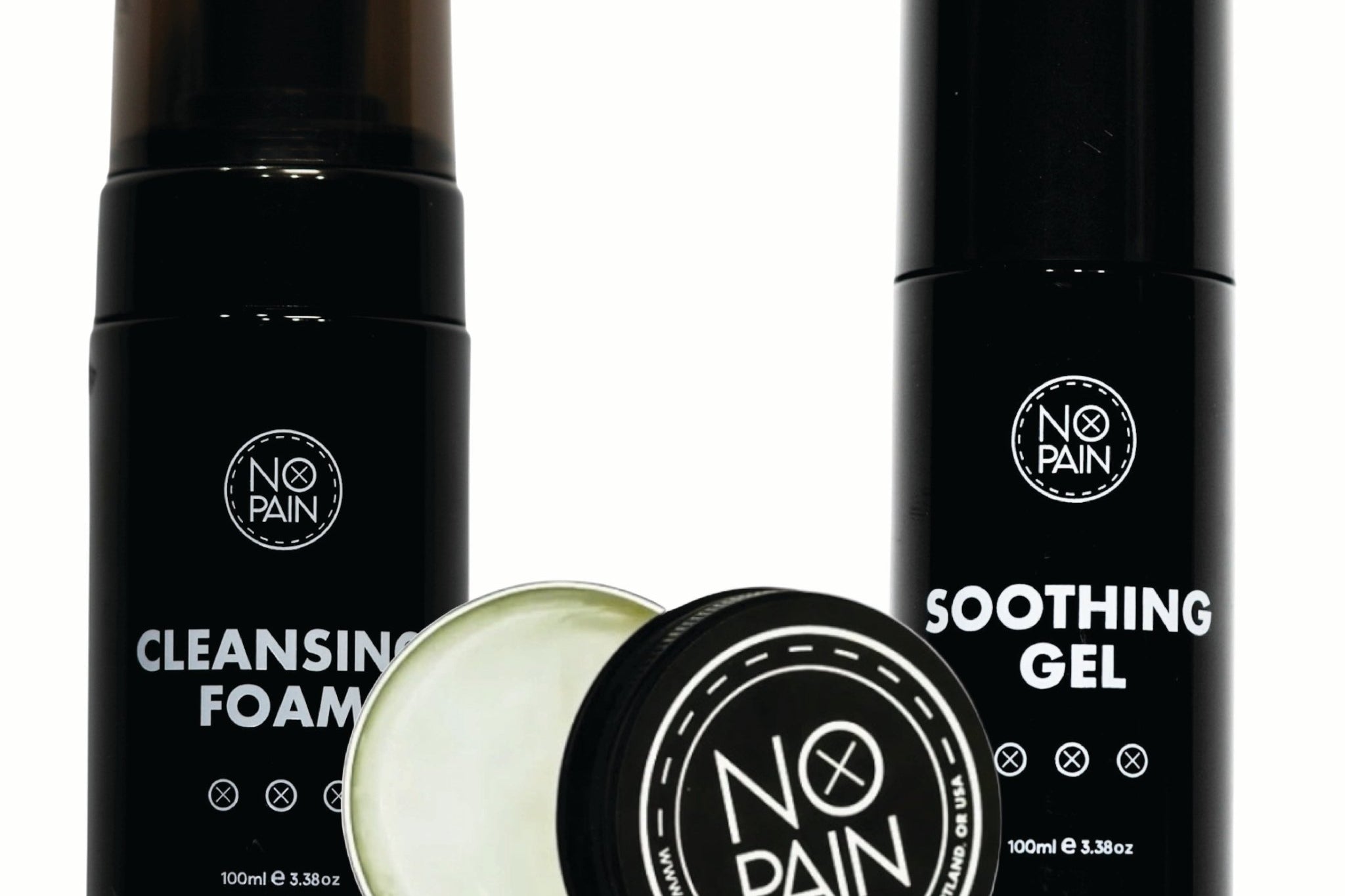
The Aftercare Bundle has a soothing gel for the first few days while the wound closes, and a nourishing balm from day three onward. The balm is what you continue using after healing to maintain the ink long-term.
Shop the Aftercare Bundle →Formulated at Historic Tattoo in Portland, Oregon. 100% money-back guarantee.
Frequently asked questions
What is the best lotion for tattoos?
For healed tattoos, a fragrance-free, alcohol-free lotion works adequately, with Lubriderm Advanced Therapy Unscented and Vanicream being the cleaner pharmacy options. For the best results in terms of moisture retention and visual vibrancy, an oil-and-butter balm outperforms water-heavy lotion at any stage because it doesn't rely on water that evaporates. During healing, skip lotion entirely: use a soothing gel for the first few days, then transition to a balm.
Can you use regular lotion on a tattoo?
On a fully healed tattoo, a fragrance-free lotion is fine. On a healing tattoo, regular lotion is not ideal: most standard lotions contain fragrances, preservatives, or other ingredients that can irritate open skin, and their high water content doesn't provide the sustained moisture barrier a healing wound benefits from. A gel or balm specifically formulated without those irritants is a better choice during healing.
What ingredients should you avoid in tattoo lotion?
Fragrance (including "natural fragrance") is the most common problem. Drying alcohols like isopropyl alcohol and denatured alcohol are also problematic. Heavy petroleum base (petrolatum, mineral oil) is occlusive and doesn't breathe. Artificial dyes add no benefit and can irritate. For healing tattoos, also avoid retinols, AHAs, and strong botanical extracts like tea tree or lavender, which can be sensitizing on open skin.
Is Lubriderm good for tattoos?
Lubriderm Advanced Therapy Unscented is one of the cleaner pharmacy options for healed tattoo maintenance. It's fragrance-free, alcohol-free, and absorbs without leaving a heavy residue. It won't perform as well as a dedicated oil-and-butter balm for visual vibrancy, but it's a solid everyday option. Avoid Lubriderm's scented versions and look at the ingredient list before purchasing, as formulations can change.
Is CeraVe good for tattoos?
CeraVe's fragrance-free products are acceptable for healed tattoos. The ceramide complex supports skin barrier function, which is generally helpful for maintaining tattooed skin. The moisturizing cream (thicker) works well for drier climates or skin types. Avoid any CeraVe products with added fragrance or vitamin E blend formulations. Like Lubriderm, it works adequately for maintenance but doesn't produce the same visual result as a dedicated balm.
Does moisturizing a healed tattoo make it look better?
Yes. Dry skin is less translucent than well-hydrated skin, so the ink reads through it with less clarity. Consistent moisturization keeps the epidermis above the ink in better condition, which makes colors look more vivid and lines appear sharper. The effect is most noticeable immediately after applying a nourishing balm to dry or neglected ink. Pairing regular moisturization with weekly exfoliation and sun protection is the most effective at-home routine for maintaining the appearance of healed tattoos.