


If you have a history of keloid scarring, getting a tattoo requires real thought before you commit. A keloid isn't a normal scar — it's an overactive healing response that keeps growing past the original wound. The thousands of needle punctures involved in tattooing are exactly the kind of skin trauma that can trigger one.
That said, the picture is more complicated than a blanket warning. Whether tattooing is a serious risk for you depends on your specific history, the location of your previous keloids, and input from a dermatologist who knows your skin. This guide covers what keloids actually are, the real risk of tattooing over or near keloid-prone skin, and what the process looks like if you do decide to move forward.
This guide is not a substitute for professional medical advice. Consult your dermatologist before getting a tattoo if you have a history of keloid scarring.
What Is a Keloid? It's Not a Normal Scar
Understanding the risk starts with understanding what a keloid actually is and how it differs from typical scarring.
Normal (hypertrophic) scar: Raised above the skin surface but stays within the boundaries of the original wound. Typically fades and flattens over 12 to 24 months.
Keloid scar: Raised, often firm and rubbery, and extends beyond the original wound boundary. The scar tissue keeps proliferating after the wound has healed, sometimes for years. Keloids can become large, itchy, tender, and cosmetically significant. They do not resolve on their own and are notoriously difficult to treat — keloid removal frequently causes another keloid to form at the excision site.
Keloids result from an overproduction of collagen during the healing process. They are more common in people with darker skin tones, though they occur across all ethnicities. They tend to run in families. Common trigger sites include the earlobes (from piercing), the upper chest, shoulders, and upper back.
The Koebner Phenomenon
The reason tattooing is particularly risky for keloid-prone skin comes down to a well-documented dermatological reaction called the Koebner phenomenon: certain skin conditions and scar responses are triggered by trauma to the skin, and they manifest at the site of that trauma.
For someone prone to keloids, any significant skin injury — a cut, a burn, a surgical incision, or the repeated punctures of a tattoo needle — can trigger a new keloid at exactly that site. The tattoo ink goes in, the healing process starts, and the collagen overproduction kicks in instead of resolving normally.
The outcome in that scenario: the tattoo design gets consumed by the keloid formation. The art is lost, replaced by a raised, spreading scar that may be larger and more difficult to manage than anything you started with.
How Significant Is the Risk?
The risk is high, but it's not uniform across everyone who has ever had a keloid. Dermatologists generally distinguish between degrees of keloid history:
High risk: Keloids that formed spontaneously (without major injury), keloids in multiple locations, keloids that are large or have continued to grow over years, or a family history of severe keloid formation. In these cases, tattooing is almost certainly contraindicated and most reputable tattoo artists will decline the work.
Moderate risk: A single small keloid from a specific trauma (ear piercing is the most common example), with no keloids forming from other injuries. The risk is real but the picture is less clear-cut. Dermatological consultation is essential.
Lower risk: Hypertrophic scarring (raised but within wound boundaries) that has been mistaken for a keloid. Many people think they are keloid-prone when they actually scar normally. A dermatologist can distinguish between the two.
Why Placement Location Matters
Keloids are not equally likely everywhere on the body. They form most readily on the upper chest (especially the sternum), shoulders, upper back, and earlobes. The lower extremities and face are lower-risk zones.
Someone with a single earlobe keloid from a piercing who wants a tattoo on their lower leg is in a meaningfully different situation than someone with chest keloids wanting a sternum tattoo. Location is one of the variables a dermatologist will factor into their assessment.
What to Do Before Booking
See a dermatologist first. Not after you've chosen a design and found an artist — before any of that. A dermatologist who has seen your skin and your scar history can tell you whether your situation is truly high-risk or whether your risk has been overstated. Get a clear answer in writing if possible.
Tell your tattoo artist your history. A reputable, professional artist will ask. Any artist who doesn't care about your scar history before picking up a needle is not the right person for this work. The best artists in this situation will want to see your dermatologist's assessment and may still decline depending on what it says.
Consider a test patch. Some dermatologists recommend a small test tattoo in an inconspicuous location first, then waiting 6 to 12 months to see how the skin responds before committing to the full design. This is a reasonable approach for people whose risk is genuinely ambiguous.
Avoid known trigger zones. If you do proceed, avoiding the upper chest, sternum, and shoulders — the highest-risk locations for keloid formation — is a basic risk-reduction step.
Aftercare for Sensitive or Keloid-Prone Skin
If you have received clearance from a dermatologist and decided to proceed, aftercare becomes even more important than usual. The goal is to minimize inflammation during the healing phase — reducing the inflammatory signal is directly relevant to limiting overactive healing responses.
Keep the wound as calm as possible:
- Clean gently 2 to 3 times a day with a fragrance-free, non-irritating soap
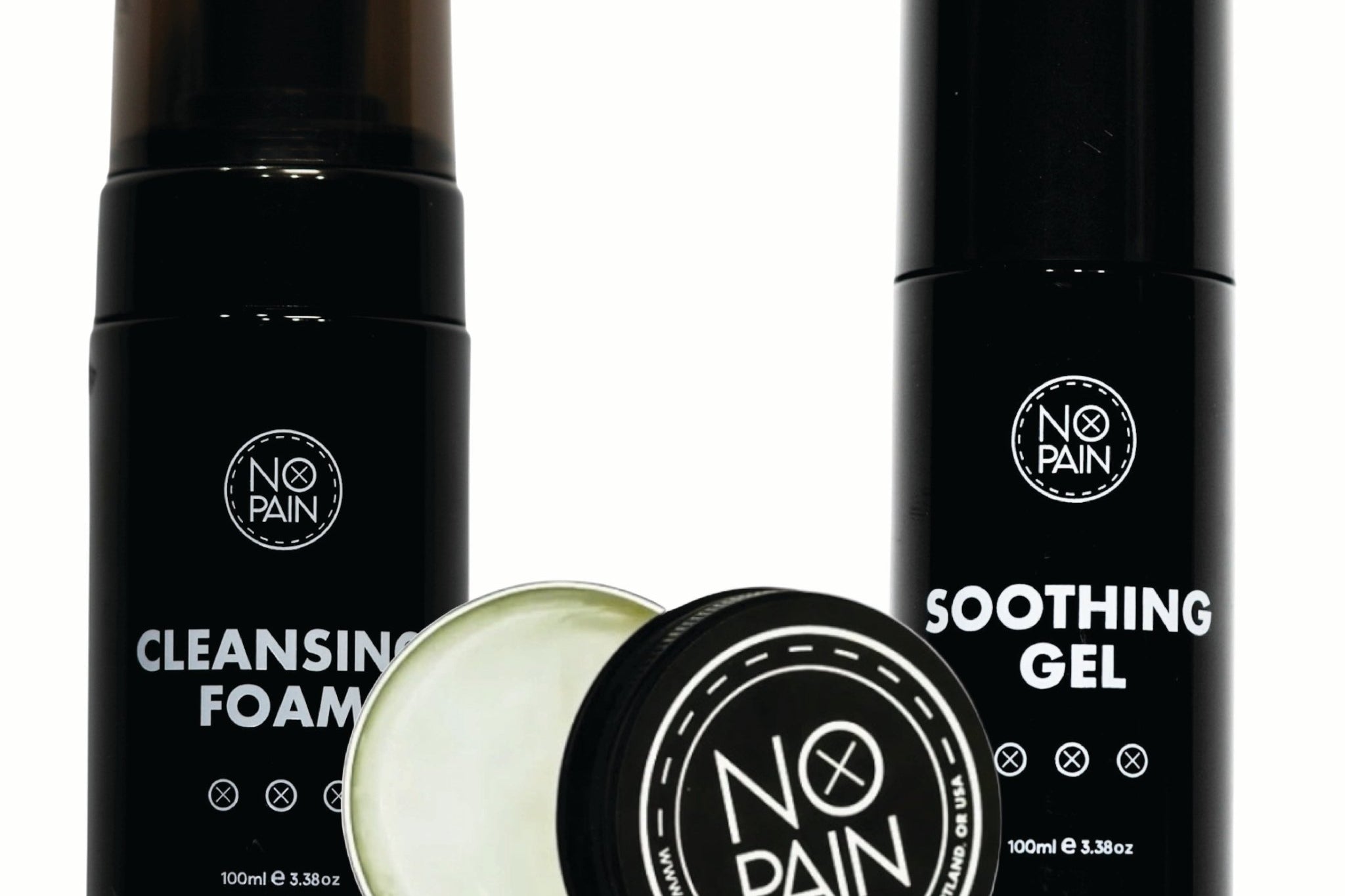
- Apply soothing gel immediately after cleaning for the first 3 days — the gel's lightweight, fast-absorbing formula keeps the skin moist without occlusion and calms the inflammatory response
- Transition to aftercare balm from day 3 onward to maintain the skin barrier through the repair phase
- Avoid anything that adds irritation: fragrances, alcohol, petroleum-based products, or excessive moisture
- Watch the site carefully and contact your dermatologist immediately if you see the scar starting to raise beyond the tattoo boundary

For anyone with sensitive or reactive skin, numbing cream before the session can reduce the immediate inflammatory spike from the needle work — less initial trauma means less signal for the healing response to overreact to.

FAQ
Can you get a tattoo if you have keloid-prone skin?
It depends on the extent and location of your keloid history. Someone with a single small earlobe keloid from a piercing is in a different situation than someone with multiple keloids on their chest and back. The right first step is a dermatologist consultation — not a blanket yes or no from the internet.
What is the Koebner phenomenon?
The Koebner phenomenon is when skin trauma triggers a pathological skin response at the site of that trauma in people who are susceptible to it. For keloid-prone individuals, any significant skin injury — including tattooing — can trigger keloid formation at exactly where the needle worked. The tattoo gets replaced by the scar.
What does a keloid tattoo look like?
A tattoo that has triggered keloid formation shows raised, thickened scar tissue growing at and beyond the tattoo's border. The ink design may be distorted or completely obscured by the raised tissue. The scar is often shinier than surrounding skin, firm to the touch, and may be itchy or tender.
Will a tattoo artist tattoo someone with keloids?
Most reputable, experienced artists will not tattoo a client with a known history of significant keloid scarring. They understand the Koebner risk and are not willing to permanently damage your skin. If an artist doesn't ask about your scar history or doesn't seem to care, that's a red flag about their professionalism generally.
Is tattooing over a healed keloid safe?
Tattooing directly over an existing keloid scar is generally not recommended — it typically re-traumatizes the keloid and triggers further growth. Even tattooing near a keloid in a high-risk zone carries significant risk. This is a question for a dermatologist with hands-on knowledge of your specific scar, not a general guideline.
What placements are lower risk for keloid-prone people?
Keloids form most readily on the upper chest, sternum, shoulders, and upper back. The lower extremities (calves, shins, ankles) and the outer forearm are generally lower-risk zones, though individual susceptibility varies. A dermatologist who knows your history can give more specific guidance for your skin.