


Not right away. A fresh tattoo is an open wound, and exercise creates conditions that directly interfere with healing: friction against the skin, sweat pooling over the wound, higher body temperature, and exposure to bacteria on shared equipment. The good news is the restrictions aren't permanent. Most people are back to a full routine within three to four weeks. The timeline depends on what you're doing and where the tattoo is.
In this article
- Why exercise too soon damages a healing tattoo
- The workout timeline
- How placement changes the timeline
- Post-workout aftercare
- Frequently asked questions
Why Exercise Too Soon Damages a Healing Tattoo
The problem isn't exercise itself. It's what exercise does to a healing wound that hasn't sealed yet.
Friction and stretching. Clothing rubbing against a healing tattoo during a run or a lifting session can lift scabs, pull flaking skin, and drag ink out of the dermis before it's set. Exercises that repeatedly stretch the tattooed skin (squats for a thigh tattoo, rows for a back tattoo) stress the healing tissue and can distort the design as it settles. The more the skin moves during the healing phase, the harder it is for the surface to close cleanly.
Sweat over an open wound. A healing tattoo in the first two weeks doesn't have a sealed surface yet. Sweat is warm, wet, and full of salt and bacteria. Sitting in sweaty workout clothes for an hour after a session creates exactly the conditions that promote infection: warmth, moisture, and bacteria against an open wound. The risk is highest in tight-fitting gear that presses the fabric against the tattoo.
Gym surfaces. Gyms are shared spaces. Benches, mats, cables, and bars carry bacteria from hundreds of users, including antibiotic-resistant strains like MRSA. Pressing a fresh tattoo against a gym surface is a direct infection risk. The wound doesn't have a barrier yet. Anything that touches it has a path in.
Higher body temperature. Vigorous exercise raises your core temperature and increases blood flow to the skin. This can worsen inflammation in a healing tattoo, prolong swelling, and cause the tattoo to weep more plasma than it otherwise would. Hot yoga and saunas present the same problem even without the friction or bacteria factors.
The Workout Timeline
Hours 0 to 48: nothing. The tattoo is at its most vulnerable in the first two days. It's actively weeping plasma, the surface hasn't begun to close, and your immune system is in full repair mode. The only physical activity appropriate during this window is light walking. No gym, no cardio, no sport. For the full picture of what's happening to the skin in this phase, see the healing process guide.
Days 3 to 7: light cardio, low sweat. Once the initial weeping has stopped and the surface has started to close, you can ease back in with very low-intensity movement. A brisk walk, a gentle bike ride, an easy session on the elliptical. The aim is to keep sweat minimal and to avoid any clothing rubbing on the tattoo. Keep sessions short, ideally under 30 minutes. Avoid anything that makes you sweat heavily, anything that involves the gym floor or shared equipment against the tattoo, and any exercise that directly moves or stretches the tattooed skin.
Week 2 (days 7 to 14): targeted exercise, still careful. By the second week, the surface is peeling and starting to close. You can reintroduce more of your routine, as long as you work around the tattoo. A leg tattoo means upper-body sessions only. A shoulder tattoo means lower-body and core work. Avoid exercises that cause friction at the tattoo site, and still stay out of pools, hot tubs, and open water. Sweaty cardio is still risky; wash the tattoo immediately afterward if you do any.
Weeks 3 to 4 and beyond: full return. Once the tattoo has finished peeling, the surface is no longer shiny or raised, and the texture matches the surrounding skin, you're clear to resume your full routine. For most people this is three to four weeks. Larger or more heavily worked pieces may take longer. Swimming requires a fully healed surface; for the exact timeline on that, see the swimming guide.
How Placement Changes the Timeline
Not all tattoos are equal when it comes to returning to exercise. The location of the tattoo determines which movements are restricted and for how long.
High-movement placements: tattoos over joints (knee, elbow, wrist, ankle) or in areas that flex constantly during exercise (inner arm, armpit, back of knee) take longer to heal cleanly and require more caution during activity. The skin in these areas never really stops moving, which means healing is slower and the risk of friction damage is higher. Expect to modify your routine more carefully and for longer with tattoos in these spots.
High-friction placements: anywhere clothing presses tightly during a workout (inner thigh, ribcage under a sports bra, shoulder under a backpack strap, ankle under a sock line) needs extra attention. The solution is loose, breathable clothing that keeps fabric away from the tattoo. If that's not possible for a given workout, skip that workout until the surface is sealed.
More stable placements: outer thigh, outer arm, shoulder cap, and upper back generally tolerate a return to exercise sooner, as long as you're not doing movements that directly stress those areas. The skin there moves less and rubs against clothing less, which keeps the risk lower in the early weeks.
Post-Workout Aftercare
If you're exercising while your tattoo is still in the healing phase, your aftercare routine gets more demanding, not less. The window between finishing your workout and cleaning the tattoo matters.
Don't sit in sweaty clothes. As soon as your workout is done, wash the tattoo. Use a gentle, fragrance-free liquid soap and lukewarm water. Your fingertips only: no cloth, no loofah, no scrubbing. Rinse thoroughly, pat dry with a clean paper towel, and let the area air for a few minutes before applying product.
In the first week, apply a thin layer of a breathable gel after washing. A gel absorbs fully into the skin and lets the surface breathe, which is what you want after a workout has already warmed and stressed the area. Don't seal it with a heavy ointment; that traps the heat you're trying to dissipate.
From week two onward, once the surface has started to close and peeling has begun, switch to a balm after each wash. The skin at this stage is less vulnerable and needs deeper hydration, especially after exercise has dried it out. Apply it thin: a coat you can rub in completely, not a visible layer sitting on top.

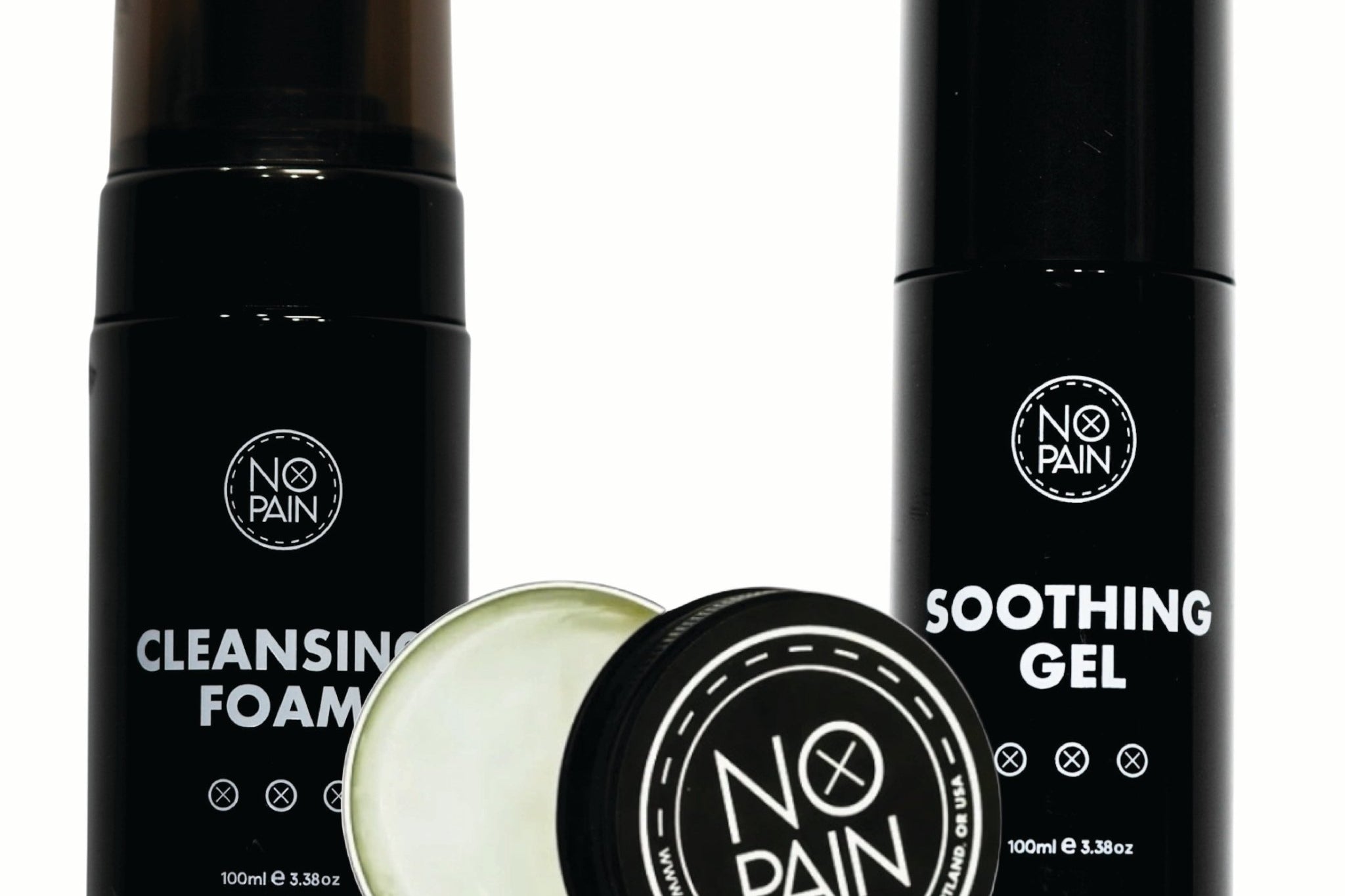
A cooling, lightweight gel that absorbs fully into the skin without trapping heat or moisture. Apply it after each post-workout wash in the first week to calm the skin and keep the wound supported without blocking airflow.
Frequently asked questions
Can I go to the gym the day after getting a tattoo?
No. The first 48 to 72 hours are the highest-risk window. The tattoo is an open wound actively weeping plasma, and it hasn't even begun to close. Gym equipment, sweat, and friction are all direct infection risks at this stage. Light walking is fine. Everything else waits.
What counts as light exercise after a tattoo?
In days three to seven, light exercise means low-intensity, low-sweat movement that doesn't involve the tattooed area. A brisk walk, a gentle bike ride, or easy work on a stationary machine at low resistance. The aim is to move without sweating heavily, without clothing rubbing the tattoo, and without stretching or flexing the tattooed skin. If any of those conditions can't be met, the session waits.
Can I lift weights after getting a tattoo?
It depends on where the tattoo is and how far into healing you are. In week one, lifting is generally off the table. In week two, you can return to lifting as long as the movements don't directly stress the tattooed area. A chest tattoo means no pressing movements. A leg tattoo means no lower-body work. Once the tattoo is fully healed (three to four weeks for most), full lifting resumes without restriction.
Can I do hot yoga after getting a tattoo?
Not in the first two weeks. Hot yoga raises your core temperature, increases sweating, and keeps the tattooed skin warm and moist for an extended period, which is exactly what you don't want during healing. After the surface has fully closed and peeling is done, you can return to hot yoga. Wash the tattoo immediately afterward and reapply your aftercare product.
What happens if I work out too soon after a tattoo?
The most likely outcomes are prolonged healing and a worse final result. Friction can pull ink and lift scabs before they're ready to shed, leaving patchy or faded areas. Sweat and gym bacteria can cause infection, which requires medical treatment and usually damages the tattoo. Working out too soon doesn't always cause visible problems, but it adds risk with no benefit. The ink isn't going anywhere. The workout can wait a few days.
Can I swim after getting a tattoo?
Not until the tattoo is fully healed. Swimming exposes a healing tattoo to water-borne bacteria (pool chemicals don't make it safe) and causes prolonged soaking of the wound, which leads to maceration and ink loss. A quick shower is fine; submerging the tattoo is not. For a full breakdown of when you can swim and what risks apply to different water types, see the swimming guide.
Everything You Need to Heal It Right
The Aftercare Bundle includes a lightweight soothing gel for the first week and a nourishing balm for the second week and beyond. Two products, two phases, one clean heal, whether you're active or taking it easy.
Shop the Aftercare Bundle →Formulated at Historic Tattoo in Portland, Oregon. 100% money-back guarantee.