

If you have a skincare routine and a collection of tattoos, at some point you're going to face this question: can you use your usual serums and actives on tattooed skin? It seems reasonable to assume that what's good for your skin generally should be fine for the skin that happens to have ink in it. Hydration is good, antioxidants are good — what's the problem?
The problem is that certain skincare ingredients work by doing something to your skin that directly conflicts with what you want for your tattoos. Understanding the distinction is important, because the consequences of getting it wrong are permanent.
The Science: What Retinol and Exfoliating Acids Actually Do
Retinol, tretinoin, glycolic acid, lactic acid, and salicylic acid are among the most popular and effective ingredients in modern skincare. They share a common mechanism: they accelerate skin cell turnover. By speeding up the rate at which the top layers of skin shed and regenerate, these ingredients reduce fine lines, improve texture, and correct uneven tone.
That acceleration is exactly the problem. Your tattoo ink sits in the dermis — the deeper layer of skin — but the stability of that ink depends on the outer layers above it remaining relatively undisturbed. When you constantly accelerate the turnover of those protective layers using exfoliating actives, you are simultaneously encouraging your body to process and clear the foreign ink particles more rapidly. The result is accelerated fading: you are using a product that speeds up the very process you're trying to prevent.
This applies to both retinoids and acid-based exfoliants. High-concentration vitamin C serums can also be mildly exfoliating and photo-sensitizing, adding sun sensitivity to already UV-vulnerable tattooed skin.
New vs. Healed Tattoos: A Crucial Distinction
On a new, healing tattoo, these products are categorically off-limits. A healing tattoo is an open wound, and applying acidic, active ingredients to it will cause chemical irritation or a genuine burn. The damage to the healing process can be severe and result in permanent scarring and significant ink loss. There are no exceptions here.
On a fully healed tattoo, the risk is different but still real. You won't get a chemical burn, but consistent use of these products on healed tattoos will cause measurably faster fading over months and years. The more regularly you apply them, the more pronounced the effect.
What to Use Instead
The good news is that the two most effective things you can do for tattoo longevity are also genuinely excellent for skin health: deep moisturization and UV protection.
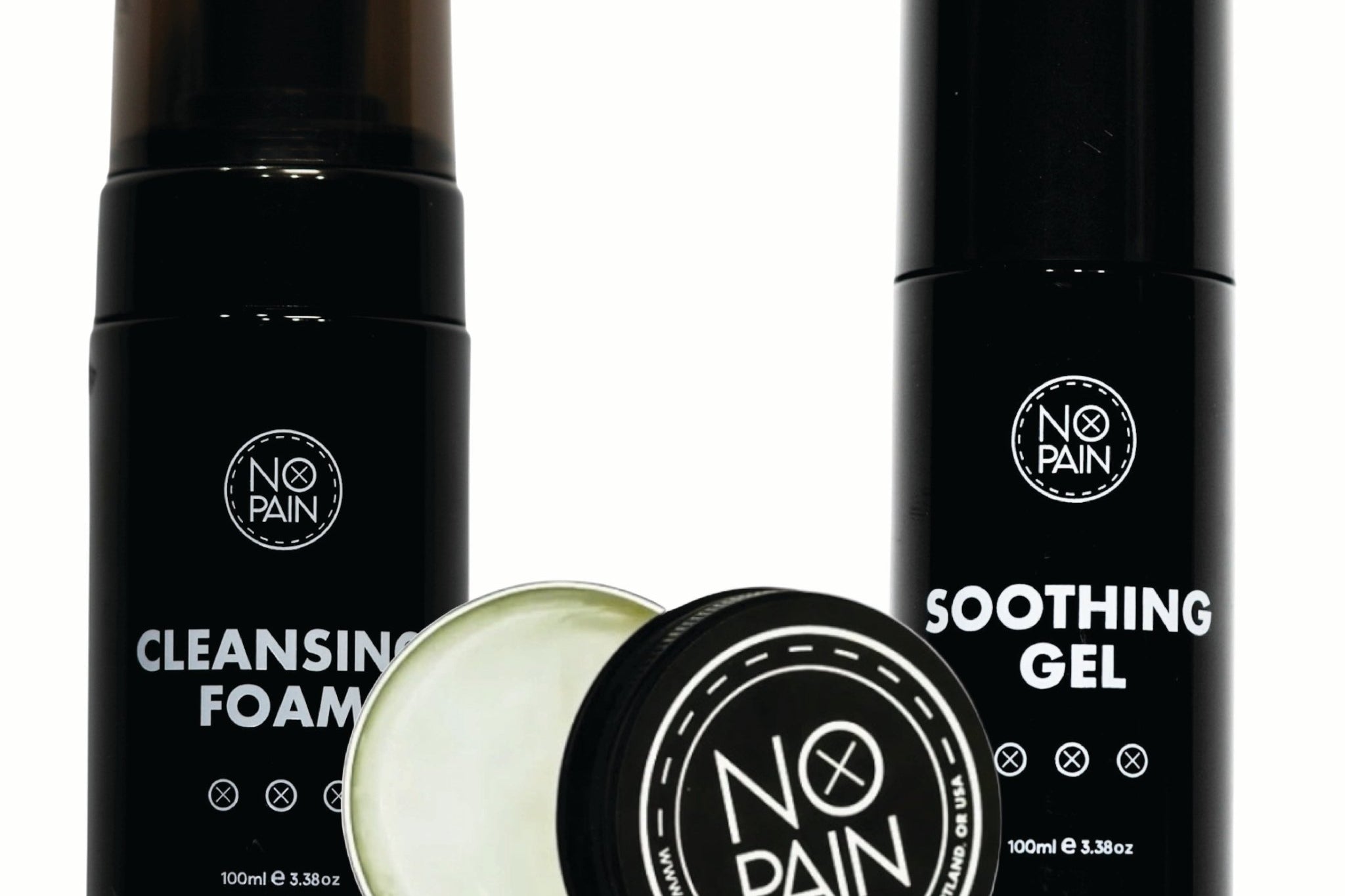
A nourishing moisturizer keeps the skin plump, elastic, and healthy — all of which makes tattoos appear more vivid and saturated. No Pain Tattoo Aftercare Balm is formulated with natural butters and oils that deliver lasting hydration without any of the cell-turnover actives that cause fading. It's not just for healing — used regularly on healed tattoos, it keeps the surrounding skin in excellent condition, which keeps the ink looking bold and crisp rather than dry and dull.
Daily sunscreen on tattooed skin is the single most effective anti-fading strategy available. UV radiation is the primary cause of both skin aging and tattoo fading, so protecting against it covers both concerns simultaneously. A high-SPF, broad-spectrum sunscreen applied to any tattooed area exposed to sun will do far more to preserve your ink than any retinol product ever could.
The Practical Rule
Keep your retinol and exfoliating acids for your face. Use a nourishing balm and sunscreen on your tattoos. You don't have to choose between great skin and long-lasting ink — you just need to use the right tools in the right places.