


Black and grey tattooing is one of the oldest and most enduring approaches in the craft. It encompasses a wide range of styles: smooth photorealistic portraits, bold illustrative work, and delicate fine-line pieces, all built from one ink color and the tonal range it creates. Here is how the different B&G styles work, how they age over time, and how to decide whether black and grey or color is the right choice for your next piece.
In this article
- What black and grey tattooing is
- The main styles within B&G
- How black and grey tattoos age
- B&G vs. color: how to choose
- Skin tone and B&G tattooing
- Finding the right artist
- Healing a black and grey piece
- Frequently asked questions
What Black and Grey Tattooing Is
Black and grey tattooing uses a single black ink (either straight or diluted with distilled water or a mixing solution to create lighter tones) to build a full range of values from near-white to deep black. The artist controls the tonal range by adjusting dilution ratios, needle configuration, and layering technique rather than switching between different colored inks.
Despite the name, true grey ink is rarely used. What looks grey in a finished B&G tattoo is almost always diluted black, sometimes called "grey wash." This approach gives the artist precise control over tone and allows for smooth transitions that would be much harder to achieve by mixing pigmented inks. The result can be photographic, painterly, bold and graphic, or delicate and minimal, all from the same palette.
The Main Styles Within B&G
Grey wash. Grey wash is the foundational technique of B&G tattooing: diluting black ink to different concentrations to build smooth tonal gradients. Many people use "grey wash" and "black and grey" interchangeably, but grey wash is more accurately a technique within B&G tattooing rather than a style of its own. It is the method behind most photorealistic and fine-line work.
Black and grey realism. Realism applies grey wash technique to photorealistic subjects: portraits, animals, still-life, and nature rendered to look like photographs. This style demands precise value control and a thorough understanding of light and shadow. Healed photorealism can be stunning, but it is also the most demanding to execute and the most unforgiving of technical errors: a portrait that looks good fresh but loses subtle midtones during healing can look muddy at 12 months.
Illustrative black and grey. Illustrative B&G combines ink-style linework with grey wash shading. The look sits somewhere between traditional tattooing and realism: recognizable subjects with clean outlines, dimensional shading, but without the hyper-realistic surface detail of photorealism. This is one of the more versatile styles for B&G, and it ages predictably because the linework holds the composition even as shading softens.
Chicano and fine line. Chicano tattooing originated in Mexican-American culture and is characterized by delicate linework, intricate patterns, and fine grey shading, often portraits of religious figures, loved ones, or cultural icons. Fine line B&G more broadly covers any work built primarily from thin, precise lines with minimal shading. Both age differently from heavier shaded work: thin lines spread slightly over decades, so spacing between fine lines is a real consideration for longevity.
How Black and Grey Tattoos Age
Black ink is carbon-based. Carbon is chemically stable and difficult for the body's macrophages to break down over time. This gives B&G tattoos a measurable longevity advantage over color work: the same piece will generally retain more contrast and definition at 10 or 20 years than a comparable color tattoo would.
That said, "ages better than color" does not mean "ages without change." Here is what actually happens to a B&G tattoo over time.
Deep blacks hold well. Heavily saturated black areas are the most stable part of any tattoo. A solid black fill from two decades ago will typically still look dense and defined.
Midtones soften. The delicate grey midtones in photorealistic work (the subtle gradient from highlight to shadow) do fade over time. The contrast compresses. A photorealistic portrait may look softer and less detailed at 10 years than it did at one year.
Fine lines spread. Very thin lines thicken slightly as the ink disperses in the dermis over years. This is why experienced artists leave deliberate spacing between fine lines and why some fine-line work that looks intricate fresh can look crowded or blurry at 10 years.
UV is still the primary driver. Even stable black ink fades in proportion to sun exposure. A well-protected B&G tattoo on the inner arm will look far sharper at 15 years than an unprotected one on the forearm.
B&G vs. Color: How to Choose
The choice between black and grey and color is not purely about longevity. Both are legitimate approaches with distinct strengths.
When B&G is the stronger choice: portraits and faces (grey wash captures skin tones and shadows more naturally than most color approaches), architectural or mechanical subjects (high contrast and sharp detail read well in B&G), classic or traditional-inspired work, fine line and geometric designs where precision is the point, and any piece where longevity is a priority.
When color is the stronger choice: subjects where color is inherent to the meaning (a flower where the species matters, a specific flag, a scene with a vivid sky), work in styles like neo-traditional or new school that are built around color relationships, and pieces where the client wants a specific vibrant result that grey wash simply cannot replicate.
On pure longevity: black and grey holds contrast longer than color, all else equal. Color inks fade on a spectrum: white and pastel fastest, then yellows, pinks, and reds, then deep blues and greens. No color ink is as UV-resistant as carbon black. But aftercare and sun protection close most of that gap. A well-maintained color tattoo will look better at 10 years than a neglected B&G one.
Skin Tone and B&G Tattooing
Black and grey tattooing works across a wider range of skin tones than color. On medium and darker skin tones, many color pigments lose saturation because the underlying pigmentation filters the ink's apparent hue. Black ink does not have this problem; contrast and linework read clearly regardless of skin depth.
That said, the lightest grey wash tones (the near-white highlights in photorealistic work) do disappear on medium-dark to dark skin. Artists experienced in tattooing darker skin tones adjust by shifting the value range: leaning into deeper blacks and midtones rather than relying on light highlights to create the illusion of dimension. If you have a darker complexion and are considering a detailed grey wash or realism piece, specifically seek out an artist with healed portfolio examples on skin tones similar to yours.
Finding the Right Artist
Black and grey encompasses enough distinct sub-styles that "I want a B&G tattoo" is not enough information to find the right artist. A grey wash realism specialist and an illustrative B&G artist have almost nothing in common technically.
Narrow the style first. Then look for portfolio pieces in that specific style, ideally healed work rather than fresh. Fresh tattoos look their best in the first few weeks; healed work tells you what the artist's technique actually produces over time. Ask directly: "Do you have any healed photos of this kind of work?" A confident artist will have them.
Pay attention to how the midtones hold in healed realism work and how the spacing between fine lines reads after healing. Both are hard to see in fresh photos and easy to assess in healed ones.
Healing a Black and Grey Piece
B&G pieces heal the same way as any other tattoo, but the investment in detailed shading makes getting the heal right more important. Lost ink during a scabby first week shows up as uneven grey wash and gaps in gradients that are expensive to fix.
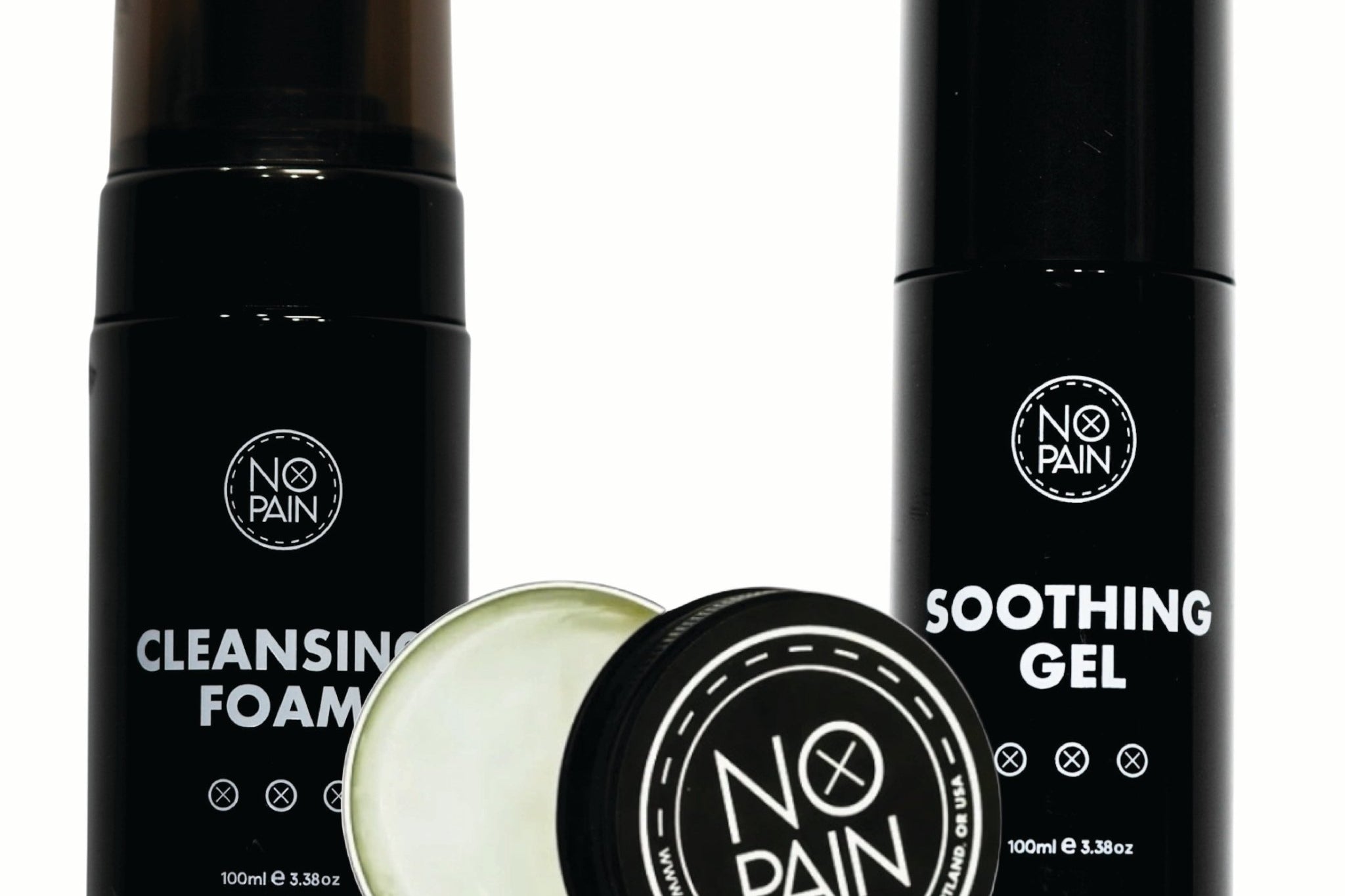
For the first two to three days, use a lightweight soothing gel after each wash. The wound is still weeping and beginning to close, and gel keeps the surface hydrated without sitting too heavily on tissue that is still draining. From around day two or three onward, switch to a nourishing balm and apply twice daily through the first month. Hydrated, healthy skin holds ink better during healing and displays the finished result more clearly once the skin settles.

A lightweight, fragrance-free gel for the first two to three days of healing. Keeps the surface hydrated without occluding a wound that is still closing. Apply a thin layer after each wash and let it absorb.
Frequently asked questions
What is the difference between black and grey and black and white tattooing?
The terms are often used interchangeably, but there is a technical distinction. Black and grey tattooing uses diluted black ink to create a full tonal range including mid-grey values. Black and white is a looser term that sometimes refers to strictly two-tone work with no shading. In practice, most artists who describe their work as black and white are doing grey wash work, since purely two-tonal tattooing (solid black plus bare skin) is a limited and stylized look. When researching artists, "black and grey" is the more useful search term for finding technically skilled shading work.
Do black and grey tattoos age better than color?
Generally yes, over long time horizons. Black ink is carbon-based, which makes it more stable and UV-resistant than the pigment compounds used in colored inks. A B&G piece will typically retain more contrast and definition at 15 or 20 years than a comparable color tattoo. The difference is real but can be narrowed considerably by consistent sun protection on color work. Placement and aftercare have a larger effect on either style than the color of the ink alone.
What is grey wash tattooing?
Grey wash is a technique in which black ink is diluted to different concentrations to create a range of grey tones. The artist works with multiple dilutions simultaneously, moving from darker to lighter values to build dimensional shading. True grey ink is rarely used; most grey tones in tattooing are diluted black. Grey wash is the technical foundation of B&G realism but is also used in illustrative and fine-line work to add depth without color.
Do black and grey tattoos work on dark skin?
Yes, better than most color work does. Black ink reads clearly on all skin tones because it creates contrast regardless of the underlying skin depth. The main adjustment on medium to dark skin is that very light grey wash values (the near-white highlights in photorealistic work) become less visible, so the artist shifts the value range toward deeper blacks and midtones. If you have a darker complexion and want detailed grey wash or realism work, look specifically for an artist with healed portfolio examples on skin tones like yours.
Is black and grey tattooing more painful than color?
Style does not directly affect pain; placement, needle configuration, and session length are the relevant variables. That said, photorealistic B&G work often involves extended shading passes over large areas, which can be more fatiguing than shorter sessions. If you are planning a large piece, the session length is the pain variable to plan for, not the style. Numbing cream applied before the session (90 to 120 minutes under wrap) handles that.
Can you add color to an existing black and grey tattoo?
Yes, though the result depends on the original work. Adding color over solid black is not possible; black ink blocks most colors. But adding color into areas that are grey wash or bare skin is achievable. The more common approach is to add a colored background, surround, or accent rather than trying to overlay color on existing shaded areas. Consult the original artist or a specialist in the style you want added; they will be able to tell you whether the existing work supports the addition.
Cover Both Phases of Healing
The Aftercare Bundle includes a lightweight soothing gel for the first two to three days and a nourishing balm for the weeks that follow. Everything you need from the moment the wrap comes off through full recovery.
Shop the Aftercare Bundle →Formulated at Historic Tattoo in Portland, Oregon. 100% money-back guarantee.