


A Guide to Healing Tattoos in High-Friction Areas
Not all tattoos heal the same way. A tattoo on your upper back heals in a quiet, stable environment. A tattoo on your inner thigh, wrist crease, or the back of your knee heals in a place that flexes, rubs, and sweats every single day. High-friction placements fail more often than any other type, and the reason is nearly always preventable with the right approach.
This guide covers which areas count as high-friction, why they are challenging, and what to do differently from day one.
Which Placements Are High-Friction
High-friction placements fall into two categories: areas where skin rubs against other skin, and areas where clothing or gear constantly presses against the tattoo.
Skin-on-skin friction: inner thighs, underarms, between the toes, behind the knees, inner elbows (the elbow ditch), beneath the breasts, and the back of the neck at the collar line.
Fabric and gear friction: the inner wrist (watch band), the ankle (sock line), the waistline (waistband), the top of the foot (shoe tongue), collarbone area (bra straps), and the back of the knee (knee bend in trousers).
Areas that combine both types of friction, like the inner thigh, are the most demanding to heal and the most likely to require touch-ups.
Why Friction Causes Healing Problems
A healing tattoo is, at its core, an open wound in the process of closing. The dermis is knitting back together, the epidermis is regenerating over the top, and ink particles are being stabilized by the body. Friction disrupts every part of this process.
Physical rubbing displaces ink before it has been fully encapsulated by the dermis. This is why high-friction tattoos often appear patchy once healed: some areas closed cleanly, others had ink pulled out by repeated friction before the skin sealed over. Even mild rubbing from soft fabric can cause ink loss in the first two weeks if it happens often enough.
Friction also generates heat and moisture, both of which create conditions where bacteria multiply faster. The inner thigh and underarm are warm and often damp, making them higher-risk for minor infections that further disrupt healing. Maceration (the softening of skin from prolonged moisture exposure) makes the epidermis more fragile and more likely to lose ink.
The High-Friction Healing Protocol
The core protocol is the same as standard tattoo aftercare, but every step requires more attention and consistency.
Wash twice daily without exception. Sweat and skin bacteria accumulate faster in friction-prone areas. Wash with fragrance-free soap and lukewarm water, pat dry (do not rub), and apply your healing product immediately after.
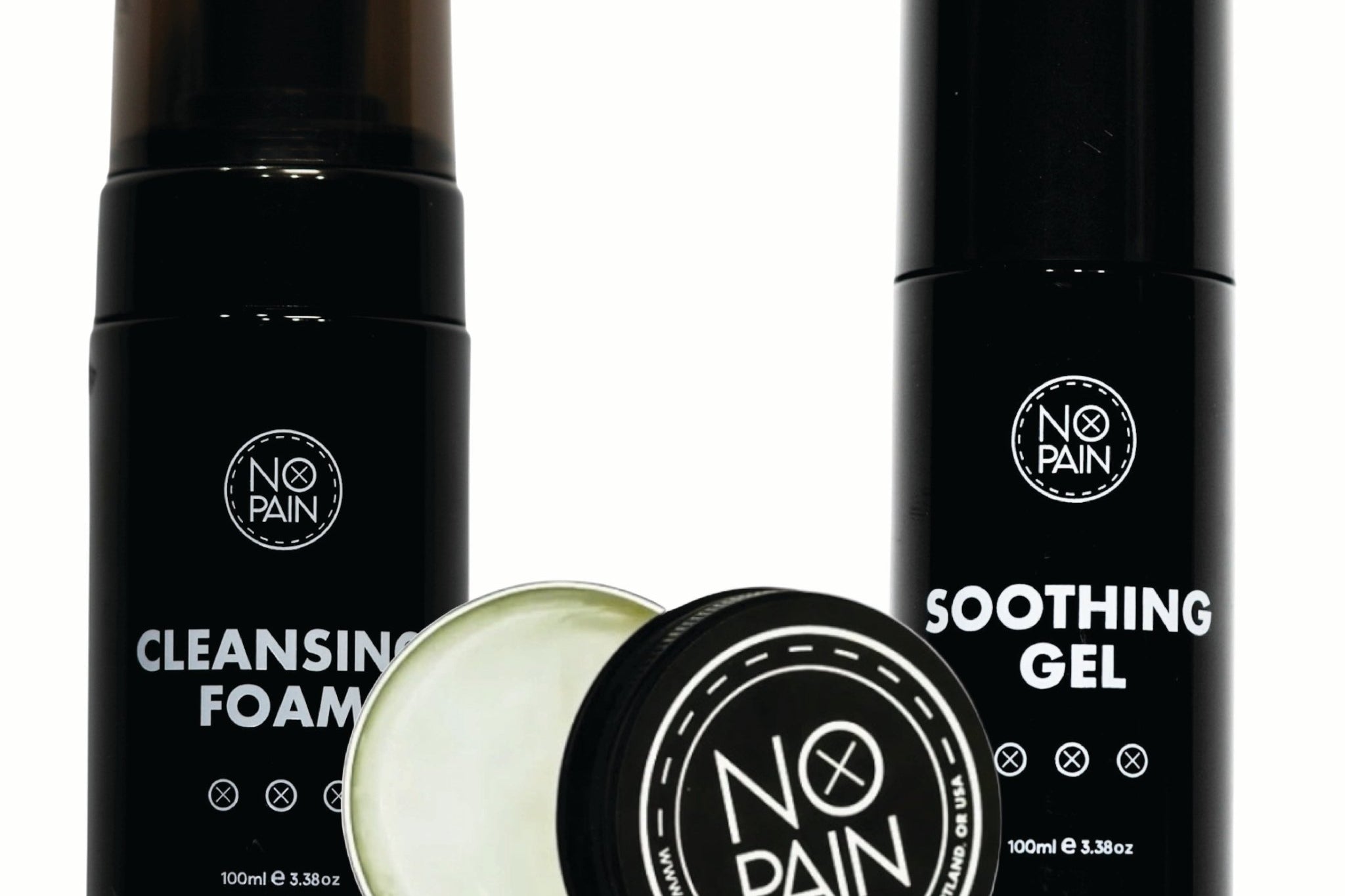
Use a breathable gel for the first three days. A lightweight gel keeps the healing surface hydrated without adding the occlusion that can cause maceration in warm areas. Apply a thin layer after each wash.

Switch to balm from day 3 or 4 onward. Once the surface plasma phase has passed and peeling begins, a richer balm keeps the skin supple and reduces the micro-trauma caused by friction on dry, tight skin. Dry healing skin cracks under friction; hydrated skin flexes.

Clothing and Coverage
Clothing choices can make or break a high-friction heal. The goal is to keep abrasive fabric away from the healing tattoo without completely suffocating the area.
Loose, soft fabrics over everything. Cotton or bamboo in the first two weeks is far better than synthetic performance fabrics, which tend to cling. Loose fits minimize contact; tight fits maximize friction with every movement.
Use a non-stick dressing for the first 72 hours if necessary. In areas that cannot be kept free of fabric contact, a non-stick bandage or second-skin wrap protects the tattoo during the most vulnerable early phase. Change it every 24 hours and let the skin breathe for at least 2 to 4 hours between applications.
Specific problem-solving by area:
Inner thigh: Cycling shorts or compression shorts create a smooth layer that prevents inner thigh skin-on-skin contact. They reduce friction more effectively than trying to keep the legs apart.
Underarm: Wear loose sleeveless tops. Keep the arm at rest as much as possible in the first few days. Avoid deodorant near the tattoo until fully healed.
Ankle / foot: Wear loose socks pulled low to keep the sock line away from the tattoo. Open-toed footwear for the first week if the tattoo is on the top of the foot.
Wrist: Remove watches and bracelets on the tattooed wrist for at least two weeks. A bare wrist in the first two weeks heals far cleaner than one with a watch strap rubbing it daily.
Waistline: High-waisted or low-rise options that keep the waistband away from the tattoo. Suspenders or no waistband at all for the first week if possible.
When to Expect a Touch-Up
High-friction placements have a higher base rate of requiring touch-ups than stable placements. This is not a failure of aftercare or tattooing skill. It is physics: the skin in these areas moves more, is exposed to more disruption, and loses some ink as a result.
Wait at least six to eight weeks after the tattoo is fully healed before assessing touch-up needs. Some apparent patchiness during healing resolves on its own as the skin settles. What remains at two months is the true healed result and, if needed, the right basis for a touch-up conversation with your artist.

FAQ
Is the inner thigh the hardest placement to heal?
It is one of the most demanding. The inner thigh combines skin-on-skin friction from walking, warmth and moisture from proximity to the groin, and clothing friction from trousers. Compression shorts help a great deal in the first two weeks. Most inner thigh tattoos require at least one touch-up.
Can I wrap my tattoo to protect it from friction?
For the first 72 hours, a non-stick bandage or second-skin wrap can protect the area from direct friction while the wound is most open. After that, the tattoo generally heals better with air exposure between fabric and some light protection during high-friction activities. Avoid tight or airtight wrapping beyond the first few days.
My tattoo looks patchy after healing in a high-friction area. Is this permanent?
Give it at least six weeks after the tattoo appears fully healed before drawing conclusions. Some patchiness resolves as the deeper layers of skin finish settling. If patchy areas remain at eight weeks, a touch-up session with your artist is the right next step.
Does sweating affect tattoo healing?
Yes. Sweat is salty and mildly acidic, which can irritate a healing tattoo if it sits on the surface for too long. Wash the area within an hour of heavy sweating to prevent buildup. Light perspiration in everyday life is not a major concern as long as you maintain your regular twice-daily washing routine.
How long does a high-friction tattoo take to fully heal?
Surface healing in high-friction areas typically takes four to six weeks, somewhat longer than low-friction placements. Full dermal healing, where the skin is completely stable and the ink is fixed in place, takes two to four months. Avoid sun exposure on the area and continue using balm for at least three months.
Should I choose a different placement to avoid friction problems?
If you have flexibility, lower-friction placements on the upper arm, outer calf, upper back, or ribcage heal more predictably. But many high-friction placements produce tattoos that are worth the extra healing effort. The right preparation and consistent aftercare make the difference in most cases.