


Most people with tattoos already know that real tanning—sun exposure, tanning beds—is the enemy of good ink. UV radiation breaks down ink particles over time, and there's no SPF on earth that blocks it completely. But self-tanners raise a different question: the active ingredient is a chemical, not radiation. Does it affect the ink?
The short answer is no, not permanently. The longer answer has a few caveats worth knowing.
How self-tanners actually work
Fake tan products use Dihydroxyacetone (DHA) as their primary active ingredient. DHA reacts with amino acids in the outermost layer of dead skin cells—the stratum corneum—to temporarily darken the skin's surface. This process is entirely confined to the epidermis.
Your tattoo ink lives in the dermis, the layer below. Self-tanners never reach it. The chemical reaction stays at the surface, the color fades as those outer skin cells shed naturally over about a week, and the tattoo ink underneath remains completely unaffected. This is fundamentally different from what UV tanning does, which penetrates into the dermis and physically damages the ink itself.
The one rule: never apply to a healing tattoo
A new tattoo is an open wound with a compromised skin barrier. Applying a self-tanner to healing skin can cause irritation, burning, or an allergic response to the chemicals. More practically, it can interfere with the healing process and affect the final result of the tattoo. Wait until the tattoo is completely healed—all peeling finished, skin texture fully normalized—before applying any self-tanning product to the area. When in doubt, wait an extra week.
The aesthetic effect to be aware of
While self-tanners don't damage ink, they do temporarily tint the skin brown, which affects how your tattoo looks cosmetically during the life of the tan.
Over black and dark grey tattoos, you'll barely notice. But over lighter tattoos—white highlights, pale yellows, soft blues—the brown cast of the DHA can muddy the lighter tones. A tattoo that features bright white ink may look yellowish while tanned. This clears up on its own as the tan fades and those surface skin cells exfoliate away, but it's worth being aware of if you're photographing your work or attending an event where the tattoo's appearance matters.
Getting the best results
A few practical steps make a significant difference in how a fake tan looks over tattooed skin. Exfoliating the day before application removes the oldest, most unevenly-textured dead skin cells and helps the tanner apply more evenly. Applying the tanner in thin, even layers prevents streaking, which can be more visible around the tattoo's edges.
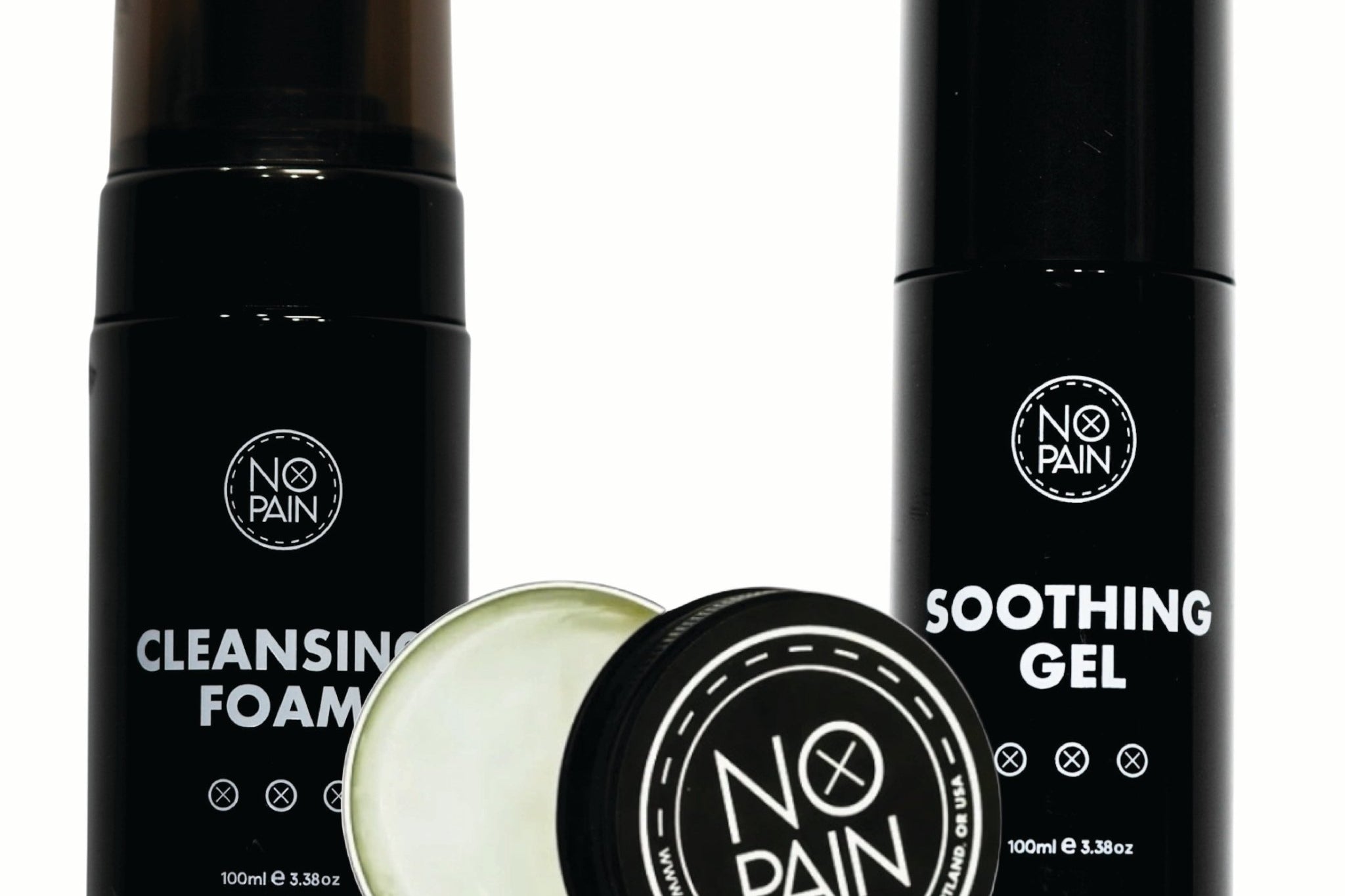
For lighter-toned tattoos where you want to minimize DHA discoloration, applying a light moisturizer over the tattooed area before the tanning product can help—it creates a partial barrier that softens how the DHA interacts with the skin directly over the ink. The No Pain Tattoo Aftercare Balm works well for this: it hydrates without leaving a heavy residue, sits lightly over the tattooed area, and allows the surrounding skin to tan more naturally.
Real vs. fake: the distinction that matters
Real tanning—whether from direct sun or a tanning bed—causes progressive, cumulative damage to tattoo ink that builds over years. A self-tanner causes a temporary cosmetic change to the surface of your skin that has no effect on the ink at all.
If you want to maintain a tan without sacrificing your ink's long-term vibrancy, fake is the way to go. Just let your tattoo fully heal before applying anything, and be prepared for lighter colors to look a little different while the tan is active.