


Fine-line tattoos exist at one extreme of the technical spectrum — they're defined by precision and delicacy, and they have almost no margin for error. When they're done well and cared for properly, they look extraordinary. When something goes wrong — whether during the application or the healing — the result is a blurry, faded, or broken-looking piece that often looks far worse than a simpler tattoo gone slightly wrong.
If your fine-line tattoo looks blurry, the cause almost always falls into one of three categories. Here's how to diagnose what happened and what can be done about it.
Cause 1: A Blowout
A blowout is the most common cause of a tattoo that looks blurry immediately after it's done, or in the first week of healing. It happens when the needle penetrates too deeply, pushing ink past the dermis and into the hypodermis — the fatty layer beneath. In this layer, ink doesn't stay contained. It spreads outward, creating a soft, blurry halo around the lines that is permanent from the moment it happens.
Blowouts are more common in fine-line work because the needle must be kept at a very precise and shallow depth. If an artist with insufficient experience in this specific style presses too firmly, or if the skin in a particular area is very thin and the needle penetrates deeper than intended, blowout occurs.
You can identify a blowout by its appearance: a diffuse, fuzzy shadow extending from the lines, visible as early as the first week of healing once the initial swelling subsides. It won't improve over time — what you see is what you have.
Cause 2: A Difficult Heal
Fine lines are uniquely vulnerable to damage during the healing process. A bold traditional tattoo can survive moderate aftercare neglect and still look fine — the linework is thick enough that losing a little ink to heavy scabbing doesn't change the design significantly. A fine-line tattoo has no such buffer.
When thick scabs form over delicate lines during healing, they adhere directly to the ink below. When those scabs eventually come off — naturally or accidentally — they take ink with them. In fine-line work, this results in segments of lines that are lighter, broken, or entirely absent, and the overall effect reads as blurry or inconsistent rather than crisp and deliberate.
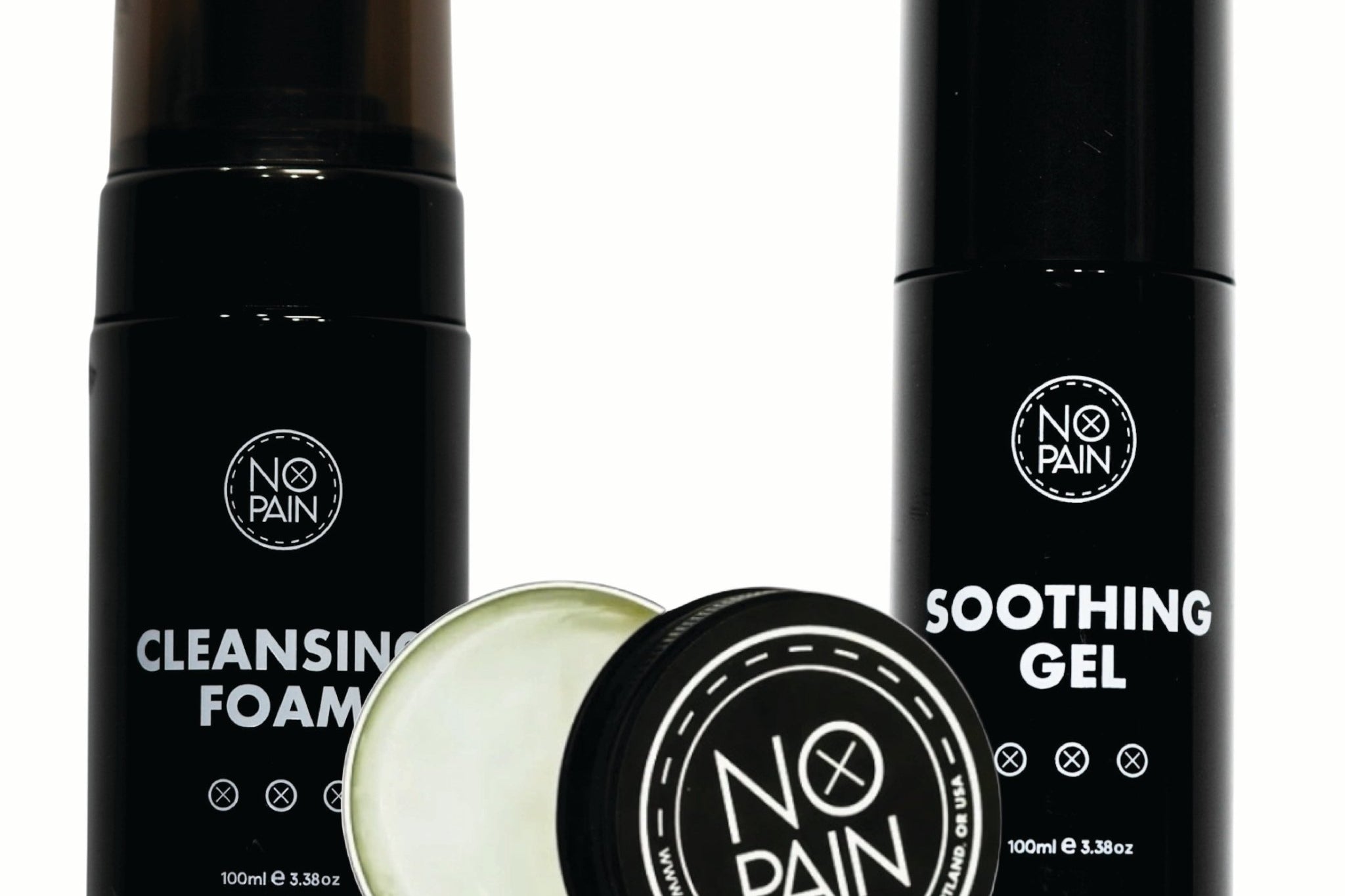
The prevention is consistent, diligent moisturizing from the very first day after getting tattooed. Keeping healing skin properly hydrated is what prevents the over-drying that leads to thick scab formation. No Pain Tattoo Aftercare Balm is designed for this purpose — breathable enough to let the skin regenerate naturally, nourishing enough to maintain the moisture level that produces a light, papery peel rather than a heavy crust.
Cause 3: Natural Aging Over Time
Over years and decades, all tattoos soften as the skin changes and ink particles gradually migrate within the dermis. In bold, saturated tattoos, this settling is gradual and less noticeable. In fine-line work, the same process is more apparent because the lines start thinner and there's less ink to absorb the change.
This is simply the nature of the style. It doesn't mean fine-line tattoos are a bad choice — it means they require thoughtful long-term care. Sun protection is the single most effective long-term maintenance habit: UV radiation breaks down ink particles and accelerates fading in all tattoos, but fine-line work shows the effects sooner and more dramatically than heavier styles. Consistent daily sunscreen on any visible fine-line tattoo is the most important thing you can do to preserve it over time.
Can It Be Fixed?
A blowout can sometimes be improved but rarely fully corrected. The most common approach is a redesign that incorporates the diffusion into the aesthetic — adding shading or background elements that make the blowout less visible in context. A full rework by a specialist in fine-line correction is often the best path for a botched piece.
Ink loss from poor healing can be corrected with a touch-up, done once the tattoo is fully healed — typically six to eight weeks after the initial session. Most artists will offer touch-ups for free or at low cost within a set window after the original appointment.