


A white ink tattoo is exactly what it sounds like: a tattoo made using only white pigment, with no black outline or dark shading beneath it. The result is subtle: a pale, slightly raised design that sits on the skin rather than contrasting against it. On fresh ink, under certain lighting, the effect can look almost like etching or embossing. On healed ink, the look depends heavily on your skin tone and how much UV exposure you've had since.
White ink tattoos are genuinely beautiful when done well on the right skin. They're also the style most likely to disappoint you if you go in with the wrong expectations. This guide covers what they actually look like as they age, which designs and skin tones work best, and what your white ink needs to last as long as possible.
In this guide
- What is a white ink tattoo?
- Fresh vs. healed: what to expect
- Skin tone and white ink
- How long does white ink last?
- White ink tattoo ideas
- Choosing the right artist
- Aftercare for white ink tattoos
- FAQ
What is a white ink tattoo?
A white ink tattoo is placed in the dermis the same way any other tattoo is: a needle deposits pigment below the epidermis where it can't simply wash away. The difference is in the pigment itself. White tattoo ink contains titanium dioxide as its primary base, which gives it opacity and reflectivity. Unlike black ink, which creates high contrast against all skin tones, white ink interacts with your skin's own color from above. The visible result depends on your melanin level, tanning history, and UV exposure over time.
White ink shows up in a few different contexts. Some people get fully white tattoos with no black outline; the design reads through texture and subtle tone difference rather than through contrast. Others use white ink as highlight detail within colored or black-and-grey work, adding the illusion of light catching a surface. Some artists use it to create a scarification effect: slightly raised, pale lines that look more carved than drawn.
Fresh vs. healed: what to expect
Fresh white ink looks its best. Right after the session, the ink is bright, clean, and clearly defined. The skin around it is slightly raised and the design reads well. This is also when most photos of white ink tattoos are taken.
As healing begins, the color changes. A new layer of epidermis forms over the ink during weeks one and two, and this new skin temporarily appears milky or slightly opaque, which can make any tattoo (including white ink) look clouded during the peeling phase. This is normal and not specific to white ink. By weeks three to four, the new epidermis thins and clears, and you can start to see the actual healed result.
The healed result is almost always less saturated than fresh ink. This is the part that surprises people most. White ink loses more apparent brightness during healing than dark inks do, because the dermis layer sits below skin that has its own pigment. You're not seeing pure white. You're seeing white filtered through your skin.
Over months and years, white ink continues to soften. Some people's white tattoos hold up well for three to five years with care. Others see considerable softening in the first year. The main variables are UV exposure, skin tone, and placement.
Skin tone and white ink
White ink works best on fair, untanned skin. On pale skin that doesn't tan easily, white ink has the most contrast against the surrounding dermis and the least interference from melanin above. The healed result reads as clearly as white ink can.
On light-to-medium skin, white ink can still look good but typically heals to a cream or ivory tone rather than true white. The design remains visible, especially in raking light or textured placements.
On medium-to-dark skin, results become more variable. White ink on deeper skin tones often heals to a tone very close to the surrounding skin, making the tattoo nearly invisible. The design may be detectable through texture (a raised feel) even when it can't be read by color contrast. Some people with darker skin tones choose white ink for exactly this reason: a subtle, tactile tattoo. Others discover after the fact that it doesn't show the way they hoped.
The honest advice: if you have any doubt about how white ink will read on your skin, ask your artist to show you healed examples on clients with a similar skin tone to yours. Not fresh work. Healed.
How long does white ink last?
Longer than the skeptics say, shorter than you probably hope.
White ink is the most UV-sensitive tattoo pigment. Titanium dioxide breaks down under ultraviolet exposure, and unlike black ink, which has carbon as its base and is extremely UV-stable, white ink near the surface of the skin takes ongoing UV damage whenever you're outdoors without protection. A white tattoo on a placement that gets regular sun can fade noticeably within a year or two.
A white tattoo on a placement that stays covered (inner wrist, behind the ear, collarbone, ribs) and that receives consistent sun protection can hold up much longer. People with fair skin who are diligent about SPF sometimes have readable white tattoos five or more years out.
White ink can also shift color over time. As melanin in the epidermis interacts with the ink visible through the skin, white tattoos sometimes develop a yellowish or slightly tan tint. This is more common in people whose skin tans easily or in high-UV placements. It's not a product failure or an artist error. It's how light, skin, and ink interact over time.
Going in knowing that white ink will evolve and may need a touch-up at two to three years will leave you more satisfied than expecting it to stay sharp for a decade.
White ink tattoo ideas
Design choice matters more for white ink than for almost any other style. Some designs age gracefully; others become unreadable.
Simple bold shapes and linework. Single lines, geometric shapes, and clean outlines hold up better than complex detail. As white ink fades, intricate patterns lose definition fastest. A bold clean circle or simple botanical outline will remain legible longer than a detailed mandala.
Scarification-style designs. Designs meant to read through texture rather than color contrast (raised lines, simple patterns, geometric shapes) are a natural fit. The visual is in the dimensional quality as much as the tone, so longevity matters less.
White highlights in colored work. One of the best applications of white ink is as an accent within a larger colored piece. White ink can suggest the glint of light on metal, a bright reflective point in a dark design, or the highlight on a gem. In this context, white doesn't need to stand alone. It supports the composition, and any softening over time reads as a natural highlight settling rather than a failure.
Simple botanicals. A single sprig, leaf, or flower can work well on fair skin. The organic lines are forgiving if they soften slightly, and the design retains its logic even as the ink becomes more diffuse.
Minimalist lettering. Single words or initials in a simple font can work, but keep the letters large enough that softening won't make them illegible. Fine script in white ink is the design most likely to disappoint within a few years.
What to avoid: hyper-detailed realism, ultra-fine lines, complex mandala patterns with dense dotwork shading, and any design where legibility depends on precise fine detail holding over time.
Choosing the right artist
White ink is harder to apply than black. The pigment is thicker, which makes it more difficult to push into the dermis consistently. It's also less forgiving: uneven application produces a patchy result, and white ink is difficult to touch up cleanly because fresh layers look slightly different from older healed ink.
The most important thing you can ask for is healed examples of white ink work on clients. Fresh white always photographs well. Healed work shows you what actually persists. Ask to see how their white ink looks three months out, six months out, a year out. And ask what skin tones are represented in those examples.
Also ask about their layering approach. Experienced white ink artists know that multiple lighter passes often produce more consistent results than one heavy pass. The technique differs from black ink work in ways that matter.
Staying still is more important for white ink than for most styles. Precise, consistent needle placement is what separates clean white ink from patchy white ink. If you're heading into a placement that's likely to be uncomfortable, numbing is worth considering. Not just for your comfort, but for the quality of the result.

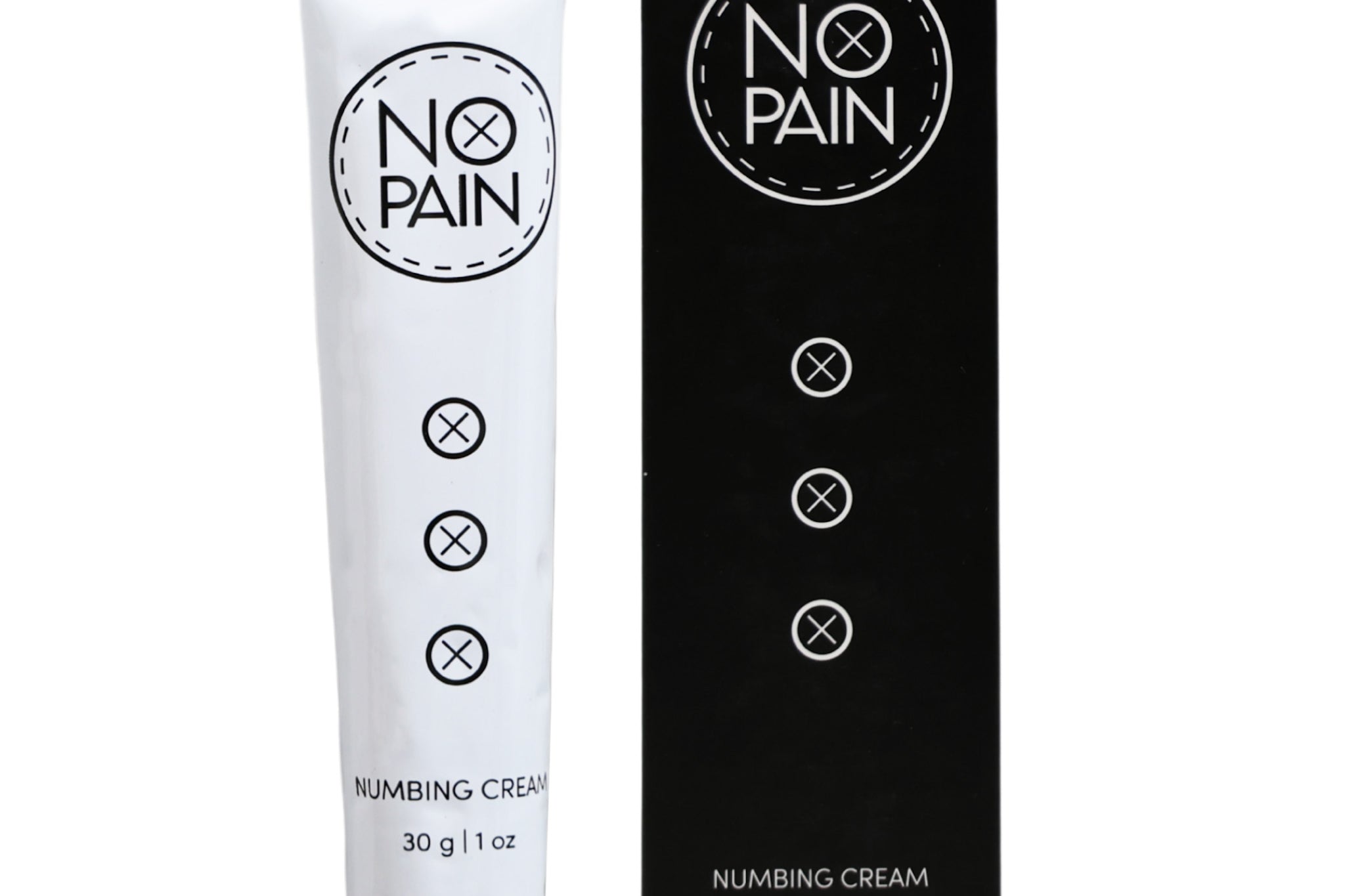
Maximum strength numbing so you can hold still for the full session. White ink is precision work. Small movements affect how evenly the pigment is placed. Apply in two coats under cling film, 90 to 120 minutes before your appointment. Backed by a money-back guarantee.
Shop Numbing Cream: $30
Aftercare for white ink tattoos
White ink aftercare follows the same protocol as any tattoo, but the stakes are higher. White pigment is less dense than black, which means any ink lost during healing shows more in the final result. A thick scab pulling free unevenly can leave a noticeable gap in a white ink design that would be far less obvious in dark work.
For the first few days: wash twice daily with fragrance-free liquid soap, pat dry with a paper towel, and apply a thin layer of soothing gel. The goal is to keep the healing surface just moist enough to close without forming raised scabs. A coating isn't the goal. Just a thin protective layer.
Around day two or three, switch to an aftercare balm. The balm's oil-and-butter base nourishes the healing skin without occluding it, which is right for the peeling and settling phase.
The most important long-term factor for white ink is sun protection. Apply SPF 30 or higher over the healed tattoo every time it's exposed to sunlight, consistently, not occasionally. This habit does more to preserve white ink than any other aftercare measure. UV exposure is the primary driver of white ink fading and color shift, and it's the one variable almost entirely within your control once the tattoo is healed.

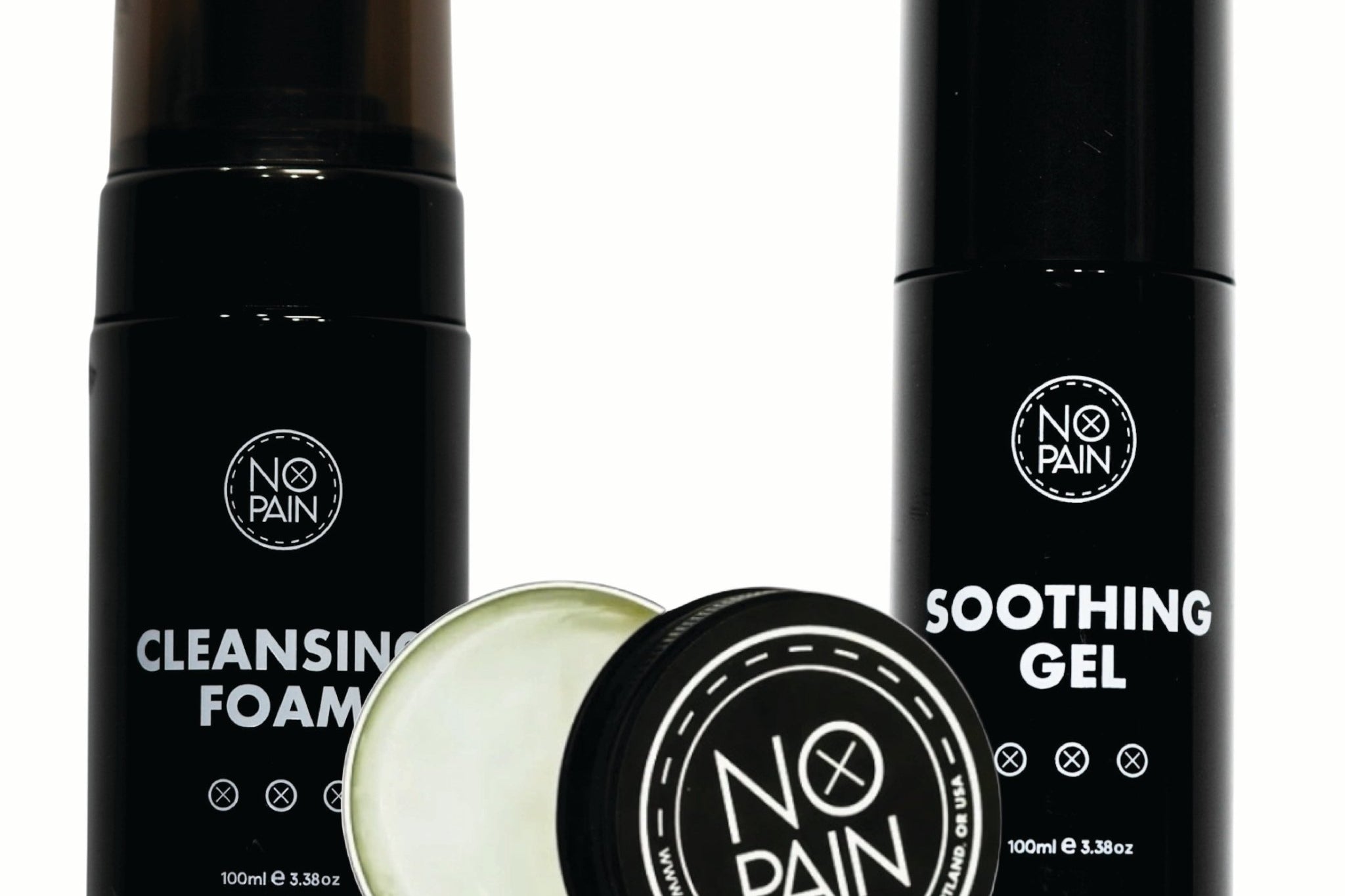
No Pain Tattoo Aftercare Bundle
Soothing gel for the first few days, aftercare balm from day three onward, and cleansing foam for daily washing. Everything your white ink needs to heal cleanly and protect every bit of pigment your artist placed. Backed by a money-back guarantee.
Shop Aftercare Bundle: $33.60FAQ
Do white ink tattoos fade faster than regular tattoos?
Yes, faster than black ink. White pigment (titanium dioxide) is more UV-sensitive than the carbon base of black ink, and it sits in the dermis beneath skin that has its own melanin, which affects how it reads over time. How quickly it fades depends on placement, sun exposure, and skin tone. A white tattoo on a covered placement with consistent SPF protection fades much more slowly than one on a sun-exposed area without it. All tattoos fade; white ink requires more active management to slow the process.
Does white ink tattoo work on dark skin?
It depends on skin tone and what result you want. On medium skin, white ink often heals to a cream or ivory tone rather than true white but can still read as a subtle design. On deeper skin tones, white ink frequently heals nearly invisible by color, though the raised texture may remain. Before committing, ask your artist to show healed white ink examples on clients with your skin tone. Fresh photos are not a useful reference. Only healed work tells you what will actually persist.
Why does white ink turn yellow?
White ink is translucent, not opaque. You're seeing it through the epidermis above, which contains melanin. When that melanin darkens (from sun exposure or your skin's baseline pigment), it filters the white ink visible through it, shifting the apparent color toward yellow, cream, or tan. This is a natural optical effect, not a sign of bad ink or poor artistry. Minimizing UV exposure slows how quickly this color shift progresses.
What designs work best in white ink?
Simple, bold shapes and clean lines hold up best. A clear single-line botanical, geometric shape, or minimalist symbol will remain legible as it fades. Hyper-detailed work (fine dotwork, intricate script, complex sacred geometry) tends to blur and lose definition faster. White ink also works very well as an accent or highlight within colored or black-and-grey work, where it doesn't need to stand alone and any softening reads naturally over time.
Does a white ink tattoo hurt more than a regular tattoo?
Pain level depends on placement, not ink color. What may feel different is duration. White ink requires precise, consistent application, and artists sometimes make multiple passes to achieve even coverage. A longer session on a sensitive placement adds up. Numbing cream applied 90 to 120 minutes before the session can make the experience much more manageable and help you stay still enough for the artist to work precisely.
How do I make a white ink tattoo last longer?
The two most effective measures are aftercare and sun protection. During healing, keep the tattoo clean and moisturized to prevent thick scabbing, since any ink lost during healing shows more in white work than in black. Once healed, apply SPF 30 or higher every time it's exposed to sunlight. This is the highest-impact habit for white ink longevity. Placements that stay covered (ribs, inner arm, collarbone) hold up longer than those with regular sun exposure.