



Most people think their tattoo is healed when the peeling stops. It is not. What has finished is the surface: the outer layer of skin has closed over and the tattoo no longer looks raw or flaky. The deeper layer, where the ink actually lives, is still in the middle of a process that takes weeks longer and happens entirely below what you can see.
The difference matters because how you treat the skin during that second phase affects how well the ink settles permanently. Here is what each stage of healing looks and feels like, and how to tell when you are actually done.
In this article
- What "fully healed" actually means
- How long it takes
- The touch test
- The visual test: the milky phase
- The sensation test
- The activity milestones
- When to stop active aftercare
- Frequently asked questions
What "Fully Healed" Actually Means
A tattoo heals in two distinct phases. The first is the surface phase: the epidermis, the outer layer of skin, closes over the wound, peeling or flaking clears up, and the skin no longer looks raw. This typically takes two to three weeks.
The second is the dermal phase. The dermis is the deeper layer of skin where tattoo ink is deposited during the session. After the surface heals, the dermis continues remodeling around the ink particles, and this process takes considerably longer: typically two to four months, sometimes more for large pieces or areas with dense needle work.
When people say a tattoo is not fully healed, this is what they mean. The surface has closed over, but the skin underneath is still actively resolving. This is why some tattoos look slightly hazy or carry a faint milky overlay in the weeks after the peeling stops. The outer skin has regenerated over the dermis but has not yet fully settled and thinned back to its normal transparency.
How Long It Takes
Surface healing runs two to three weeks for most people. Placement and skin type both factor in. Areas with higher friction, such as the inner forearm, behind the knee, or the inner wrist, may take a few extra days. Areas that move significantly during normal activity take longer to close cleanly.
Full dermal healing spans two to four months for average-sized work. Large pieces or designs with high ink density can take longer. Color-heavy work typically takes more time than black and grey, because more pigment volume was deposited and the dermis has more to organize around.
Age, hydration, sleep, and general health all affect the timeline. Younger skin tends to heal faster than older skin. People with conditions that affect immune response or circulation may see longer healing windows. A tattoo that looks slightly dull or patchy at three weeks may look entirely different at month two or three, and this is normal.
The Touch Test
The clearest sign that a tattoo is fully healed is when you can no longer feel any difference between the tattooed skin and the skin around it.
Run your fingertips lightly over the tattooed area. In the early weeks of healing, the ink lines often feel slightly raised, as if there is a subtle ridge or texture difference where the needle passed. The skin may feel slightly thicker or more rigid over the tattooed areas compared to the skin beside it. This is the dermis still resolving around the ink particles.
When healing is complete, the tattooed area should feel exactly like the surrounding skin. No raised edges along the lines, no detectable texture difference, no ridge where there used to be one. The skin should move and flex the same way untattooed skin does. If you can still feel the design as a raised or textured surface, healing is still in progress.
The Visual Test: The Milky Phase
After peeling finishes, many tattoos go through a phase where the colors look slightly muted, or a thin whitish or grayish film seems to sit over the design. Artists sometimes call this the onion skin phase. It can last anywhere from a week to several weeks after surface healing is complete.
What you are seeing is a fresh layer of epidermis that is still thicker and less translucent than fully settled skin. The outer layer regenerates from the inside out, and until it reaches its normal thickness and clarity, it acts like frosted glass over the ink. The tattoo is there, and the ink is in good shape. You just cannot see it cleanly yet.
A fully healed tattoo should have no overlay. Colors should look true and saturated, blacks should look deep and solid, and there should be no foggy or whitish cast over any part of the design. When the milky phase has fully resolved, what you see is what you have. If colors still look muted or the piece has a slightly veiled appearance, the epidermis is still settling.
The Sensation Test
Early healing brings a range of sensations: itching, tightness, occasional aching, and heightened sensitivity in and around the tattooed area. These are normal parts of the immune response and tissue remodeling, not signs that something is wrong.
When healing is complete, tattooed skin should feel the same as the skin beside it. No lingering itchiness, no heightened sensitivity when something brushes against it, no unusual awareness of the area. The tattoo should simply be there, visible, without announcing itself through sensation.
Some people notice that densely inked areas stay slightly more sensitive to temperature or pressure for longer than expected. This is usually the dermis still in the final stages of resolution and clears with time. If there is ongoing discomfort or sensation that persists past the three-month mark, it is worth consulting a dermatologist to rule out anything else happening beneath the surface.
The Activity Milestones
Certain activities are restricted during healing not out of excessive caution but because they actively interfere with the healing process itself.
Swimming, whether in pools or open water, introduces bacteria and chemicals into skin that has not yet fully restored its protective barrier. This risk extends past the surface-healing phase because the dermis is still remodeling. Four weeks is the general minimum before swimming, and six weeks is a safer target for most people.
Direct sun exposure on healing skin causes UV damage to a barrier with no functional protection. This accelerates fading before the ink has even finished settling, which is a different problem from long-term fading on mature skin. Keep healing tattoos covered and out of direct sunlight. Once fully healed, SPF applied to the tattooed area before sun exposure is the most effective long-term maintenance step for keeping ink looking sharp.
Heavy exercise involving contact, sustained friction, or submersion should wait until healing is confirmed. Light activity is generally fine within the first two weeks, but anything that directly stresses the tattooed area adds unnecessary risk during the healing window.
When to Stop Active Aftercare
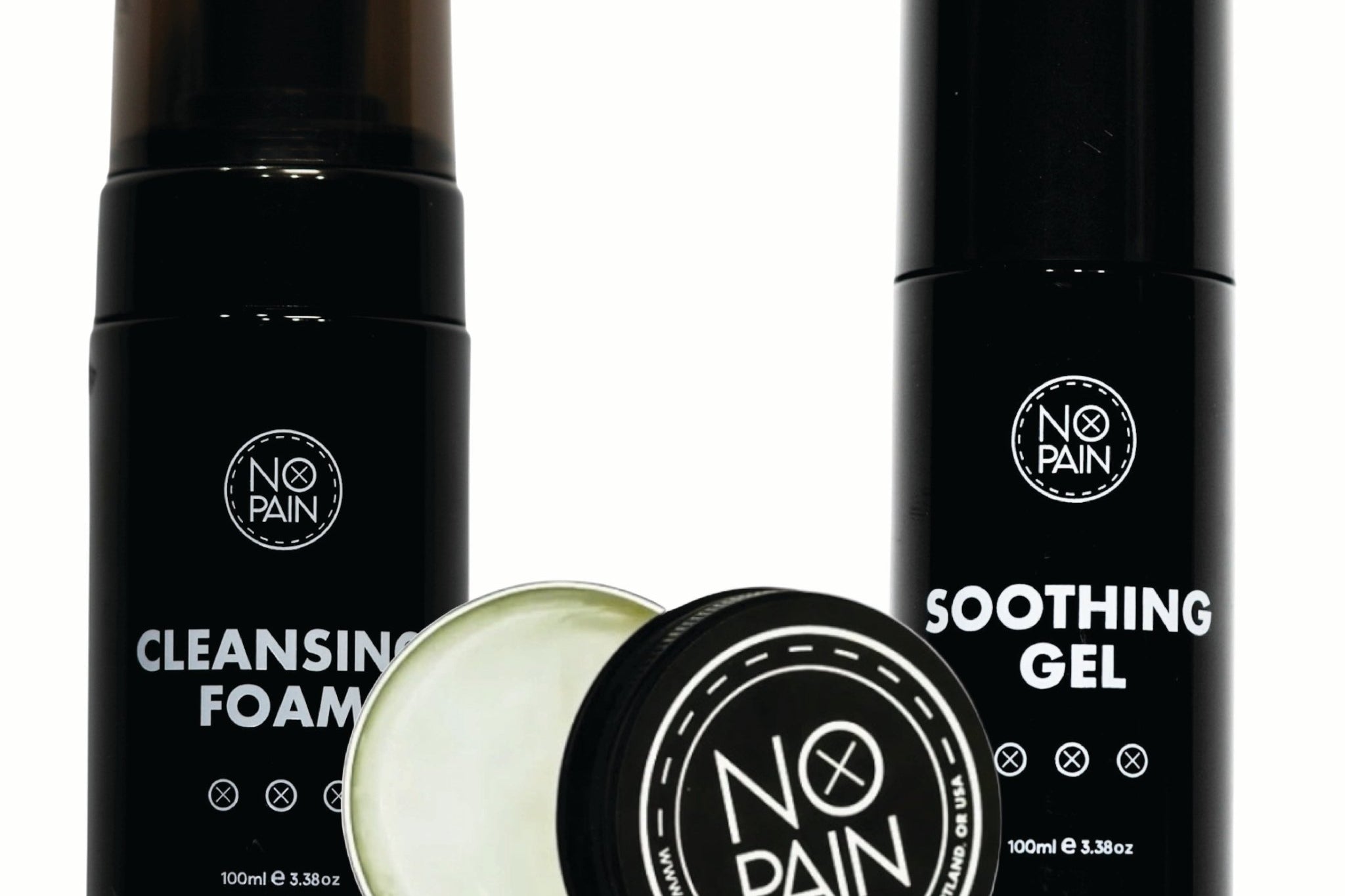
Active aftercare covers two phases. In the first three days, a lightweight, fast-absorbing soothing gel keeps the surface calm while the skin is most inflamed. From day three onward, an aftercare balm provides the deeper moisture the dermis needs as it remodels. Most artists recommend running the active protocol for two to four weeks total, tapering application as the skin normalizes.
After active aftercare ends, a healed tattoo still benefits from regular moisturizing. Hydrated skin shows ink more clearly than dry or rough skin. It is not the same as the intensive first-weeks protocol, but keeping tattooed skin moisturized as part of a normal skincare routine does make a visible difference over time.
Both Stages in One Kit
Soothing gel for the first three days. Aftercare balm from day three onward. The full healing window, covered.
Shop Aftercare Kit →Frequently asked questions
Can a tattoo look fully healed before it actually is?
Yes, and this is one of the most common points of confusion. The surface, meaning the outer skin layer, can look completely normal at three weeks: no scabbing, no peeling, even color. But the dermis beneath it is still remodeling. The milky or hazy overlay is the giveaway that the process is still running. If that overlay is gone, the touch test is clear, and sensation is normal, healing is likely complete. If any of those checks still shows something, more time is needed even if the tattoo looks fine at a glance.
Why does my tattoo look dull or faded after peeling?
This is the onion skin phase, and it is normal. After the outer skin peels away, a fresh layer of epidermis regenerates over the tattoo. While this layer is still thicker and less translucent than mature skin, it mutes the appearance of the ink below. The colors have not faded. They are just being viewed through a temporarily opaque layer. As the epidermis continues to settle and thin out over the following weeks, the true colors will show through more clearly.
Does healing time differ depending on where on the body the tattoo is?
Yes, noticeably. Placements with thin skin, high friction, or significant movement heal more slowly and can show more variation during the process. The hands, fingers, feet, inner elbows, and backs of the knees are all slower than areas with thicker, more stable skin. Ribs, collarbones, and areas close to bone can also be slower due to the reduced blood flow and tissue thickness around bony areas. Areas that are routinely covered by clothing and protected from friction generally heal more predictably than exposed, high-traffic areas.
When can I use sunscreen on a healing tattoo?
Not until the surface is fully healed. During the active healing phase, the skin barrier is compromised and not ready for sunscreen: applying it to broken or actively healing skin can cause irritation and interfere with the process. Once surface healing is complete and the skin is smooth and closed, SPF can be applied as normal. For a healing tattoo still in the first few weeks, the better approach is physical coverage, clothing or shade, rather than sunscreen. Once healed, daily SPF on tattooed areas that will be in the sun is one of the most effective things you can do for long-term ink quality.
What does it mean if the ink lines still feel raised months later?
If the lines still feel distinctly raised at the two or three month mark, a few things might be happening. Dense linework or heavy shading takes longer to fully settle than lighter work, and some styles with thick outlines can retain a slight texture for longer. It can also indicate that the tattoo healed with some scarring, which can happen if the skin was over-worked during the session, if aftercare was not followed closely, or if the skin had an adverse reaction. Raised lines with visible texture differences that persist past three to four months are worth discussing with a dermatologist or your artist to understand what you are looking at.
How do I tell if my tattoo healed badly versus just not being fully healed yet?
Timing and visual quality together usually tell the story. A tattoo that is still in the milky phase at six weeks is most likely still healing. A tattoo where certain areas look clearly different from others, with patchy fading, significant color loss, or areas where the ink looks missing or uneven compared to what was put in, may have healed with some ink loss. Some ink loss during healing is normal. Significant patchiness or large areas of color that fell out during the healing window usually indicate that something in the aftercare, placement, or skin condition affected how the ink anchored. Your artist can assess whether what you are seeing is within the normal healing range or something that warrants a touch-up after the full healing period is complete.