



Can You Use Bactine on a New Tattoo?
Bactine is one of the most common household antiseptics, and it is often the first thing people reach for when they have a fresh wound. When a new tattoo is stinging and looks raw, it seems like an obvious choice. The short answer is that Bactine is not recommended for healing tattoos, and using it regularly on a new tattoo can slow healing, damage ink, and irritate the skin.
That said, the full picture is more nuanced. There is a difference between how Bactine is used in a professional studio setting versus applying it at home on a healing tattoo. Understanding what is in Bactine and why it causes problems helps clarify when it is and is not appropriate.
What Is in Bactine?
Standard Bactine contains two active ingredients: benzalkonium chloride and lidocaine hydrochloride.
Benzalkonium chloride is a quaternary ammonium compound used as a surface disinfectant. It kills bacteria effectively on intact skin and surfaces. The problem is that it is a relatively harsh disinfectant that is not well tolerated by compromised or healing skin. It can kill not just bacteria but also the fibroblasts and keratinocytes that are actively working to repair the skin. Using it repeatedly on an open wound slows the healing process rather than helping it.
Lidocaine hydrochloride is a local anesthetic. In Bactine, it is present at a low concentration - typically 2.5% - which provides mild numbing of intact skin. Some people use Bactine on tattoos specifically for this numbing effect. However, lidocaine at low concentrations applied topically to broken skin absorbs erratically, and some people develop contact sensitivities to topical lidocaine over repeated use. It is also not the right numbing mechanism for ongoing tattoo healing.
Bactine Max is a stronger formulation with 4% lidocaine. It is this version that became popular in the tattoo industry, but for a specific and limited use case that is very different from home aftercare.
How Artists Use Bactine in the Studio
Many tattoo artists dilute Bactine Max or use it as a rinse solution during the session itself. Applied during the tattooing process, it helps keep the area clean, reduces surface inflammation, and the lidocaine in it provides some mild numbing that can ease discomfort as the session progresses. This is a professional in-session use, applied in controlled amounts to skin that is actively being worked.
This is very different from taking Bactine home and applying it to a healing tattoo twice a day for two weeks. The in-session use is brief and followed immediately by proper aftercare. Home use of Bactine as a daily cleaning agent replaces the role that a proper tattoo cleanser should play, and it is not suitable for that role.
Why You Should Not Use Bactine at Home on a Healing Tattoo
Using Bactine regularly on a fresh tattoo at home causes several problems:
It disrupts wound healing. A fresh tattoo is an open wound in the dermis. The healing process depends on specific cellular activity - fibroblasts laying down collagen, keratinocytes migrating to close the surface, macrophages clearing debris. Benzalkonium chloride is cytotoxic at the concentrations found in Bactine. Regular application can kill the cells that are doing the repair work, extending healing time and potentially increasing the risk of scarring.
It can damage ink retention. Ink sits in the dermis and the immune system is actively working to wall it off. Disrupting the healing process with harsh disinfectants can affect how ink settles, potentially leading to patchiness or dullness in the healed result.
It is not formulated for this use. Bactine is approved by the FDA for first aid on minor cuts, scrapes, and burns. The label explicitly states it is not for use inside the body, in eyes, or for serious wounds. A fresh tattoo with significant open skin area falls outside its intended scope.
Lidocaine sensitivity can develop. Repeated topical application of lidocaine to broken skin can sensitize some people to it, causing contact dermatitis reactions. This is a real risk with prolonged use.
What to Use Instead
The cleaning routine for a healing tattoo should use a gentle, fragrance-free soap or a dedicated tattoo cleanser. Look for something with no alcohol, no fragrances, and no harsh antibacterial agents. The goal of cleaning is to remove excess plasma, dried blood, and surface bacteria without disrupting the healing tissue underneath.
The standard routine:
- Wash gently with clean hands twice to three times per day using a mild cleanser
- Pat dry with a clean paper towel (not a shared cloth towel)
- Apply a thin layer of aftercare gel or balm to keep the skin hydrated
Proper hydration is what supports healing at this stage, not disinfection. The body is capable of managing the wound environment on its own once surface contamination is removed by gentle washing. Aggressive antiseptic use does more harm than good.


The Complete Aftercare Kit
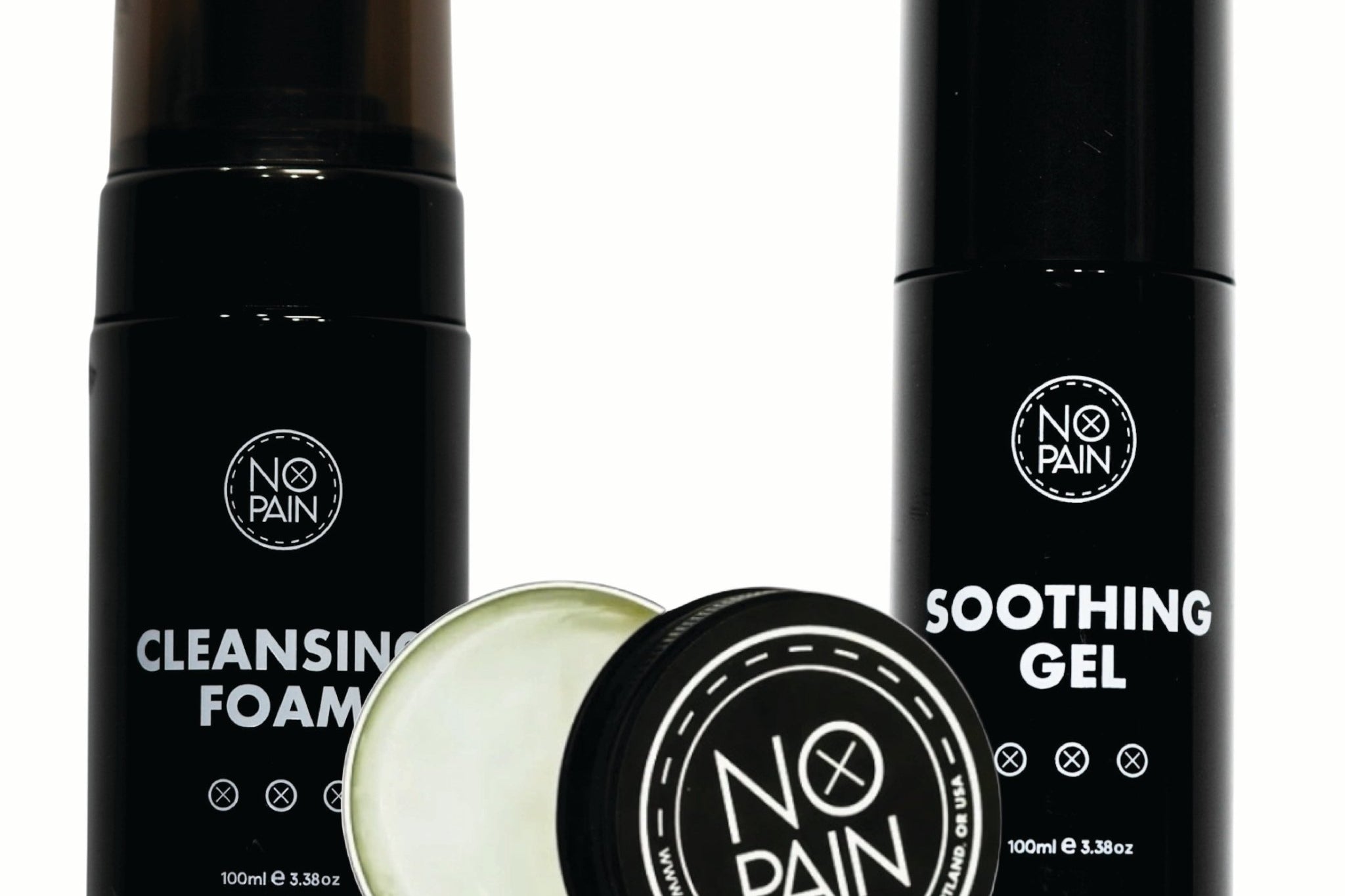
The Aftercare Bundle gives you everything you need for the full healing period - a dedicated cleanser, soothing gel for the first three days, and aftercare balm for the rest of the recovery - without any of the harsh chemistry that makes products like Bactine unsuitable for daily tattoo aftercare.

Frequently Asked Questions
Can Bactine be used to clean a new tattoo?
It is not recommended. While it is an antiseptic, benzalkonium chloride is too harsh for the healing dermis and can disrupt the cellular repair process. Use a gentle, fragrance-free soap formulated for sensitive skin or a dedicated tattoo cleanser instead.
My artist used Bactine during the session. Is that normal?
Yes, many artists use diluted Bactine Max as a rinse solution during the tattooing process. This is a short-duration, professional use that is different from applying it at home every day during healing. The in-session use is fine; daily home use as a cleanser is not.
Can Bactine numb a tattoo while it heals?
The lidocaine in Bactine provides mild numbing on intact skin, but applying it to healing skin for pain relief is not a good trade-off. The disinfectant component causes more harm to the healing process than the temporary numbing is worth. If the healing tattoo is painful beyond normal sensitivity, this may indicate a problem worth checking with your artist or a doctor.
What if I already used Bactine on my tattoo?
A few applications will not ruin a tattoo. Switch to a proper cleanser and aftercare routine going forward. Watch for signs of contact sensitivity - increased redness, rash, or unusual irritation - which can sometimes develop with repeated lidocaine exposure on broken skin.
Is Bactine better than hydrogen peroxide on a tattoo?
Neither is recommended. Hydrogen peroxide is even more damaging to healing tissue than Bactine - it actively destroys the new cells forming at the wound site and will visibly lighten or damage tattoo ink. Bactine is the lesser of the two problems, but neither should be used as a routine aftercare product.
Can I use Bactine once, just to disinfect?
A single application is unlikely to cause lasting harm, but it provides no meaningful benefit over washing with a gentle soap. A proper soap removes bacteria just as effectively without the harsh chemistry. There is no scenario where Bactine is the right tool for tattoo aftercare at home.