


Can You Over-Wash a New Tattoo?
Yes. Washing a new tattoo too frequently is one of the less-discussed aftercare mistakes, and it creates real problems. Most people focus on whether they are washing enough. Over-washing is the opposite failure mode, and it causes its own set of issues.
What Over-Washing Does to a Healing Tattoo
A fresh tattoo is an open wound. The skin's natural moisture barrier has been disrupted across the tattooed area. In the first days of healing, the skin is actively trying to rebuild this barrier by producing lipids and protective proteins. Repeated washing strips these materials away faster than the skin can replace them.
The result is a healing tattoo that dries out between washes, forms thicker and more adherent scabs than it otherwise would, and extends the inflammatory phase because the barrier repair process keeps getting interrupted. Over-washed tattoos often show more pronounced scabbing, more itching, and longer healing timelines than tattoos washed at the appropriate frequency.
There is also the matter of what is being washed away. Gentle washing removes bacteria, excess plasma, and environmental contamination. Aggressive or frequent washing also removes the plasma and protective fluids that the skin produces as part of the normal healing response. Some of what looks like excess plasma on a fresh tattoo is actually the skin doing its job.
How Often to Actually Wash a New Tattoo
Twice per day is the right frequency for most people during the first two weeks. Morning and evening, or spaced roughly twelve hours apart, covers the hygiene requirement without stripping the skin of its healing materials.
There are situations that warrant an additional wash: if the tattoo is accidentally contaminated (touched by someone's unwashed hands, contact with a dirty surface, exposure to animal contact or soil), or if the area sweated heavily during physical activity. In these cases, washing immediately is appropriate regardless of schedule. The goal is hygiene in response to real contamination, not washing on a schedule for its own sake.
If you shower once or twice a day, washing the tattoo during one of those showers is typically sufficient. You do not need a separate dedicated tattoo-wash routine outside of showering unless there is a specific contamination reason.
Signs You Are Washing Too Much
The tattoo feels tight or uncomfortable after washing and the tightness does not resolve with moisturizing. The skin around the tattoo is becoming red and irritated, not from the tattooing itself but from the washing. The tattoo is healing with heavier or more cracked scabbing than you have experienced with previous tattoos done at a similar placement. The skin feels perpetually dry despite moisturizing regularly. These patterns suggest the washing frequency is outpacing the skin's ability to maintain its healing environment.
Correct Washing Technique
How you wash matters as much as how often. Use a fragrance-free liquid soap applied with clean fingers. Do not use a cloth, sponge, or loofah, as these can harbor bacteria and introduce friction to the healing wound. Lather gently and rinse completely. The wash should take about thirty seconds. Thorough is not the same as aggressive.
Avoid high-pressure water directly on the tattoo. Shower spray at a normal distance is fine. A jet of water from a handheld showerhead aimed directly at a healing tattoo is not. The goal is to rinse, not to blast.
Water temperature should be lukewarm to cool. Hot water opens pores, increases blood flow to the surface, and can cause the tattoo to weep more plasma. It also feels uncomfortable on a raw healing area. Cool or lukewarm water is more effective and more comfortable.
What to Do After Washing
Pat dry with a clean paper towel. Do not rub or use a cloth towel. Cloth towels hold moisture and bacteria and can snag forming scabs. Paper towels are single-use and disposable. Pat until the surface is dry, then allow the skin to air for five to ten minutes before applying aftercare products.
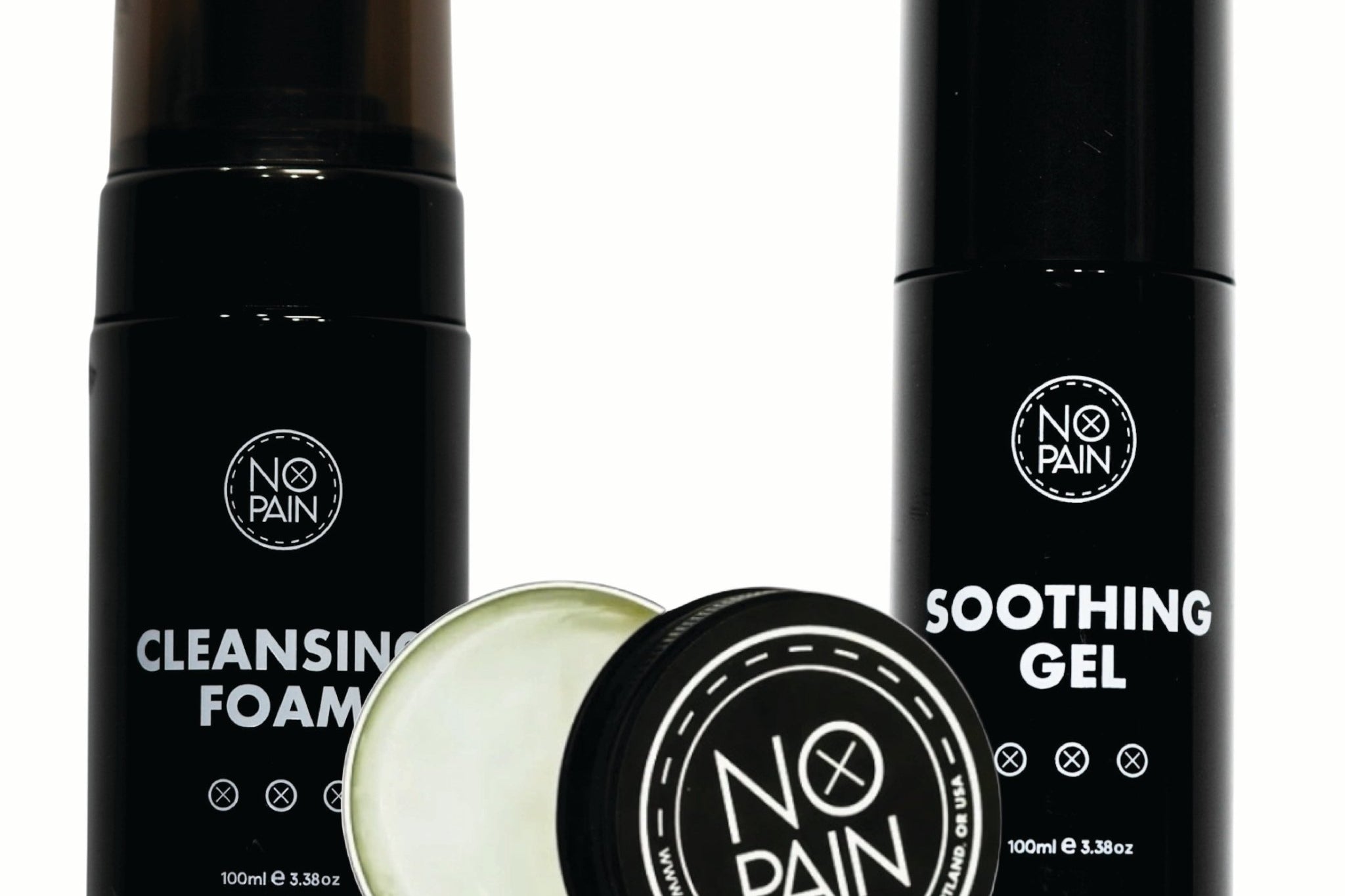
Apply soothing gel immediately after each wash for the first three days. The gel reduces the inflammation that washing can provoke and replaces the moisture that water and soap remove. It also creates a light barrier that slows the rate at which the healing skin dries out between washes.

From day three onward, switch to a nourishing balm applied after each wash and once or twice additionally during the day. The balm creates the moisture barrier needed to allow the scab phase to proceed without the skin drying out between washes.
Everything You Need to Wash and Heal Right
The Aftercare Bundle includes soothing gel for the first three days and balm from day three onward: the complete protocol for a new tattoo.
Shop Aftercare Bundle →Frequently Asked Questions
What counts as over-washing? Is three times a day too much?
For most people, three times per day is edging into over-washing territory unless there is a specific contamination reason for the third wash. The twice-daily baseline covers the hygiene need. A third wash on a day when you worked out heavily or had direct skin contact with a potentially contaminated surface is reasonable. Three routine washes per day without contamination-related cause will deplete the skin's barrier materials faster than they can be restored.
I was told to wash more often by my artist. Should I follow their advice?
Yes, follow your artist's instructions. Some artists recommend three washes daily, particularly for wet-heal methods or specific skin types. Artist instructions take precedence because they know the specifics of the session: how much the skin was worked, what your skin reacted like, and what they believe your particular heal requires. The twice-daily baseline in this guide is general advice for typical heals; your artist's instructions are specific to you.
What soap should I use to wash my new tattoo?
A fragrance-free, dye-free liquid soap is the standard recommendation. Avoid bar soaps (which can harbor bacteria in the soap itself), antibacterial soaps with triclosan (which can cause irritation), and anything with exfoliants, acids, or retinol. Simple, unscented liquid hand soap or gentle body wash with minimal ingredients covers what you need.
Can I use too much soap when washing?
Using more soap than necessary does not help and can leave residue if not fully rinsed. A small amount, lathered between your fingers before touching the tattoo, is sufficient. What matters is that it is fully rinsed. Soap residue left on a healing tattoo can cause irritation and dryness.
Does it matter if I wash morning versus evening?
The timing matters less than the spacing. Two washes twelve hours apart is more effective than two washes close together (like morning and midday). If you shower at night and not in the morning, an evening shower wash plus a morning rinse without soap is a reasonable adaptation. The key principle is consistent hygiene without stripping the skin's healing environment.
My tattoo feels sore after washing. Is that normal?
Some sensitivity after washing is normal in the first few days, particularly when water first contacts the fresh wound. Brief discomfort during the wash that resolves once you apply aftercare products is within the expected range. Pain that intensifies after washing, persists for an extended period, or is accompanied by increasing redness may indicate that the washing method is too aggressive or that the soap is irritating the skin. Switching to a gentler soap and reducing pressure and duration of washing is the first adjustment to try.