

Ask ten people with tattoos and you'll get ten different answers. Some swear the linework was the worst part; others say the hours of shading broke them. Both are right, because outline and shading don't hurt the same way. They produce two distinct sensations, and which one feels worse usually comes down to the person, the placement, and how long the session runs.
In this guide
- What the outline feels like
- What shading feels like
- Which one is actually worse
- Managing both phases
- FAQ
What the outline feels like
The outline is done with a tight grouping of needles (a round liner) moving in a single pass to cut a precise line. The sensation is sharp, focused, and immediate, often described as a hot scratch or a fine stinging along the path of the needle. It's intense in the moment but moves quickly. Each line is a brief burst of pain, then it's over and the artist moves to the next section.
For most first-timers, the outline defines what they expected getting a tattoo to feel like. It's the classic tattoo pain: acute, localized, unmistakable.
What shading feels like
Shading uses a wider spread of needles (a magnum) going back and forth over the same area repeatedly to build up tone and color. The sensation is broader and less sharp, more of a burning, abrasive feeling, like a bad sunburn being rubbed. It doesn't have the spike of a fresh line, but it doesn't stop either.
Three things make shading harder to endure than it sounds:
Your skin is already worked. Shading comes after the outline. The skin is inflamed, your adrenaline has worn off, and your natural pain tolerance has dropped from where it started. The same sensation you could handle at the beginning of the session lands harder two hours in.
It covers the same ground repeatedly. The artist is returning to areas that are already raw and tender. Each pass over inflamed skin compounds the sensation. By the end of a shading section, the area can feel genuinely burned.
It takes longer. On most pieces, shading and color fill take more time than linework. You're enduring a grinding, repetitive sensation for an extended stretch, not a series of quick passes.
Which one is actually worse
The outline is more intense moment-to-moment. The shading is more difficult to endure overall.
Most people find the outline sharper and more startling, especially at the start of a session. But when you ask which part was hardest to sit through, the answer is usually the shading, because of the duration, the worked skin, and the grinding repetition. A long shading session on a large piece is where most people hit their limit, not during the linework.
“Whenever I sit down to get tattooed and my artist (usually @tbonetat2) starts the outline, I immediately start thinking ‘Why am I paying this guy to make me feel like this?’ The outline, for me, is always way more painful than anything else. I have to talk myself through it, thinking that the lines will be done soon. And I get through it.”
— Michael Hollman, founder of No Pain Tattoo
Placement also matters. Shading over a bony area (the spine, the ditch of the elbow, the ribs) combines the already-difficult shading sensation with an already-difficult location. That combination is where sessions get genuinely rough.
Managing both phases
The cleaner answer than arguing which phase is worse is to take both seriously and prepare for both. Maximum strength numbing cream applied 90 to 120 minutes before the session under wrap dulls the outline's initial sharpness and reduces the burning sensation of shading. For longer sessions where the shading runs for hours, numbing spray on broken skin mid-session extends that relief through the parts of the appointment where the skin is most worked.

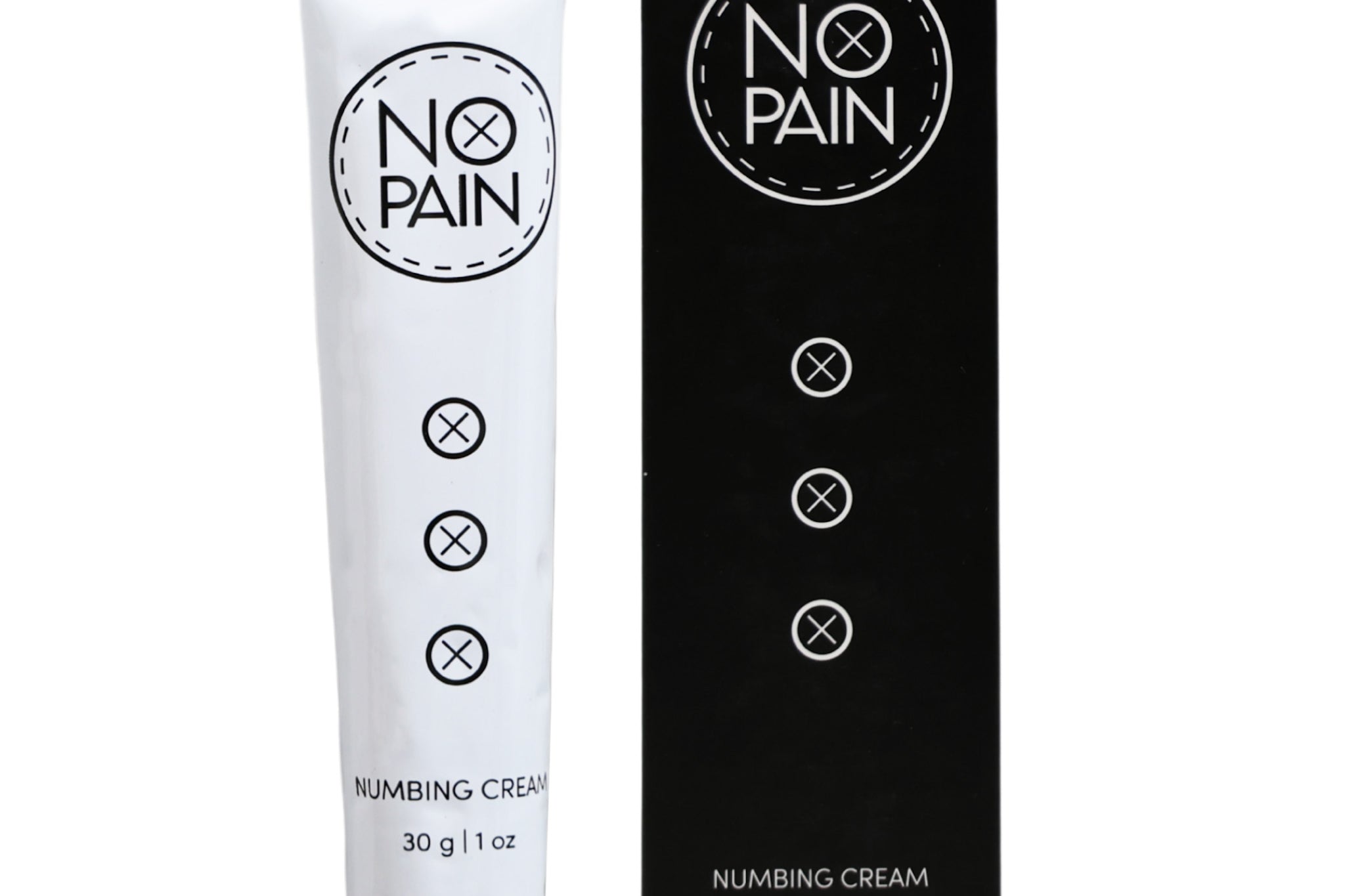
Numbing cream for pre-session application (90 to 120 minutes before, under wrap) plus numbing spray for mid-session use on broken skin. Covers both the outline and the long shading stretch. Thick, slow-absorbing formula that penetrates deeper and lasts longer. Backed by a money-back guarantee.
FAQ
Does shading hurt more than the outline?
Usually not in terms of sharpness, but often in terms of overall difficulty. The outline produces a more acute, stinging pain. Shading produces a broader, burning sensation that compounds over time as the skin becomes increasingly raw. Most people find the outline more jarring in the moment but the shading harder to endure over a long session.
Why does shading feel like burning?
The magnum needles used for shading work back and forth over the same area repeatedly, inflaming the skin progressively. The sensation is similar to friction burn or severe sunburn being rubbed. It doesn't have the same sharp spike as linework, but the repetitive irritation to already-inflamed tissue produces a persistent burning feeling that intensifies the longer the section runs.
Does color fill hurt as much as shading?
Color fill uses a similar technique to shading and produces a similar sensation. It can feel slightly more intense in some cases because saturating an area with color often requires multiple passes to achieve full coverage. The same logic applies: it's not the sharpest pain, but the duration and repetition are what make it hard to sit through.
Why does the shading hurt more later in the session?
By the time shading starts, your skin is already inflamed from the linework, your adrenaline has faded, and your baseline tolerance has dropped. The same sensation that would have been manageable at the start of the session lands harder two or three hours in. This is one reason long sessions on large pieces are genuinely difficult even for experienced clients.
Can numbing cream help with both the outline and shading?
Yes. Applied correctly 90 to 120 minutes before the session under wrap, maximum strength numbing cream takes the edge off both phases. It reduces the sharp sting of linework and the burning sensation of shading. For sessions long enough to outlast the cream's duration, numbing spray can be applied mid-session on broken skin to extend the relief into the shading phase.
Is it normal to feel more pain during shading than the outline?
Yes, and it's common enough that it surprises people who found the linework manageable. The shift isn't because shading is inherently worse: it's because you're starting shading with skin that's already been worked, adrenaline that's already worn off, and a session that's already been running for a while. All of those factors combine to make the shading phase feel harder than it might otherwise.