


Yes, you can be allergic to tattoo ink. True allergies are uncommon, but they happen, and they can appear immediately after a tattoo, during the healing phase, or on a fully healed tattoo months or years later. Red ink is the most frequent trigger by a wide margin, though other pigments can cause reactions too. If you're experiencing something that feels wrong on your tattoo, this guide will help you understand what you're likely looking at and what to do about it.
This guide is for informational purposes only and is not a substitute for professional medical advice. If you believe you're having an allergic reaction, see a doctor or dermatologist.
In this article
- Allergy vs. normal healing vs. infection
- Symptoms of a genuine allergic reaction
- Which ink colors are most reactive
- Delayed reactions on healed tattoos
- What to do if you suspect a reaction
- The aftercare variable
- Frequently asked questions
Allergy vs. Normal Healing vs. Infection
The hardest part of identifying an ink allergy is that several different things look similar in the first two weeks after a tattoo. Normal healing includes redness, swelling, warmth, and some weeping, all of which can look alarming if you're not expecting them. Understanding the difference between what's normal, what's an infection, and what's an allergic reaction is the starting point.
Normal healing follows a predictable arc. Redness and swelling peak in the first 48 to 72 hours, then steadily improve. The area feels warm but not increasingly painful. Weeping plasma and excess ink tails off within a few days. By day five or six, the skin should be peeling or flaking and clearly moving toward resolution.
Infection moves in the opposite direction: symptoms worsen rather than improve past day three. The area becomes increasingly painful, hot, and red. Discharge turns cloudy, yellow, or green and may have a foul smell. A fever may develop. If you see any of these signs, this is a medical situation and needs to be treated with antibiotics. See a doctor promptly.
Allergic reaction typically presents differently from both. The characteristic sign is an intense, persistent rash or raised texture confined to one specific color area of the tattoo, not the whole piece. The area may itch severely. It may not fully resolve the way normal healing does. It can appear immediately or long after the tattoo has otherwise healed.
Symptoms of a Genuine Allergic Reaction
A persistent, intensely itchy rash. A bumpy, scaly, or papular rash localized to one ink color. This is the most common presentation. The rash doesn't settle the way normal healing does; it lingers or worsens.
Swelling that gets worse after the initial period. All new tattoos swell. Allergic swelling is swelling that increases after the first few days, or a healed tattoo that suddenly puffs up and feels raised or tender without any obvious cause like sun exposure or injury.
Blistering or persistent oozing. Small blisters or weeping that continues well past the normal healing window, not caused by picking or trauma.
Granulomas. Small, hard bumps that form as the immune system attempts to isolate pigment particles it's treating as foreign. These can appear months or years after the tattoo was placed and are more common with red, purple, and some blue pigments.
Color-specific presentation. This is the most useful diagnostic clue: if the reaction is limited to one color in the tattoo and the surrounding areas look normal, an ink-specific reaction is the likely explanation.
Which Ink Colors Are Most Reactive
Red ink has been the most common source of tattoo allergic reactions for decades, and it remains so today. Historically, red pigments contained mercury (cinnabar) and other metallic compounds that triggered immune responses. Modern high-quality inks have moved away from those formulations, but the specific organic compounds used to create red and orange-red shades can still be reactive for some immune systems. If you have a red-specific reaction on an otherwise fine tattoo, red pigment is almost certainly the cause.
Other colors can cause reactions, but far less often. Some blue and green pigments have been associated with reactions in isolated cases, and certain purple shades (which are often made by mixing red and blue) carry some of red's reactive potential. Yellow can occasionally cause problems as well.
Black ink from high-quality carbon-based sources is considered the most biocompatible tattoo pigment available and genuine allergies to it are very rare. Lower-quality black inks that use different compounds are a different story, which is one of the reasons studio ink quality matters.
Delayed Reactions on Healed Tattoos
One of the more unsettling aspects of ink allergies is that they don't always appear during healing. A tattoo can look and feel completely normal for months or years, then develop a reaction. This happens because the immune system's response to a foreign substance can change over time, particularly with substances that remain permanently in the tissue.
Delayed reactions on red ink are the most documented. A tattoo with red that healed without issue can become raised, itchy, and reactive years later. Sun exposure is a known trigger for delayed reactions, particularly in red and yellow pigments; UV light can alter the chemical structure of certain pigments and prompt an immune response that wasn't there before. Granulomas appearing long after a tattoo was placed are almost always delayed immune reactions.
If a healed tattoo suddenly becomes raised, itchy, or reactive with no clear cause, a dermatologist referral is the right step. Skin patch testing can often identify the specific pigment causing the response.
What to Do If You Suspect a Reaction
Don't panic. Most reactions are mild sensitivities, not medical emergencies. The severity varies widely.
Contact your tattoo artist. Let them know what's happening and ask for the specific brand and type of ink they used, including any lot numbers if available. This information is useful for your doctor. A reputable studio will have records of the inks used for your appointment.
See a doctor or dermatologist. This is the step that matters most. A doctor can distinguish between a true allergy, a different skin condition being triggered by the pigment (like eczema or psoriasis), and an infection. Treatment options include topical corticosteroid creams, antihistamines, and in persistent cases, steroid injections or other interventions. Self-treating a genuine allergic reaction is not a path to resolution.
Don't try to speed-heal it with aggressive products. Applying things to the reacting area that aren't prescribed or recommended by a doctor can complicate the picture and make it harder to assess what's happening.
The Aftercare Variable
During the first two weeks after a tattoo, it can be genuinely difficult to tell whether a reaction is coming from the ink or the aftercare product you're using. Many common aftercare ingredients (fragrances, preservatives, petroleum derivatives, and certain plant extracts) are themselves known contact allergens. A reaction to an aftercare product can look almost identical to an ink sensitivity in those early days.
Using fragrance-free, petroleum-free aftercare with minimal ingredients removes a major source of confusion. If a reaction still appears on a specific ink color when your aftercare products are clearly non-reactive, you have a much cleaner picture for your doctor: the ink is almost certainly the cause. If you're using a product with fragrances or common irritants and you develop a reaction, you've introduced a variable that's hard to separate from the ink itself.

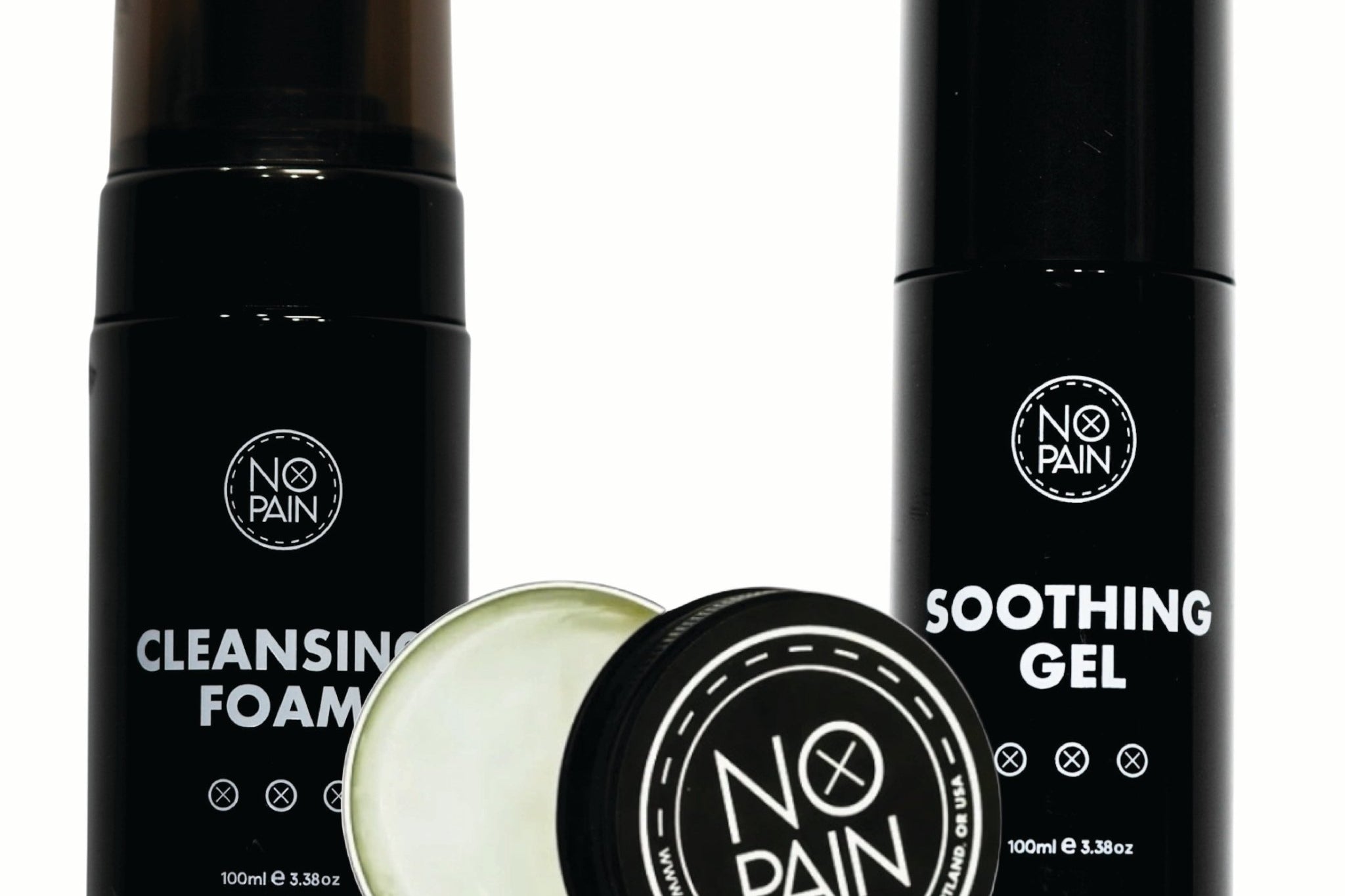
Soothing gel for the first few days, nourishing balm from day two or three onward. Both fragrance-free, petroleum-free, and formulated with minimal ingredients. Eliminates your aftercare as a variable if you're trying to isolate a reaction.
Frequently asked questions
Can you be allergic to tattoo ink?
Yes. Tattoo ink allergies are real, though true allergies are uncommon relative to the number of tattoos placed every year. Red ink is the most frequent trigger. Reactions can appear immediately, during healing, or on a fully healed tattoo months or years later. If you suspect a reaction, see a doctor or dermatologist rather than attempting to self-treat.
What does a tattoo ink allergy look like?
The most characteristic sign is an intense, persistent rash or raised texture confined to one specific color in the tattoo, while the surrounding areas look normal. The rash may be bumpy, scaly, or papular and will typically itch severely. Swelling that worsens after the first few days, persistent blistering, and small hard bumps (granulomas) are also associated with allergic reactions. Color-specific presentation is the key diagnostic clue that distinguishes a reaction from an infection or normal healing.
Which tattoo ink color causes the most allergic reactions?
Red, by a wide margin. Red pigments have historically contained compounds more reactive to human immune systems than other colors. Modern ink formulations are safer than older ones, but red and orange-red pigments can still trigger reactions in some people. Other colors cause reactions far less often. High-quality carbon-based black ink is considered the most biocompatible pigment and genuine allergies to it are very rare.
Can a tattoo allergy appear years after getting the tattoo?
Yes. Delayed reactions on healed tattoos are documented, particularly with red and yellow pigments. Sun exposure is a known trigger: UV light can alter the chemical structure of certain pigments and prompt an immune response that wasn't present before. A healed tattoo that becomes raised, itchy, or develops small bumps without obvious cause warrants a dermatologist visit. Skin patch testing can often identify the specific pigment responsible.
How do I know if my tattoo is reacting or just healing?
Normal healing improves steadily after the first 72 hours. If redness, swelling, and discomfort are getting better day by day, you're likely healing normally. If symptoms are worsening past day three, or if a specific color area is noticeably more reactive than the rest of the tattoo, that's worth investigating. An infection will produce worsening pain and heat, possible colored discharge, and sometimes fever. An allergic reaction typically produces intense localized itching and a rash-like texture specific to one color. When in doubt, see a doctor.
Does using fragrance-free aftercare reduce the risk of a reaction?
It doesn't prevent an ink allergy, but it eliminates a major source of confusion during the healing period. Many common aftercare ingredients (fragrances, preservatives, and certain plant extracts) are contact allergens themselves. If you develop a reaction while using a fragrance-free, minimal-ingredient aftercare product, the ink is almost certainly the cause. If you're using a product with fragrances and develop a reaction, you've created a variable that's difficult to separate from the ink. Using non-reactive aftercare gives you a cleaner picture and your doctor more useful information.