


If your healing tattoo feels tight, looks dull, and is forming hard, raised scabs instead of thin flaking skin, it is drying out. This is one of the most common aftercare mistakes, and it is fixable at almost any stage, but it needs to be addressed quickly. Hard scabs attached to the skin are attached to ink. When they crack or come off prematurely, they take some of that ink with them.
Here is why it happens, what it looks like, and how to rescue a tattoo that has dried out before the damage becomes permanent.
In this article
- Why tattoos dry out
- What a drying-out tattoo looks and feels like
- How to rescue a dry tattoo
- How to prevent it from happening again
- Frequently asked questions
Why Tattoos Dry Out
A healing tattoo needs moisture to form thin, flexible scabs rather than hard, cracking ones. When that moisture is absent or insufficient, the surface dehydrates. There are a handful of reasons this happens.
The most common is simply not applying enough product often enough. People underestimate how much moisture a healing tattoo needs in the first week. Two thin applications a day is not enough for most people in most environments. Three to four light applications keeps the skin in the right zone without over-saturating it.
Using the wrong product is a close second. Heavy, petroleum-based ointments like Vaseline or A+D create an occlusive seal on the surface that traps heat and prevents the skin from breathing. They feel like they are moisturizing but they actually interfere with the healing process and can cause more problems than they solve. On the other end, using nothing at all or using a product formulated for dry hair rather than skin leaves the wound exposed and dehydrating.
Environment plays a bigger role than most people expect. Dry indoor air, air conditioning running all day, low-humidity climates, and sitting in front of a desk fan all pull moisture from the skin faster than the body can replenish it. Tattoos in these environments need more frequent application than tattoos healing in a humid climate.
Over-washing is less obvious but also a factor. Washing the tattoo more than two to three times a day strips the skin's natural oils along with bacteria. After each wash the skin is temporarily more vulnerable to drying, so if you are washing frequently without immediately moisturizing after, you are running a cycle that works against healing.
What a Drying-Out Tattoo Looks and Feels Like
The earliest sign is tightness that does not go away. Some tightness in the first day or two is completely normal as the inflammatory swelling recedes and the skin starts to close. But tightness that is intensifying rather than easing after day two, or that pulls noticeably when you move or stretch the area, is a signal that the skin is dehydrated.
Visually, the tattoo will look dull and flat rather than slightly shiny the way properly healing skin looks during the first week. The surface may look ashy or gray around the edges. As the drying progresses, the scabbing will be thick and raised rather than thin and papery. Normal healing produces light, translucent flaking. Drying out produces hard, opaque scabs that sit above the skin surface and feel rough to the touch.
In the worst cases, those scabs crack. A cracked scab on a healing tattoo is a problem because it means the layer attached to the dermis is being mechanically disrupted. The ink in the scab comes out with it. The result is a faded, patchy tattoo that may need a touch-up to correct.
How to Rescue a Dry Tattoo
The rescue process is not complicated, but it needs to be applied consistently to work. Do not try to rush it by over-applying product or by picking at the scabs to speed things along. Both make things worse.
Start with a gentle wash. Use clean hands and a fragrance-free soap, work it lightly across the surface, and rinse with lukewarm water. Pat dry with a clean paper towel without rubbing. This step clears the surface of any dried product, dead skin buildup, and bacteria that have accumulated, and gives you a clean surface to apply aftercare to.
Immediately after patting dry, apply a thin, even layer of a lightweight soothing gel while the skin is still slightly damp. The slight dampness helps the product absorb rather than just sitting on the surface. Do not glob it on. A thin layer that disappears into the skin within a minute or two is the right amount. A thick layer that sits on top does not absorb and can trap debris.
Repeat this two to three more times over the course of the day. Keep the applications light and consistent. By the next day you should notice the scabs softening slightly and the tightness easing. Do not try to lift or peel any of the scabs while doing this — let them fall away on their own as the skin underneath hydrates and pushes them off naturally.

How to Prevent It From Happening Again
Prevention is simple once you understand what the skin actually needs during healing. The goal is to keep the surface hydrated enough to form thin, flexible scabs rather than hard ones, without creating the opposite problem of suffocating the skin under too much product.
Apply a light layer of aftercare product after every wash and any other time you notice the tattoo feeling tight or looking dry. For most people in most environments, three to four applications a day during the first week keeps things in the right range. In dry climates, air-conditioned offices, or during low-humidity winters, you may need more. The skin is telling you what it needs — respond to it rather than sticking to a fixed schedule that might not fit your conditions.
Use a product designed for healing skin. A soothing gel works well for the first three days when the skin is actively inflammatory and you want something lightweight and cooling. Once the tattoo is past the active weeping phase and into the peeling stage, transition to a light aftercare balm that provides more sustained moisture to support the new skin forming underneath. The two products address different stages of healing — using the right one at the right time makes a measurable difference.
Do not sleep with the tattoo pressed against bedding. The pressure, friction, and the dry fabric pulling against a fresh tattoo for eight hours compounds the drying problem significantly. If the tattoo is in a position where bedding would be in contact with it all night, apply a light layer before sleeping and position yourself to minimize contact if possible.
Frequently asked questions
Is my tattoo supposed to feel tight while healing?
Some tightness in the first 24 to 48 hours is normal as the swelling from the initial inflammatory response begins to recede. What is not normal is tightness that increases after the first couple of days or that feels like the skin is pulling when you move. Increasing tightness after the first day or two is the clearest early warning sign that the skin is drying out and needs more moisture.
Can I fix a tattoo that has already formed hard scabs?
Yes, in most cases. Start washing gently and applying a lightweight gel consistently, four times a day, and the scabs will soften over the next day or two. Do not try to remove the scabs manually. Let them soften naturally and fall away on their own as the skin hydrates. The goal is to stop further damage and let the skin recover — you cannot undo a scab that has already formed, but you can prevent it from cracking and taking more ink with it.
What happens if a dry tattoo scab cracks?
A cracked scab exposes the raw healing tissue underneath. The immediate concern is that the crack can be an entry point for bacteria if the area is not kept clean. The longer-term concern is that the scab piece attached to the crack is also attached to the dermis, and when it eventually comes away it may take pigment with it, leaving a light or missing patch in the tattoo. If this happens, keep the area moisturized, keep it clean, and wait until the tattoo is fully healed before evaluating whether a touch-up is needed. Many apparent ink losses from scabbing look worse before they look better.
Can you over-moisturize a healing tattoo?
Yes, and it is a real problem in the opposite direction from drying out. Over-moisturizing creates a warm, wet environment on the skin surface that can trap bacteria and slow the healing process. The sign of over-moisturizing is a raised, red, bumpy rash around the tattoo, sometimes called "bubbling." The right amount of aftercare product is a thin layer that absorbs into the skin within a minute or two. If product is still sitting visibly on the surface after a couple of minutes, you have applied too much.
How do I know if my tattoo is healing or just dry?
Normal healing produces thin, translucent, papery flaking that lifts away from the skin easily and does not feel tight or rough. The tattoo may look slightly dull during the peeling phase. Drying out produces thick, hard, opaque scabs that sit above the skin surface, feel rough or crusty, and are accompanied by tightness or a pulling sensation. If your skin is flaking lightly and you are not experiencing tightness or pain, you are likely healing normally. If the scabs are hard and raised and the area feels tight, it needs more moisture.
How long does tattoo aftercare need to continue?
The active wound phase, when the tattoo needs the most careful aftercare, is roughly the first two weeks. During the first three days, a lightweight soothing gel applied consistently is the priority. From day three through the end of the peeling phase (usually around day ten to fourteen), a light aftercare balm maintains the moisture level as the new skin forms. After the surface has fully closed and peeling is complete, you can taper off to occasional moisturizing as needed. The skin continues maturing in the deeper layers for another four to six weeks, but you do not need to maintain the same aftercare intensity for that entire period.
The Full Aftercare Routine, Start to Finish
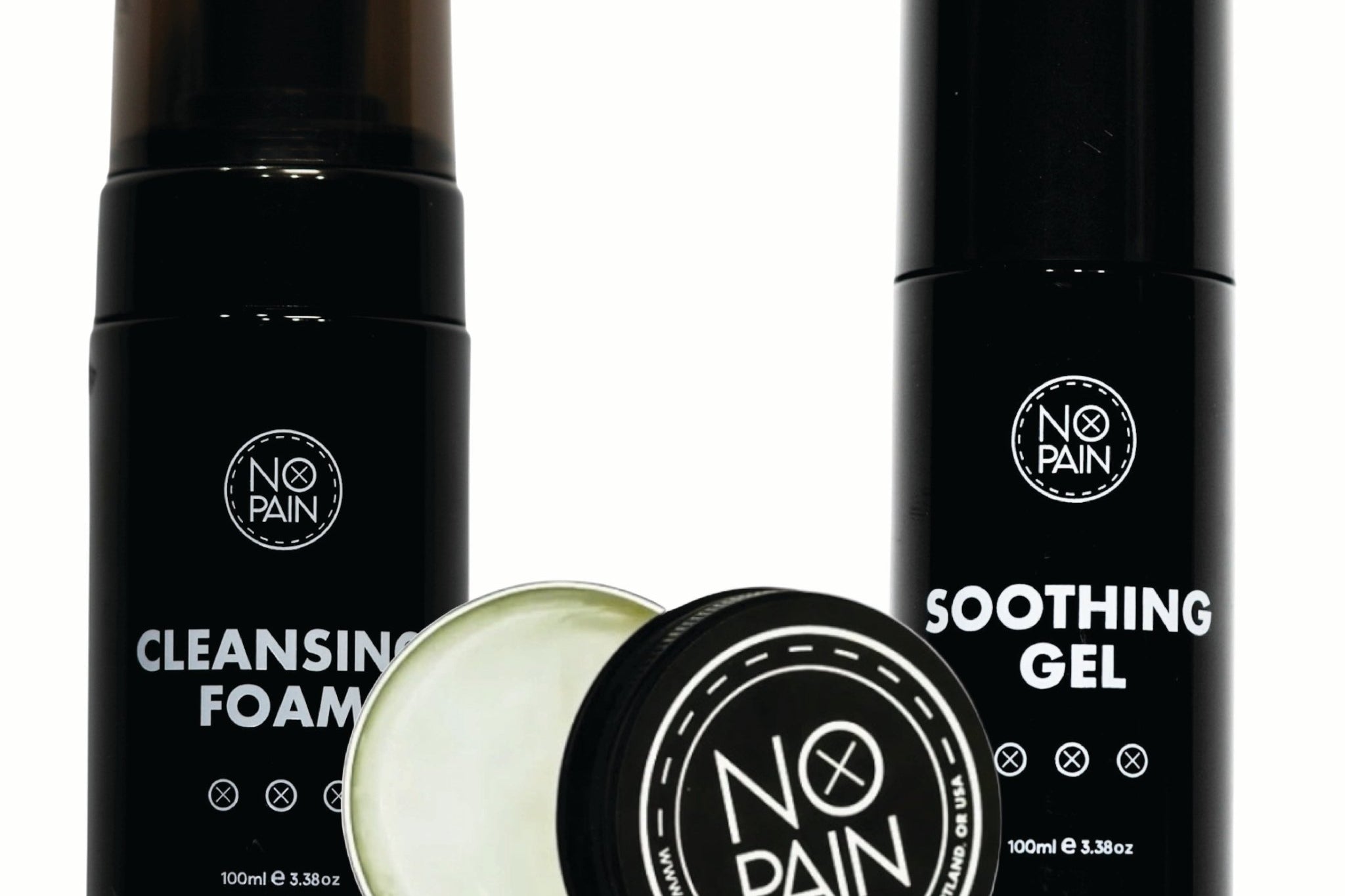
Soothing gel for the first three days. Aftercare balm from day three through the end of peeling. Both in one kit.
Shop Aftercare Kit →