

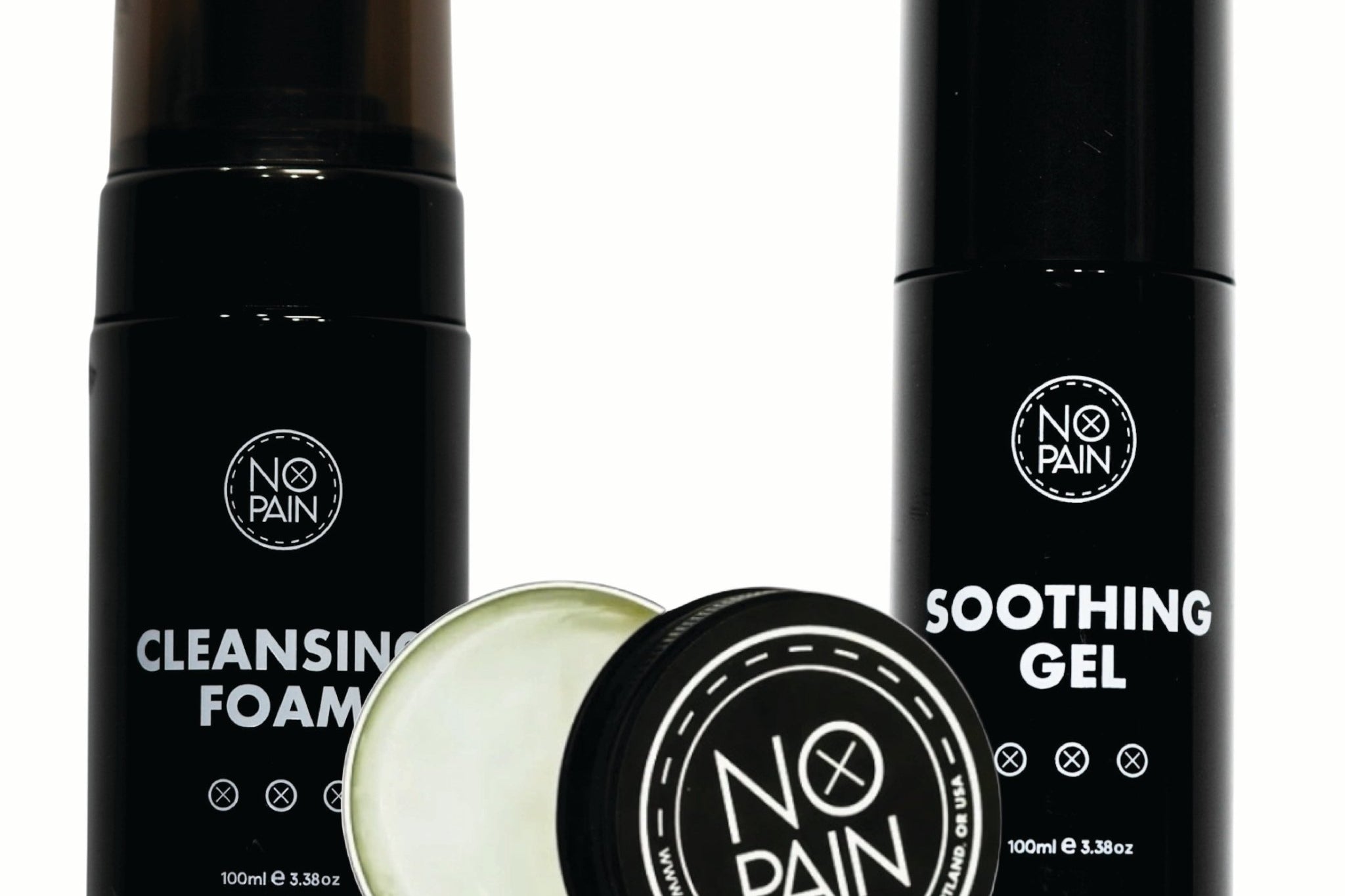

Healing a tattoo is a 50/50 partnership. Your artist puts the ink in. You're responsible for getting it to stay. This checklist covers every phase from the moment you leave the studio to the day your tattoo is fully settled.
In this article
- Phase 1: The first 24 hours
- Phase 2: Days 1 to 3
- Phase 3: Days 3 to 14
- Phase 4: Once fully healed
- FAQ
Phase 1: The First 24 Hours
Leave the wrap on. Whether your artist used cling film or an adhesive bandage like Saniderm, leave it in place. Cling film: 2 to 4 hours. Adhesive bandage: 24 hours, or as your artist instructed.
Do the first wash properly. Wash your hands first. Remove the wrap and immediately wash the tattoo with lukewarm water and a fragrance-free liquid soap or dedicated cleansing foam. Use your fingertips only, no washcloths. Rinse thoroughly. Pat dry with a clean paper towel, then let it air dry for 10 minutes.
Apply a thin layer of soothing gel. The tattoo is an open wound at this stage. A lightweight gel keeps it moist without trapping heat. Thin coat only. You should not see product sitting on the surface.
Wear loose clothing over it. Nothing tight that rubs against the healing surface. Cotton is your best first layer.
Phase 2: Days 1 to 3
Wash twice daily. Morning and before bed. Cool to lukewarm water, fragrance-free soap or cleansing foam, fingertips only, rinse thoroughly, pat dry with a paper towel. Every time.
Apply a thin layer of soothing gel after each wash. Use the minimum amount needed to keep the surface from drying out. A light, barely-there film is the goal, not a visible coating. The tattoo needs to breathe.
No soaking. No baths, no swimming, no extended water exposure. A quick shower is fine. Submerging the healing tattoo for any length of time draws ink out and is one of the most common causes of patchy healed results.
No picking or peeling. If flaking starts during this phase, let it shed on its own. Pulling any attached skin pulls ink with it.
No sun exposure. UV on a healing tattoo damages the pigment and inflames the skin. Keep it covered outdoors.

A lightweight, fast-absorbing gel for the first few days of healing. Calms the redness and sting without trapping heat or moisture. Apply a thin layer after each wash in the first few days.
Phase 3: Days 3 to 14
Switch to aftercare balm. Around day three, when the acute soreness has settled, transition from soothing gel to a nourishing balm. The balm's richer formula supports the skin through the peeling and flaking phase without drying it out.
Continue washing twice daily. Same routine: cool water, fragrance-free soap or cleansing foam, fingertips, paper towel dry, then balm. The washing matters throughout the healing period, not just in the first few days.
Still no soaking, sun, or picking. These three rules apply throughout the full healing period. Not just the first few days. A tattoo that looks healed on the surface at day seven still has an incomplete dermis below it. It's vulnerable.
Let the peeling happen on its own. By week two, significant flaking is normal. The skin may look dull, cloudy, or milky. This is the outer epidermis completing its renewal cycle. It will clear. Do not accelerate it.
Expect itching. Normal. Keep the balm applied and do not scratch. A gentle pat is the safe response to the itch. Scratching breaks the surface and risks infection.
Phase 4: Once Fully Healed
A fully healed tattoo has no scabbing, no peeling, no shiny or waxy texture, and the skin feels identical to the surrounding area. For most placements, this is two to four weeks. Hands and feet can take five to six weeks.
Apply SPF 30 or higher every time it's exposed to sunlight. UV radiation breaks down ink pigment. The healed tattoo is no longer a wound, but it is still vulnerable to fading. SPF is the single most effective long-term maintenance habit.
Moisturize daily. A nourishing balm or fragrance-free lotion applied daily keeps the skin healthy and the ink appearing vibrant. Dry, dehydrated skin looks ashy and muted. Well-hydrated skin transmits the ink clearly.
FAQ
When can I stop using aftercare products on my tattoo?
Stop the twice-daily wash-and-moisturize routine when the tattoo is fully healed: no peeling, no scabbing, no shine, texture matches the surrounding skin. After that, daily moisturizing and SPF on exposed ink aren't wound care anymore. They're maintenance. Most people who care about how their tattoos look long-term keep doing both indefinitely.
Can I just use Vaseline or Aquaphor instead of a tattoo-specific product?
Vaseline and Aquaphor are occlusive, which means they seal off the skin surface entirely. During the wound-healing phase, the tattoo needs a balance of moisture and air circulation. A fully occlusive product traps heat and moisture, which can cause heavy scabbing and create an environment prone to bacterial growth. A lightweight gel for the first few days and a nourishing balm from day three keeps the surface properly moisturized while still allowing the skin to breathe.
What does over-moisturizing a healing tattoo look like?
Small, raised white or colorless bumps under or around the tattooed area, a perpetually wet-looking surface that never seems to settle, and occasionally excess plasma weeping when product is applied too frequently or thickly. If you see these signs, skip one application cycle and allow the skin to dry out slightly before resuming. A thin film of product is enough. You should never see it sitting on the surface.
Can I exercise with a healing tattoo?
Light movement is fine from day one. Heavy gym sessions, contact sports, or anything that produces significant sweat over the healing area should wait until at least week two. Sweat is not sterile and is a bacterial irritant on a healing wound. Gym surfaces (mats, benches, equipment handles) are some of the highest-bacteria surfaces people regularly contact. Avoid any direct contact between the healing tattoo and gym equipment surfaces during the healing period.
How long until I can go swimming with a healed tattoo?
Wait until the tattoo is fully healed before swimming in any body of water. That means no scabbing, no peeling, no shine, and the skin feeling like the area around it. For most placements, that's two to four weeks from the session. Pools have chlorine (a mild chemical irritant to healing skin), and any open water carries bacterial load. Neither is worth the risk during the healing window.
What's the most common aftercare mistake?
Picking at the peeling skin. It's the most common and the most damaging. Every flake of skin pulled off during the peeling phase takes a small amount of ink with it. The people who end up with patchy, faded healed tattoos that need touchups almost always picked. The people who leave it alone and let the skin shed naturally get consistent, vibrant results. The discipline required is small. The payoff lasts decades.
The Right Product for Every Phase
Soothing gel for the first few days, nourishing balm from day three onward. Everything you need to follow this checklist from day one to fully healed, in one kit.
Shop the Aftercare Bundle →Formulated at Historic Tattoo in Portland, Oregon. 100% money-back guarantee.