


Hair grows back over a fresh tattoo faster than most people expect. Within a week or two, you're looking at a fuzzy patch over a design you want to see clearly. The urge to shave is understandable — but timing matters.
Here's the honest timeline and what you risk if you move too fast.
In this guide
- Why you can't shave a healing tattoo
- The timeline: how long to wait
- What fully healed actually means
- How to heal faster
- Shaving technique over a healed tattoo
- FAQ
Why you can't shave a healing tattoo
For the first two to four weeks after getting tattooed, your skin is healing from the inside out. The surface may look intact — especially after the peeling phase ends — but the skin is still rebuilding tissue and the ink is still settling into the dermis.
Running a razor over a healing tattoo causes three distinct problems:
It pulls off scabs and peeling skin before they're ready to release. Light scabbing and flaking are normal parts of healing. Those flakes are attached to new skin where ink is being locked in. A razor blade removes them mechanically before the underlying skin is ready. The result is ink pulled out of the dermis, which shows up as patchy, faded areas that may not recover without a touch-up.
It creates infection risk. A razor creates micro-abrasions in even healthy skin. On healing skin, those micro-cuts provide a direct pathway for bacteria from the blade or skin surface to enter the wound. Tattoo infections are painful and can cause permanent scarring that distorts the design.
It causes irritation that slows healing. The friction of a razor blade, combined with the fragrances and preservatives in most shaving creams, produces inflammation in skin that's already managing a healing response. This extends the overall healing time and can make the final result look less clean.
The timeline: how long to wait
The standard guidance is to wait until the tattoo is fully healed before shaving over it — a minimum of two to four weeks for most people. Some tattoos, particularly those with heavy shading or color packing, or placed in areas that move a lot (inner arm, back of the knee), can take longer.
The visible phases of healing are not a reliable proxy for readiness. The peeling phase typically ends around week two, but that doesn't mean the skin underneath is finished healing. The deeper skin layers take additional weeks to fully stabilize.
When in doubt, wait an extra week. The difference between three weeks and four weeks of waiting is meaningless in the long run. Pulling ink out of a tattoo because you shaved a week too early is not.
What fully healed actually means
Fully healed means more than "the peeling has stopped." Look for all of these before picking up a razor:
No remaining flakes or scabs anywhere on the tattoo. The skin surface is smooth, not rough or textured. The skin is no longer shiny or waxy — that shininess indicates active repair. The area isn't tender when you press it. The texture of the tattooed skin feels identical to the un-tattooed skin immediately surrounding it.
If any of those conditions aren't met, give it more time.
How to heal faster
You can't compress the biology of skin repair, but you can avoid the things that extend healing: infection, over-drying, heavy scabbing, and irritation from harsh products. A consistent aftercare routine handles all of these.
Get to Shave-Ready Faster
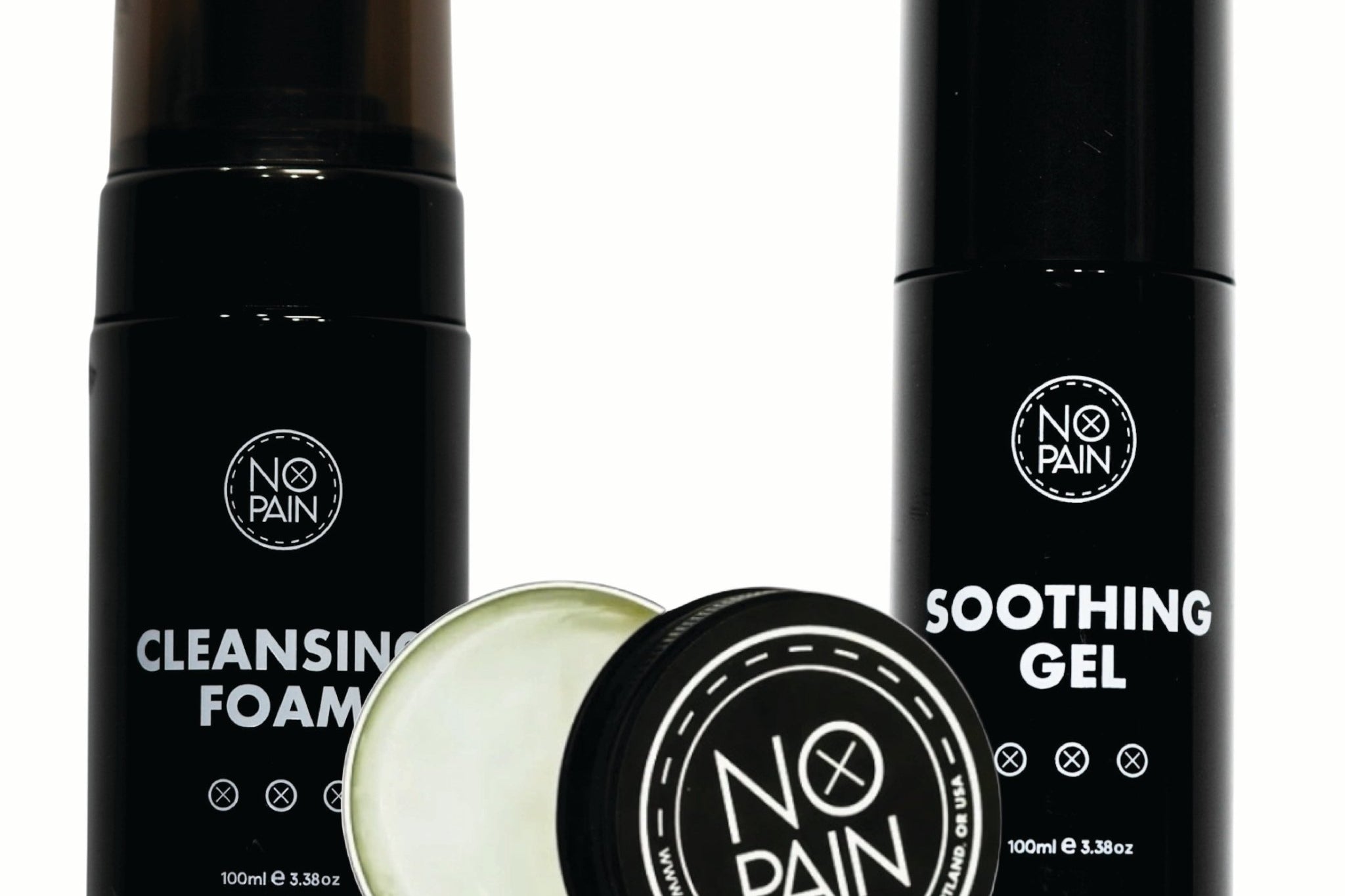
The Aftercare Bundle gives you everything for a clean heal: cleansing foam for daily washing, soothing gel for the first few days, and balm from day three onward. Consistent use reduces heavy scabbing and speeds the overall recovery timeline.
Shop the Aftercare Bundle →Formulated at Historic Tattoo in Portland, Oregon. 100% money-back guarantee.
Shaving technique over a healed tattoo
Once the tattoo is fully healed, shaving it is fine — and a clean shave can make the colors and lines look noticeably sharper and more vivid.
Use a fresh blade. A dull razor drags rather than cutting cleanly. Dragging causes irritation even on healed skin, and over a tattoo it can cause temporary redness that makes the design harder to see clearly.
Use fragrance-free shaving cream. Fragrances and certain preservatives are common irritants. With a healed tattoo they won't cause damage, but they can cause temporary redness or dryness that affects how the tattoo looks immediately after shaving.
Light strokes with minimal pressure. Let the blade do the work. No heavy passes, no repeated strokes over the same area.
Moisturize after. Pat dry and apply a light, fragrance-free moisturizer. Aftercare Balm works well here — it conditions the skin and enhances how the tattoo reads visually once the razor is done.
FAQ
When can you shave over a tattoo?
When the tattoo is fully healed — typically four weeks at minimum, sometimes longer for pieces with heavy shading or in high-movement areas. Fully healed means no remaining flakes or scabs, no shininess or waxiness to the skin, no tenderness, and the tattooed skin texture matching the surrounding un-tattooed skin. The end of the peeling phase around two weeks doesn't mean it's safe to shave.
What happens if you shave a tattoo too early?
Shaving a healing tattoo can pull off scabs that are still attached to new skin where ink is settling, resulting in ink pulled out of the dermis. This shows up as patchy, faded areas in the finished tattoo. It also risks infection by creating micro-abrasions in healing skin. In the worst cases, premature shaving can cause permanent scarring that distorts the design.
Can you trim hair over a new tattoo?
Trimming with scissors or an electric trimmer held away from the skin is safer than a razor during healing because you're not dragging anything across the skin surface. That said, any tool that comes close to the healing tattoo carries some risk. The safest approach is to leave the area alone until the tattoo is fully healed.
How do you shave over a tattoo without fading it?
Once a tattoo is fully healed, regular shaving doesn't cause ink fading. The ink is in the dermis, well below the layers the razor contacts. Use a sharp blade with light pressure and fragrance-free shaving cream to minimize skin irritation, and moisturize after. Long-term tattoo fading is caused by sun exposure and the natural aging of the dermis — not by routine shaving.
Does shaving over a tattoo make it look better?
Yes — once the tattoo is healed, removing the hair over it makes the design read more clearly. Lines look sharper, colors appear more saturated, and detail becomes more visible. This is why artists shave the area before tattooing in the first place.
How long does a tattoo on the leg or arm take to heal before shaving?
Arms and legs are generally good healing placements, typically reaching full surface heal in two to four weeks. That said, the inner arm and the back of the knee are higher-movement areas where healing can run a week or two longer. Wait until all the physical markers of full healing are present — smooth skin, no shininess, no tenderness — rather than going strictly by calendar days.