



Face tattoos sit near the top of the pain scale. Thin skin, dense nerve clusters, and bone proximity make the forehead, jaw, and cheekbones among the most uncomfortable areas to tattoo. Numbing cream reduces that substantially — but applying it near your eyes and mouth requires more care than applying it to an arm or leg.
Here's how to do it safely.
In this guide
- Why face tattoos hurt more
- Can you use numbing cream on your face?
- How to apply it safely
- What to expect during the session
- Aftercare for a face tattoo
- FAQ
Why face tattoos hurt more than most placements
Several anatomical factors combine to make the face painful:
Thin skin. The skin on your forehead, temples, and around your eyes is significantly thinner than on your arms or legs. Less tissue between the needle and nerve endings means more sensation transmitted directly.
Bone proximity. On the forehead, jaw, and cheekbones, the needle is working just above bone. This produces an intense vibration that radiates differently from needle work over muscle or fat. Many people describe it as a rattling or buzzing sensation that travels through the skull.
Nerve density. The trigeminal nerve — the main sensory nerve of the face — branches throughout the cheeks, forehead, and jaw. The face has more active nerve endings per square centimeter than most body areas.
None of this means a face tattoo is impossible to sit through. It means numbing cream is a reasonable choice for managing a difficult placement.
Can you use numbing cream on your face?
Yes. Topical anesthetics work on facial skin the same way they work elsewhere — they block sodium channels in the nerve endings near the surface, reducing pain signal transmission. The active ingredient (typically lidocaine at 4–5%) doesn't change based on placement.
What changes is the application. Two risks are specific to facial use:
Eye proximity. If numbing cream migrates into the eyes, it causes significant irritation and can temporarily affect the cornea. Any area near the orbital bone requires a clean edge and careful monitoring.
Mouth and nostril proximity. Accidental ingestion of topical lidocaine should be avoided. For tattoos on the upper lip, chin, or around the nose, precision application is more important than anywhere else on the body.
A cream formulation — thick, slow-absorbing — is safer near the face than a spray or thin gel that can run or drip. It stays where you put it.
How to apply numbing cream safely on your face

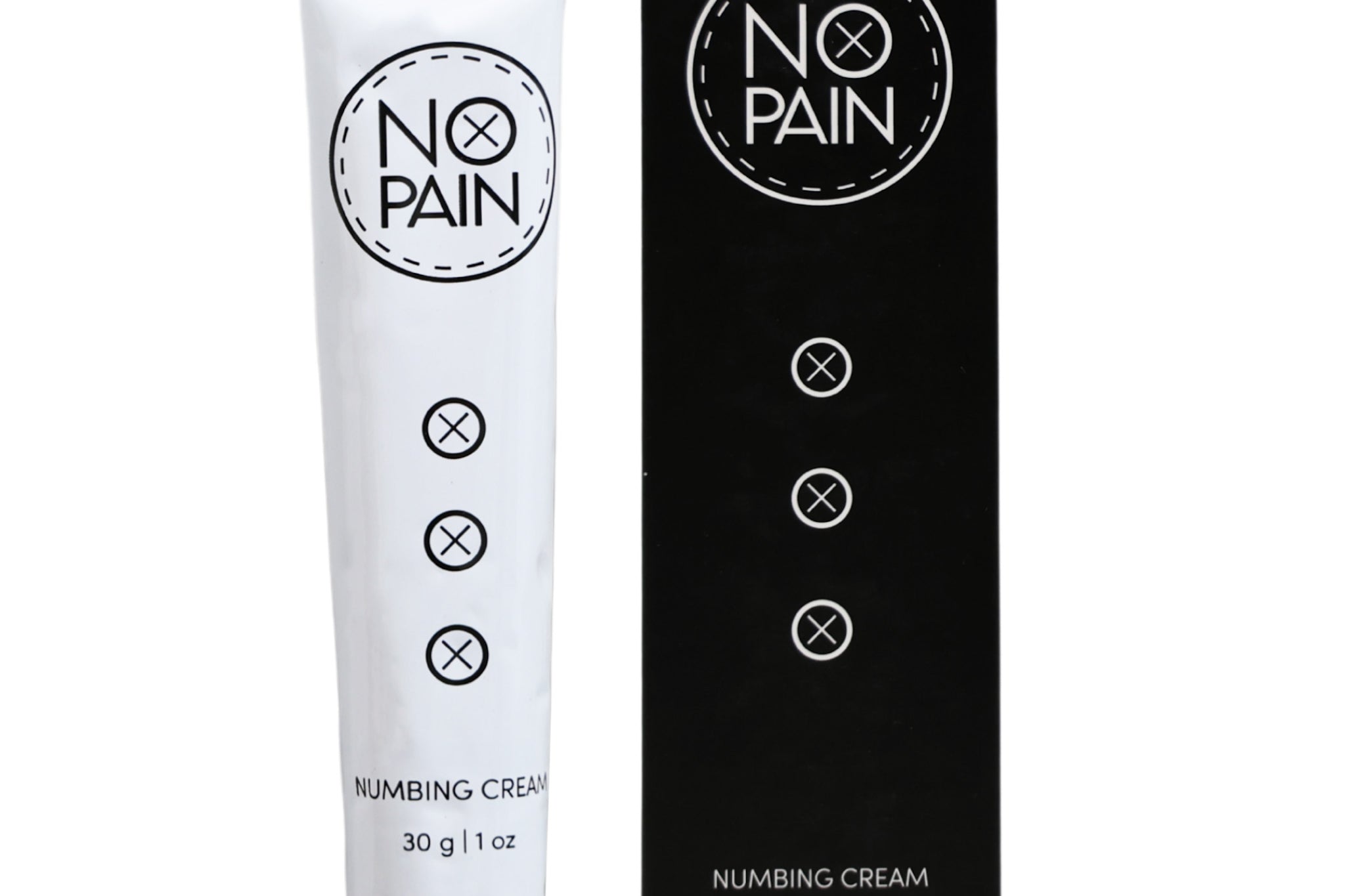
Maximum-strength numbing in a thick, slow-absorbing base that stays where you apply it. Especially important for facial application where a runny product could migrate toward the eyes. 100% money-back guarantee.
24 hours before: Do a patch test. Apply a small amount behind one ear and leave it for 20 minutes. Check for redness, swelling, or irritation after an hour. If there's no reaction, you're clear to proceed.
90 minutes before your appointment:
- Wash the area with a gentle cleanser and pat completely dry. Cream absorbs better into clean skin.
- Apply with precision. Use a gloved hand or a sterile applicator — not your bare fingers. Apply a thick, even layer only to the specific area being tattooed. If you're tattooing near the eye, maintain at least a centimeter of clearance from the orbital rim. If you're tattooing the upper lip or chin area, stop at the lip line and keep the applicator away from your mouth.
- Cover with plastic wrap. Cut plastic wrap to fit the tattooed area and press it flat. Occlusion — sealing the cream under wrap — significantly increases absorption depth. Use medical tape to secure the edges so it doesn't shift.
- Leave it undisturbed for 90 minutes. Don't peel back the wrap to check — it disrupts absorption.
- Let your artist remove it. They'll unwrap and clean the area thoroughly before starting. Don't remove it yourself before arriving; the studio environment is cleaner.
Tell your artist you've applied numbing cream and where you placed it. Many experienced artists adjust their technique slightly for numbed skin, since skin behavior under the needle can differ when surface nerves are temporarily blocked.
What to expect during the session
Numbing cream typically provides meaningful relief for 60 to 90 minutes after it's removed and the session begins. For short sessions or small face tattoos, that covers the whole appointment. For larger pieces, the numbing effect will fade while the artist is still working.
Sensation returns gradually rather than all at once — you'll notice increasing awareness rather than a sudden shift from numb to full pain. If the session runs long, ask your artist whether re-application is possible. For external numbing, some artists can apply a second round during a brief break.
Some people experience heightened skin sensitivity immediately after the numbing wears off. This is normal and temporary.
Aftercare for a face tattoo
Face tattoos heal in a highly visible, high-activity area. Facial muscles move constantly, the skin is touched and washed more often than other body parts, and sun exposure is hard to avoid. Consistent aftercare through the first two to three weeks makes a substantial difference in how cleanly the tattoo heals.
Aftercare Built for Sensitive Placements
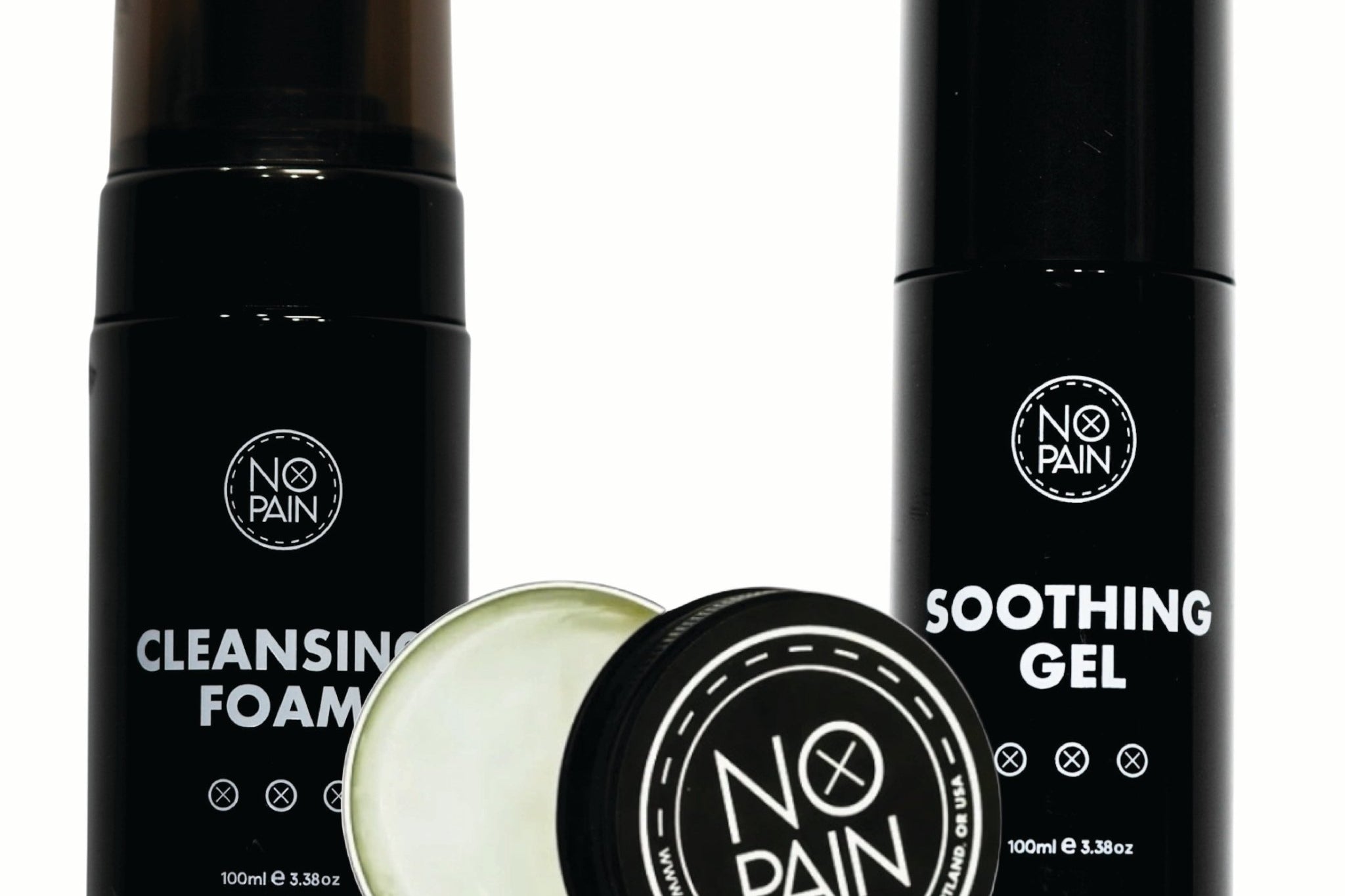
The Aftercare Bundle includes soothing gel for the first few days, balm from day three onward, and cleansing foam for gentle daily washing — all formulated without harsh fragrances or preservatives.
Shop the Aftercare Bundle →Formulated at Historic Tattoo in Portland, Oregon. 100% money-back guarantee.
FAQ
Is numbing cream safe to use near your eyes?
Topical lidocaine cream is safe near the eye area when applied carefully with a clean edge at least a centimeter from the orbital rim. The risk is the cream migrating into the eye if applied too close or if the plastic wrap shifts. Use a thick cream formulation (not a spray or thin gel) and tape the wrap edges securely to prevent movement. If any cream gets near your eyes during application, rinse immediately with water.
Will numbing cream affect how my face tattoo looks?
When applied before the session and removed completely before needlework begins, numbing cream doesn't affect ink retention or the final appearance of the tattoo. The concern about numbing cream affecting ink quality relates to application mid-session — some in-session numbing products temporarily alter skin texture. Pre-session cream, fully removed before the needle touches skin, doesn't have this effect.
How long does numbing cream last for a face tattoo?
Applied for 90 minutes under plastic wrap, the numbing effect typically lasts 60 to 90 minutes from when the cream is removed. Most face tattoos — particularly smaller designs — can be completed within that window. Larger pieces or full-face work may require a break and re-application mid-session.
Can I use numbing cream on a lip tattoo?
Inner lip tattoos (inside the mouth) require dentist-administered anesthetic — topical lidocaine is not formulated for internal use. For tattoos on the outer lip or around the lip line, external numbing cream applied carefully to the skin surface is appropriate; keep it off the lip itself and away from the inside of the mouth.
Do I need to tell my tattoo artist I used numbing cream?
Yes. Tell your artist before they begin. They need to know what was applied and where so they can clean the area properly. Many experienced artists also slightly adjust their technique when working on numbed skin, since skin behavior under the needle can change when surface nerves are temporarily blocked.
Can you use numbing cream on a face tattoo even if you have sensitive skin?
The patch test 24 hours before your appointment is especially important if you have sensitive skin or a history of reactions to topical products. Apply a small amount behind the ear, wait an hour, and check for redness or irritation before committing to full facial application. If you have known lidocaine sensitivity or other anesthetic allergies, discuss this with a physician before using any topical numbing product.