



A blackout tattoo covers a large area of skin in solid, opaque black ink with no design, no negative space, and no color. The entire surface goes black. It's one of the most committed choices in tattooing: bold, intentional, and more permanent than most tattoos in practice.
People get blackout tattoos for a range of reasons, from covering old work they no longer want to making a deliberate aesthetic statement. Whatever the reason, the process is physically demanding, the healing is longer than most other styles, and the commitment is real. This guide covers what blackout tattoos are, who gets them, what the experience involves, and what the heal actually looks like.
In this guide
- What is a blackout tattoo?
- Why people get blackout tattoos
- Blackout tattoo ideas
- Pain, sessions, and prep
- How blackout tattoos heal
- Aftercare
- FAQ
What is a blackout tattoo?
A blackout tattoo is exactly what the name says: a tattoo that blacks out a section of skin completely. The artist saturates the entire area with dense black ink, pass after pass, until the skin holds a solid, uniform black field with no gaps, gradients, or design elements showing through.
The style is distinct from black-and-grey tattooing (which uses diluted ink for shading) and from tribal traditions (which use cultural patterns rather than solid coverage). A blackout tattoo is simply black coverage, usually over a substantial area: a full sleeve, the entire outer leg, a back panel, or sections of the torso.
Some blackout tattoos incorporate negative space, where the artist leaves small untattooed areas to create a design within the black field. Stars, geometric shapes, or silhouettes carved out of solid black. But the defining characteristic of blackout style is the solid saturated coverage that makes up the majority of the piece.
Why people get blackout tattoos
Cover-ups. The most common reason. A blackout tattoo can erase almost anything underneath it: old work you regret, a collection of pieces that no longer feel cohesive, amateur tattoos, or faded ink that's too patchy to fix through traditional cover-up design. If what's underneath is dark enough, some laser lightening sessions first may improve the final coverage. But for many people, blackout is the most complete solution available without full laser removal.
Aesthetic commitment. Some people are drawn to the stark, graphic quality of solid black coverage as a deliberate design choice. The contrast between solid black skin and skin that isn't tattooed creates a visual impact that no other style matches at scale. On a full arm, it reads as a structural change to the body rather than a decorative addition to it.
Covering scars or skin conditions. Dense black ink can minimize the appearance of scarring, stretch marks, or hyperpigmentation on areas where the skin's texture and tone are uneven. Results vary depending on the scar type and age, and blackout ink won't change the texture of the skin itself, but the visual uniformity of solid black coverage often reduces how visible surface variation appears.
Negative space design. For artists who work in negative space, blackout coverage is the canvas. The black fills everything except the intentional untattooed areas that form the actual design. The result looks like a photographic inverse of a conventional tattoo.
Blackout tattoo ideas
Full sleeve. The most common blackout placement. The entire arm from wrist to shoulder (or a defined section of it) goes solid black. Some people do outer arm only, others do full circumferential coverage. A full sleeve takes multiple sessions, often 15 to 30 or more hours of work spread across several appointments.
Blackout arm panel. Solid black on the outer arm or forearm without full circumferential coverage. Easier to manage in terms of sessions and healing, and can be an entry point for someone considering a larger piece over time.
Leg sleeve or panel. The outer thigh, shin, or full leg from knee to hip. Large, relatively flat surfaces that hold ink well and have more tissue than the arm, which can affect pain and healing in different ways.
Back panel. Sections of the upper or lower back blacked out, sometimes incorporating architectural elements like geometric shapes or patterns within the coverage.
Negative space geometric. A blackout field with geometric or botanical shapes left untattooed to create the design. Stars, moons, leaves, triangles, or mandalas carved as light negative space against a solid dark background.
Chest or torso panel. Less common, higher pain, longer healing due to skin movement. Sternum and rib areas are among the most painful placements for dense coverage work.
Pain, sessions, and prep
A blackout tattoo is one of the most physically demanding tattooing experiences you can have. The reason is density: to achieve solid, opaque coverage, the artist works the same skin repeatedly, pass after pass, until it holds the required saturation. This is different from a design tattoo where the needle works progressively through new sections. With blackout, the same area takes multiple passes, and each subsequent pass hits skin that's already been worked.
The result is cumulative pain that intensifies as the session continues. The first pass might feel like any dense black-work tattoo. By the third or fourth pass over the same area, the skin is inflamed, and the sensation is considerably sharper. Adrenaline, which blunts pain in the early part of most sessions, doesn't last three to four hours.
Most blackout pieces of any real size take multiple sessions. A full sleeve is rarely done in fewer than three appointments, and many take five or more spread across weeks or months to give the skin time to recover between sessions. Artists experienced with blackout work will plan your session schedule based on placement, your skin's response, and the size of the piece.

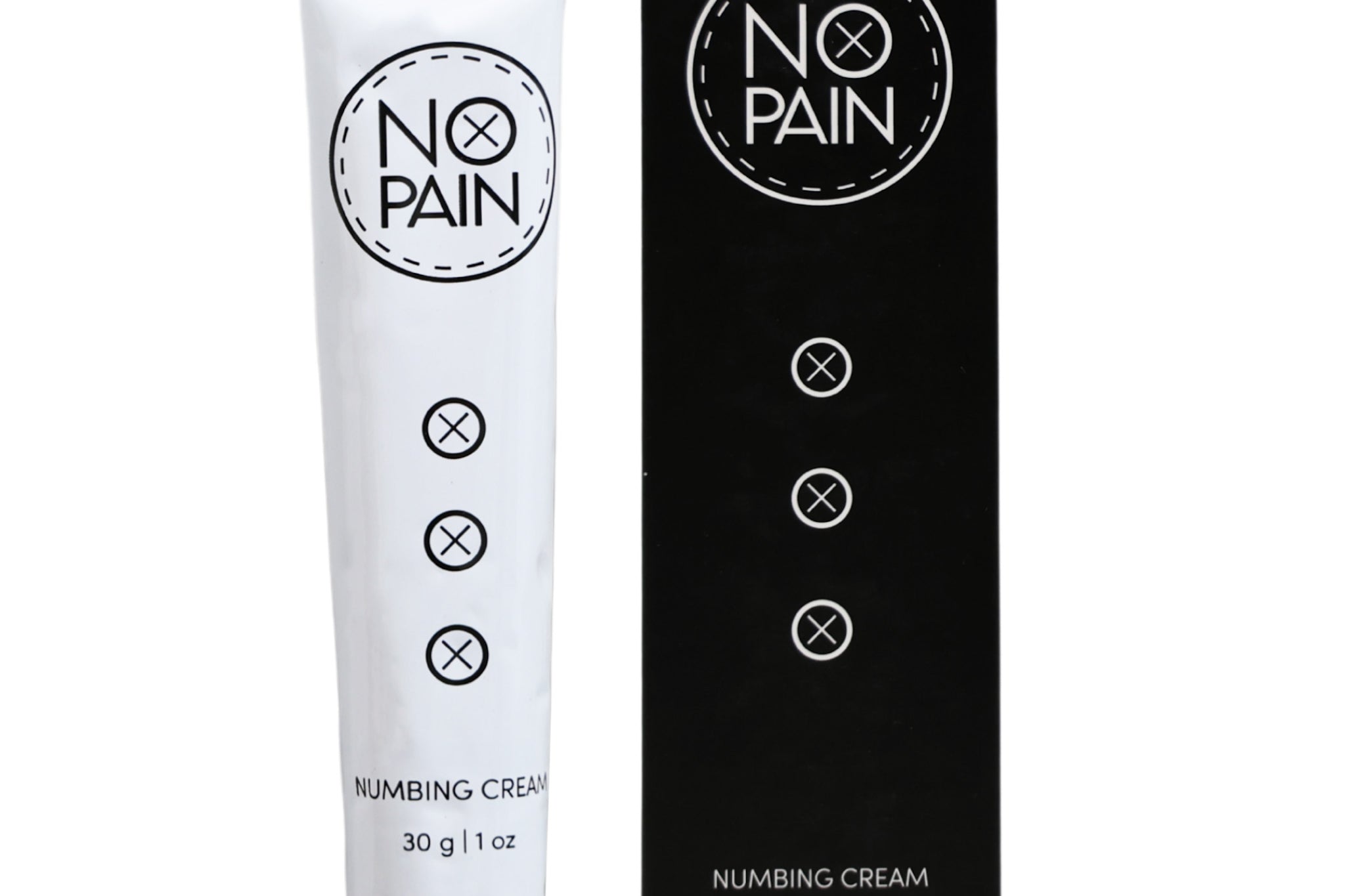
Maximum strength numbing cream for the first two to four hours, plus numbing spray for your artist to apply mid-session on broken skin. Blackout work involves repeated passes over the same area and sessions that run long. Apply the cream in two coats under cling film, 90 to 120 minutes before your appointment. Backed by a money-back guarantee.
Shop Comfort Bundle:
For prep, eat a full meal before your session, wear loose clothing that gives easy access to the placement, and arrive rested. If you're using numbing cream, apply two coats under cling film 90 to 120 minutes before your appointment starts. For sessions over two hours, the Comfort Bundle adds mid-session spray your artist can apply between passes without any additional wrap time.
How blackout tattoos heal
Blackout tattoos heal on the same biological timeline as any other tattoo, but the intensity of each healing phase is amplified by the density of ink and the degree of skin trauma involved.
Days 1 to 6: inflammation and weeping. The tattooed area will be swollen, hot, and tender. Expect more pronounced weeping than with a design tattoo, more plasma production, and more soreness that persists longer into the week. This is normal for the degree of work the skin has received. Wash two to three times daily, pat dry, and apply a thin layer of soothing gel after each wash.
Days 5 to 14: heavy scabbing. This is where blackout healing differs most from standard tattoo healing. The scab that forms over a large solid black area is dense, thick, and armor-like. It can feel tight, crack at joint movement, and itch intensely. This is the phase that most directly determines the final result. Keeping the scab hydrated enough to remain flexible is the goal. Dry, cracking scabs lose ink at the crack lines, and on a blackout piece, those gaps are visible.
Switch from soothing gel to aftercare balm around day two or three. Apply the balm in a thin layer multiple times per day, and especially before sleep and before any activity that involves the placement moving. The balm's oil-and-butter base keeps the scab pliable without suffocating the skin underneath.
Do not pick. Not even edges. Not even a piece that's clearly loose. A thick blackout scab pulled free before it's ready takes ink with it in a way that small-scab peeling doesn't. Let it fall naturally.
Weeks 3 to 6: settling. Once the main scab is gone, the underlying skin will look milky, slightly shiny, and the black may appear uneven or muted. This is the epidermis re-forming over the tattooed dermis. The final depth and richness of the black won't be apparent until two to three months out, when the new skin fully matures and clarifies.
Continue moisturizing daily and apply SPF over healed areas exposed to sunlight. Even black ink degrades under UV exposure over years, though it does so more slowly than colored pigments.
Aftercare for blackout tattoos
The aftercare protocol for a blackout tattoo is the same as any tattoo in terms of steps, but demands more consistency and more attention to the scabbing phase than smaller pieces require. The investment in the piece warrants treating it as a serious healing project.
Weeks one and two: wash twice to three times daily with fragrance-free liquid soap, pat dry completely before applying product, and use soothing gel for the first few days transitioning to balm. Keep the area away from soaking, sun, and gym equipment. Clothing friction over a healing blackout area is one of the more common causes of uneven healing.
Once healed: daily moisturizing and SPF on any exposed areas. Touch-ups on a blackout tattoo are relatively simple (re-saturation of thin areas) and a standard part of the process for large pieces. Plan for a touch-up check at three months once the skin has fully settled.

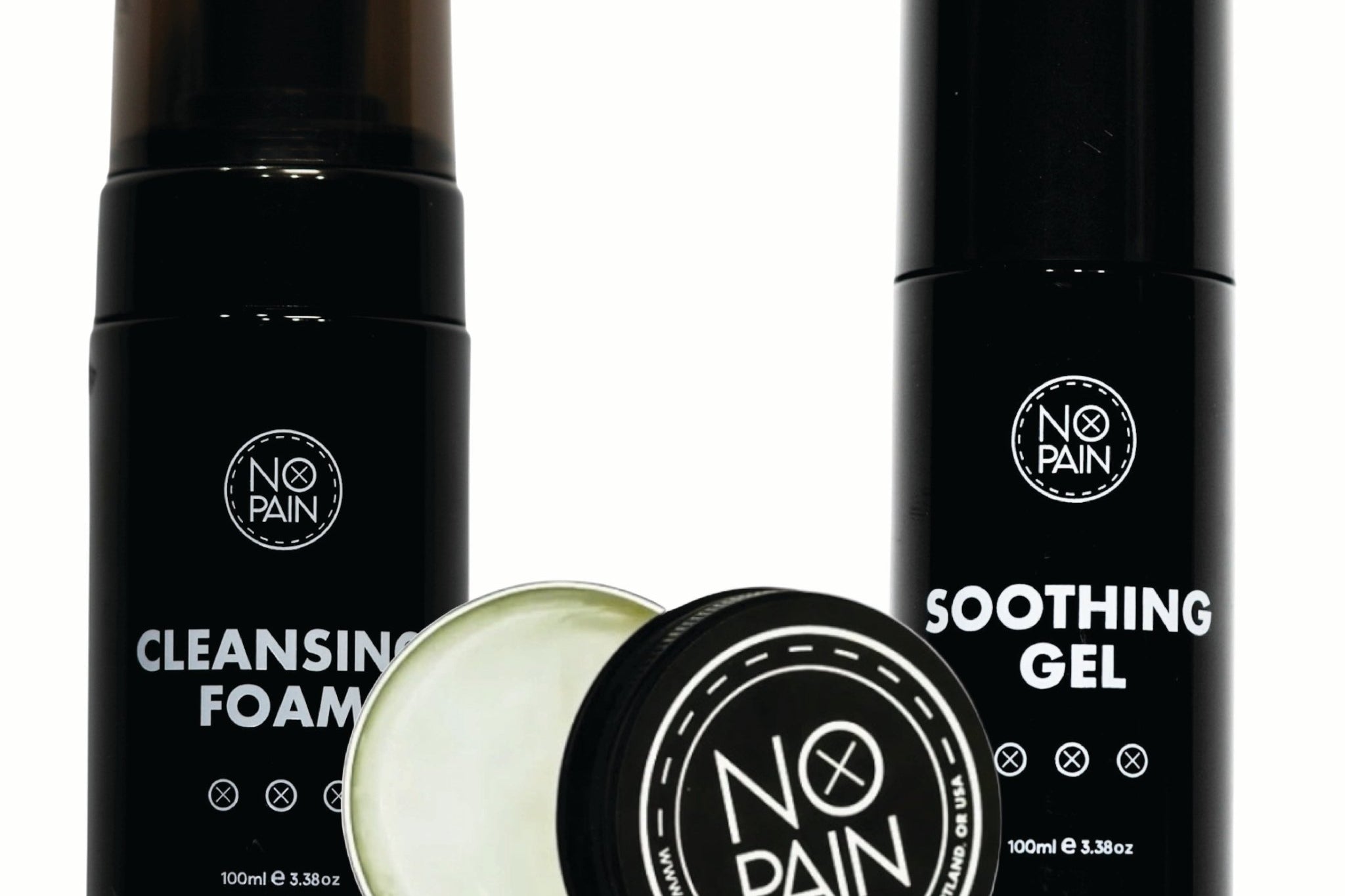
No Pain Tattoo Aftercare Bundle
Soothing gel for the first few days, aftercare balm from day three onward, and cleansing foam for daily washing. Built for the demands of a dense, large-scale tattoo heal. Backed by a money-back guarantee.
Shop Aftercare Bundle: $33.60FAQ
What is a blackout tattoo?
A blackout tattoo is a tattoo that covers a large area of skin in solid, opaque black ink with no design elements. The entire surface goes black through repeated passes of dense ink. Some blackout tattoos incorporate negative space (untattooed areas that form a design within the black field), but the defining feature is the solid black coverage that makes up the majority of the piece.
How painful is a blackout tattoo?
Very painful, and more so than most other tattoo styles because the same skin is worked repeatedly to achieve full saturation. Each additional pass over an already-worked area hits inflamed skin, and the pain compounds as the session continues. Placement matters too: a blackout arm sleeve on the outer arm is considerably more manageable than chest or rib coverage. For sessions this long and this dense, numbing cream applied 90 to 120 minutes before your appointment makes a real difference.
How long does a blackout tattoo take?
Substantially longer than a standard tattoo of similar size. A full arm sleeve typically takes three to six sessions of three to five hours each, spread over weeks or months. The artist needs to work methodically to build coverage without over-traumatizing the skin in one sitting. Most artists experienced in blackout work will book conservative session lengths and plan multiple appointments from the start.
Can you cover old tattoos with a blackout tattoo?
Yes, and this is one of the most common reasons people get them. Solid black coverage can obscure almost any existing tattooing underneath. If the original work is very dark or densely packed, a few laser sessions first can lighten it enough to improve final coverage. For lighter or older faded work, blackout coverage alone is often sufficient. Your artist will assess what's underneath and advise on whether pre-lightening would help.
How long does a blackout tattoo take to heal?
The surface heals on a similar timeline to any large tattoo: the scab phase runs from roughly day five to day fourteen, and the skin appears settled by weeks three to four. However, the final visual result (the full depth and richness of the black) won't be apparent until two to three months out, when the newly formed epidermis fully matures and clears. Plan a touch-up check at three months rather than at six weeks.
Are blackout tattoos reversible?
Technically yes, but with considerable difficulty. Dense black ink requires more laser sessions to remove than lighter or colored ink, and full removal of a large blackout sleeve would be an extended, expensive process. Most people considering a blackout tattoo should treat it as permanent. If there's any hesitation, starting with a smaller section rather than a full arm or leg allows you to live with the aesthetic before committing to full coverage.