



No. Neosporin is one of the worst things you can put on a healing tattoo. The logic seems sound: it's an antibiotic ointment, tattoos are open wounds, wound care involves antibiotics. But the two main ingredients in Neosporin (neomycin and bacitracin) are among the most common contact allergens in existence, and the petroleum base suffocates the skin at exactly the moment it needs to breathe. Neither problem is minor on a large fresh wound.
Here's what actually happens when you use it, what to do if you already have, and what to use instead.
In this guide
- Problem 1: Allergic contact dermatitis
- Problem 2: The petroleum base
- Problem 3: The antibiotic part doesn't actually help
- What to do if you've already used it
- What to use instead
- FAQ
Problem 1: Allergic contact dermatitis
Neomycin is one of the most common contact allergens in the world. Studies put sensitivity rates somewhere between 10 and 15% of the general population, and that number climbs higher in people who have used topical antibiotics frequently. Bacitracin, the other active ingredient in most triple-antibiotic formulas, is independently a common sensitizer as well.
On an intact finger cut, an allergic reaction to neomycin might cause mild redness or a small itchy bump. On a large, fresh, open tattoo wound covering several square inches of skin, the same reaction is a different problem entirely.
Allergic contact dermatitis on a new tattoo looks like this: spreading redness well beyond the tattoo border, clusters of small raised bumps or blisters, intense itching that makes it nearly impossible not to scratch, and weeping fluid that isn't the normal plasma of a healing wound. The itching alone causes scratching, which pulls ink. The inflammation disrupts the dermis while it's trying to settle the pigment. In severe cases, the skin reaction leaves scarring that permanently alters the healed result.
The problem is that you don't know you're sensitive until you react. And the time to find out is not on a $500 piece of work covering your ribs.
Problem 2: The petroleum base
Neosporin's base is petrolatum: the same occlusive petroleum jelly used in Vaseline and Aquaphor. It creates a thick, airtight seal over whatever it's applied to. That seal has a specific purpose in some wound contexts (preventing moisture loss from a small, superficial cut). It has the opposite of the right effect on a tattoo.
A healing tattoo needs airflow. The skin is rebuilding its upper layers (epidermis) over the pigment-bearing dermis, and that process requires oxygen exchange. A petrolatum layer cuts off that exchange and traps heat, moisture, and plasma against the wound surface. The result is maceration: the skin softens, becomes soggy, and loses its structural integrity. Soggy skin doesn't hold ink. It also creates the warm, wet, low-oxygen environment that anaerobic bacteria thrive in: the kind that triple-antibiotic ointments don't target.
Petrolatum is also comedogenic. On facial skin, it clogs pores and causes milia (hard white bumps under the skin). On a tattooed area, the same clogging effect produces pimple-like eruptions that disrupt the healing surface and, again, risk pulling ink when they're scratched or broken.
Problem 3: The antibiotic part doesn't actually help
The premise behind reaching for Neosporin is that the antibiotic will prevent infection. Here's why that premise doesn't hold for tattoos specifically.
Tattoo infections don't primarily come from airborne bacteria landing on the wound. They come from contamination: unwashed hands touching the tattoo, dirty surfaces pressing against it, contaminated water (pools, rivers, baths). A topical antibiotic sitting on the skin surface doesn't address any of these vectors. What addresses them is keeping the area clean: washing with a fragrance-free liquid soap twice a day physically removes bacteria from the surface, which is the actual mechanism of infection prevention for tattoos.
Neosporin's antibiotic layer gives a false sense of security that reduces how carefully people actually clean the wound. That tradeoff (worse cleaning, clogged skin, allergy risk) in exchange for surface-level antibacterial coverage that isn't needed for the actual infection vectors isn't worth it.
What to do if you've already used it
Stop applying it now. Wash the area gently but thoroughly with a fragrance-free liquid soap and lukewarm water, rinse well, and pat dry with a clean paper towel.
Watch the tattoo closely over the next 24 to 48 hours. Signs that you've triggered an allergic reaction include redness that spreads beyond the tattooed border, clusters of bumps or small blisters, or itching that's distinctly different from the normal healing itch (more intense, more widespread). If any of those appear, see a doctor. (For reference on what a genuine tattoo infection looks like vs. an allergic reaction, there's a full breakdown in our infection guide.) A short course of topical corticosteroid will address the reaction. Tell them you applied neomycin to an open wound.
If nothing abnormal appears and the tattoo looks like normal healing (some redness, some plasma weeping, gradual calming over days 1 through 4), you likely got away with it. Switch to the correct products and continue normally.
What to use instead
The right approach to tattoo aftercare doesn't involve antibiotics at all. It involves cleaning the wound regularly and keeping it moisturized with something that supports healing without clogging the skin.
Cleaning. Twice a day with a fragrance-free, gentle liquid soap. Work it in with your fingertips using light circular strokes, rinse thoroughly, and pat dry with a paper towel. That's the infection prevention. No antibiotic products needed.
Moisturizing, days 1 through 3. A soothing gel rather than an ointment. Gel formulas are non-occlusive and breathable: they keep the surface hydrated without suffocating the skin. Apply a thin layer after each wash. The goal is a sheen, not a coat.

A breathable, non-occlusive gel for the first days of healing. No petroleum, no fragrance, no common allergens. Keeps the wound surface hydrated and calm without trapping heat or moisture. Backed by a money-back guarantee.
Shop Soothing Gel: $15.00
Moisturizing, from day 3 onward. As the surface starts to settle and early peeling begins, switch to an aftercare balm. A good balm uses an oil-and-butter base rather than petroleum: it moisturizes without clogging, and it supports the skin as it rebuilds. Apply a thin layer after washing, and continue until the tattoo is fully healed (typically three to four weeks on the surface).

Oil and butter base, no petroleum, non-comedogenic. Keeps the healing skin nourished without clogging it. Works from day 3 through full healing. Backed by a money-back guarantee.
Shop Aftercare Balm: from $12.00

No Pain Tattoo Aftercare Bundle
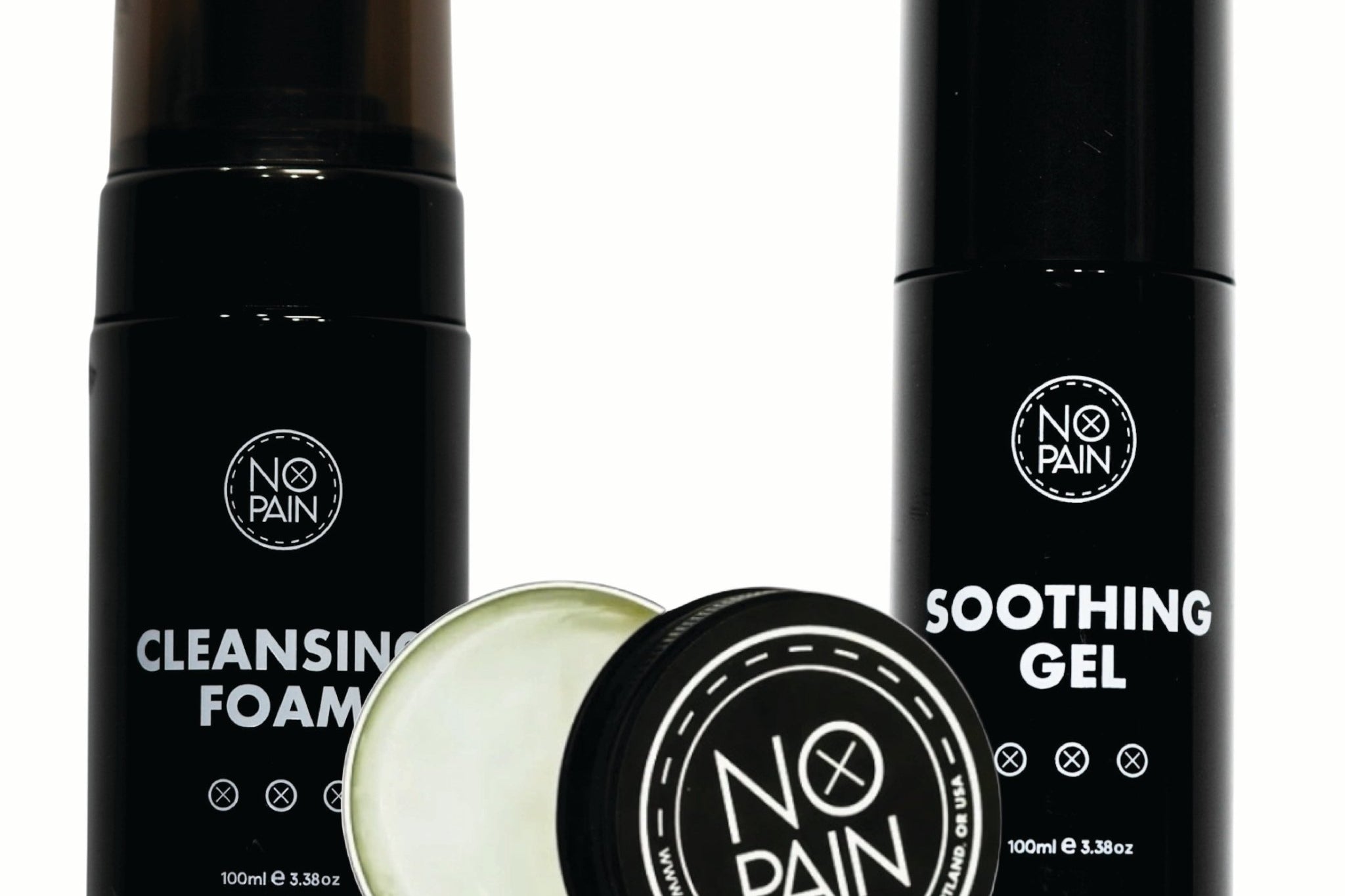
Soothing gel for the first few days, aftercare balm from day three onward, and cleansing foam for daily washing. Everything you need to heal cleanly, without petroleum, antibiotics, or anything that will fight your tattoo instead of helping it. Backed by a money-back guarantee.
Shop Aftercare Bundle: $33.60FAQ
Can you put Neosporin on a tattoo?
No. Neosporin contains neomycin and bacitracin, both of which are common contact allergens. An allergic reaction on a fresh tattoo can cause intense redness, blistering, and itching that disrupts healing and causes ink loss. The petroleum base also occludes the wound, trapping moisture and preventing the skin from breathing. Neither effect is minor on a large open wound.
What happens if you accidentally put Neosporin on a new tattoo?
Wash it off thoroughly with fragrance-free soap and water, then switch to an appropriate aftercare product. Watch the area over the next 24 to 48 hours for signs of an allergic reaction: spreading redness beyond the tattoo border, clusters of bumps or blisters, or unusually intense itching. If those appear, see a doctor. If the tattoo looks like normal healing, you likely avoided a reaction.
Is Neosporin or Aquaphor better for tattoos?
Neither. Neosporin has the allergy risk of neomycin and bacitracin plus a petroleum base. Aquaphor skips the allergens but still uses a heavy petrolatum base that occludes the wound. Both are better replaced by a purpose-made tattoo aftercare product: a breathable soothing gel for the first days, then a non-petroleum balm as the skin starts to settle.
Can antibiotic ointment help prevent a tattoo infection?
Not in any meaningful way. Tattoo infections are caused by contamination: unwashed hands touching the wound, dirty surfaces, unclean water. A topical antibiotic sitting on the skin surface doesn't prevent those vectors. What prevents them is washing the tattoo thoroughly twice a day with a fragrance-free soap. That physical cleaning removes surface bacteria, which is the actual mechanism of infection prevention.
My tattoo artist told me to use Neosporin: is that okay?
Some older aftercare advice still includes Neosporin or Bacitracin, particularly from artists who trained before purpose-made tattoo aftercare products were widely available. The allergy risk from neomycin is well-documented and widely recognized in dermatology. If your artist recommends it and you want an antibiotic element, bacitracin alone (without neomycin) carries lower allergy risk. But a proper tattoo gel or balm is a better choice for all the reasons above.
What is the best thing to put on a new tattoo?
For the first few days: a thin layer of soothing gel after each wash. The gel keeps the surface hydrated and calm without occluding the wound. Around day three, as early peeling begins, transition to an aftercare balm with an oil-and-butter base. Continue the balm until the tattoo is fully healed on the surface, typically three to four weeks. Avoid anything petroleum-based, fragranced, or containing neomycin, bacitracin, or heavy alcohols.