




A mandala tattoo is built from repeating geometric patterns radiating outward from a central point. The design traces back to Hindu and Buddhist traditions, where mandalas represent the universe, wholeness, and spiritual balance. In tattooing, it's one of the most technically demanding styles you can request, and when it's done right, one of the most striking.
This guide covers what mandala tattoos mean, how they differ from other geometric work, which placements suit the style, what to look for in an artist, and how to care for one once it's done.
In this guide
- What is a mandala tattoo?
- Mandala tattoo meaning
- Geometric tattoos vs. mandala tattoos
- Sacred geometry tattoos
- Dotwork: the technique behind the lines
- Where to place a mandala tattoo
- Choosing the right artist
- Pain and numbing
- Aftercare for mandala tattoos
- FAQ
What is a mandala tattoo?
A mandala is a geometric composition centered on a single point, with repeating patterns radiating outward in concentric rings. The word comes from Sanskrit, meaning "circle" or "center." In Hindu and Buddhist traditions, mandalas serve as visual representations of the cosmos: structured diagrams of the universe used in meditation, ritual, and sacred art.
In tattooing, the mandala has become one of the defining styles of the past two decades. Artists translate the traditional circular structure into ink using fine lines, geometric shapes, and dotwork shading. The results range from palm-sized pieces on a wrist to full back pieces that take twenty or more hours to complete.
What sets a mandala tattoo apart is its radial symmetry. Every element on one side of the design mirrors the other. Achieving that symmetry on skin, which curves, stretches, and moves, requires a level of technical skill that separates specialist artists from generalists. The margin for error is minimal.
Mandala tattoo meaning
In their traditional context, mandalas carry deep spiritual significance. They represent unity, wholeness, and the relationship between the individual and the universe. In meditation, focusing on a mandala is meant to guide the mind inward toward clarity and stillness. The geometric order of the design reflects the belief that the cosmos itself operates according to patterns and symmetry.
People who get mandala tattoos draw on these meanings in different ways. Some hold a direct connection to Hindu or Buddhist spirituality and wear the design as an expression of that tradition. Others respond to the broader symbolism: balance, harmony, finding order in complexity. Many simply respond to the visual impact and choose the style for aesthetic reasons alone.
There's no single correct reason to get a mandala tattoo, and you don't need a spiritual practice to justify one.
Geometric tattoos vs. mandala tattoos
People often use "geometric tattoo" and "mandala tattoo" as if they describe the same thing. They don't, though the two styles overlap.
A geometric tattoo is any tattoo built from geometric shapes: triangles, hexagons, circles, lines, grids. The emphasis is on clean lines and mathematical structure. Geometric tattoos can be abstract, representational (a geometric wolf or mountain range is a common example), or purely architectural. They don't need to be symmetrical and don't need to radiate from a central point.
A mandala tattoo is a specific type of geometric design. It follows the traditional mandala structure: circular, radially symmetrical, built outward from a center. Every mandala is geometric, but not every geometric tattoo is a mandala.
In practice, the two styles are often combined: geometric fill elements inside a mandala structure, or mandala-style radial patterns incorporated into a larger geometric composition. If you're drawn to either style, bring references for both and let your artist advise on what works for your chosen placement and size.
Sacred geometry tattoos
Sacred geometry is a subset of geometric tattooing that uses specific symbols believed to represent fundamental patterns in nature and the universe. These designs appear in ancient architecture, philosophy, and religious traditions across cultures and centuries, long before tattooing brought them into studios.
Common sacred geometry tattoo designs include:
The Flower of Life. A pattern of overlapping circles arranged in sixfold symmetry, forming a flower-like grid. One of the most recognized sacred geometry symbols, it appears in ancient Egyptian temples, da Vinci's notebooks, and modern tattoo portfolios alike.
Metatron's Cube. A complex figure derived from the Flower of Life, containing all five Platonic solids within a single framework. Popular with people drawn to sacred mathematics or esoteric traditions.
The Sri Yantra. A Hindu diagram made of nine interlocking triangles surrounding a central point. One of the oldest and most complex geometric symbols in Vedic tradition. The proportions are fixed and any deviation in execution is immediately apparent.
The Seed of Life. Seven overlapping circles in a simpler arrangement than the Flower of Life. Often a starting point for people who want sacred geometry without the complexity of a full Flower of Life composition.
Phi spirals and Fibonacci patterns. Based on the golden ratio, these appear as nautilus shells, leaf arrangements, and branching patterns. Popular in fine-line geometric work.
Sacred geometry tattoos require the same specialist skill as mandalas. The proportions are precise and any deviation from the correct geometric relationships is visible. Ask to see healed examples of the specific symbol you want, not just the artist's general geometric portfolio.
Dotwork: the technique behind the lines
Dotwork is the shading technique most associated with mandala and geometric tattooing. Instead of solid fill or smooth gradient shading, the artist builds tone by placing thousands of individual dots at varying densities. Dense dots create dark areas, sparse dots create light areas, and the transition between them creates the appearance of gradient.
Done well, dotwork shading looks almost like a graphite drawing. The texture is visible up close and gives geometric work a depth that solid black fill doesn't match.
Dotwork is slow. Placing thousands of dots with consistent spacing takes time and focus from the artist, and requires you to hold still for the duration. A large mandala with extensive dotwork shading can take six to ten hours across one or more sessions. That's a factor to plan for when choosing your design and setting expectations for your booking.
Not all mandala tattoos use dotwork. Some artists prefer clean linework with solid black fill. Others use a hybrid approach. When reviewing a portfolio, check whether dotwork remains crisp on healed tattoos. Fresh dotwork always looks sharp, but healed results show you whether the dots held their spacing and density over time.
Where to place a mandala tattoo
The radial symmetry of a mandala means it works best on parts of the body that are flat or gently curved, where the circular pattern can sit evenly without distortion.
Sternum. One of the most popular placements for mandala tattoos. The flat central surface lets the design spread symmetrically. Pain level is high due to thin skin directly over the breastbone with minimal tissue cushion. Lidocaine absorbs well here precisely because there's little subcutaneous fat between skin and nerve supply.
Upper back between the shoulder blades. A large, relatively flat canvas that allows for bigger pieces extending toward the shoulders or down the spine. Pain is moderate over the muscle areas and sharper near the spine itself.
Outer thigh. Considerable surface area, moderate pain, relatively even skin. One of the most accommodating placements for a large mandala. Popular for sleeve-style compositions that wrap the leg.
Shoulder cap. Works well for medium-sized pieces. The rounded surface means the design wraps slightly, which an experienced artist can account for in the stencil. Pain varies: the deltoid cap is manageable, the shoulder blade edge is sharper.
Top of the forearm. Flat enough for a mandala if the piece is sized appropriately. Common for people who want the design visible during everyday life without committing to a larger placement.
Knee or elbow. Used in some geometric traditions. Both placements are sharp over bone and heal with difficulty because of constant joint movement. Touch-ups are often needed.
Choosing the right artist
Mandala and geometric tattooing are specialist skills. The standard advice: find someone who works in the style you want. It applies here more than almost anywhere else, because the consequences of poor execution are immediately visible.
Lines that aren't straight, circles that aren't round, or patterns that lose symmetry partway through don't blend into the design. They're noticeable at a glance. Unlike expressive styles where artistic variation creates character, geometric work has objectively correct and incorrect execution.
Look at healed work specifically. Fresh tattoos always look sharp. A healed geometric tattoo shows whether the fine lines stayed crisp, whether the dotwork held its density, and whether the symmetry survived the healing process. Ask for healed photos before booking.
Check symmetry in the finished piece. Not approximate symmetry. Actual symmetry. A mandala with visible imbalance between sides reflects an execution problem, not a stylistic choice. If you can't assess symmetry from a photo, bring a reference to your consultation and ask the artist how they maintain it on a curved body surface.
Ask about stencil process. Most geometric artists use precise stenciling before starting. Know how placement decisions will be made before the needle touches your skin.
Confirm experience with your specific placement. A mandala on a flat thigh is technically different from one on a curved shoulder cap. Make sure the artist has worked on your placement before.
Pain and numbing
Pain level for a mandala tattoo depends more on placement than on the style itself. The linework and dotwork technique involves lighter needle pressure than heavy color packing, so the sensation tends to be consistent: a steady, repetitive sting rather than the deeper push of solid fill. But mandala sessions are often long, and time accumulates.
A small mandala on a moderate placement (outer thigh, upper arm) is manageable for most people. A large sternum piece or full back mandala with extensive dotwork is a different challenge: high-pain placement, long session, and the mental grind of staying still for hours while an artist places thousands of marks with precision.
A still client is a better canvas for precision work. Any movement at the wrong moment can throw off a line or break the symmetry of a pattern the artist has spent hours building. For longer sessions, numbing is a practical consideration, not just a comfort one.

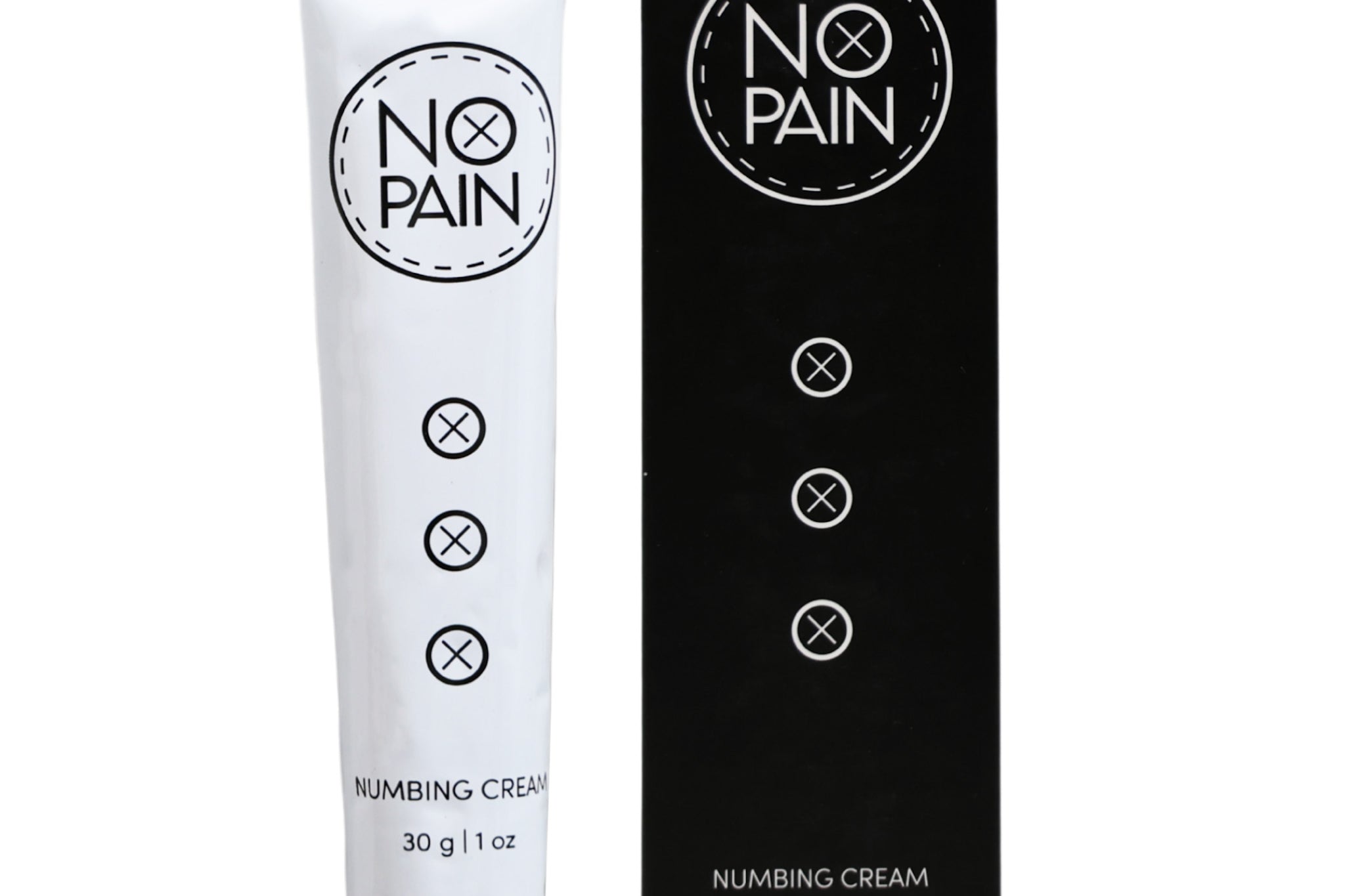
Maximum strength numbing cream for the first two to four hours, plus numbing spray for your artist to apply mid-session on broken skin. Apply the cream in two coats under cling film, 90 to 120 minutes before your appointment. For a large mandala on a demanding placement (sternum, back, or thigh), this is the setup that lets you sit the full session without breaking the artist's concentration.
Shop Comfort Bundle:
For shorter sessions under two hours, the Numbing Cream on its own covers the window. For anything longer, the Comfort Bundle adds mid-session spray that your artist applies between passes on broken skin with no wrap time required.
Aftercare for mandala tattoos
Precision tattooing has higher aftercare stakes than most styles. The fine lines, tight dotwork, and symmetrical structure of a mandala don't have any natural tolerance for a rough heal. A thick scab forming over a section of dotwork pulls ink unevenly when it separates. A line that heals patchy in a geometric composition is visible and difficult to repair precisely.
The goal in weeks one and two is to prevent thick scabbing and keep the surface healing cleanly without interference.
For the first three to six days: wash twice daily with fragrance-free liquid soap, pat dry with a paper towel, and apply a thin layer of soothing gel. The gel maintains the moisture balance the healing skin needs without occluding it.
Around day two or three, switch to an aftercare balm. The balm's oil-and-butter base nourishes the healing layers without sitting on top of the skin the way petroleum-heavy products do.
Long-term: apply sunscreen over healed mandala work. Fine lines and dotwork are vulnerable to UV degradation. Soft lines and faded dots are difficult to touch up in a precision piece because new work has to match exactly. Consistent sun protection preserves the crispness of the design longer than any other single habit.

No Pain Tattoo Aftercare Bundle
Soothing gel for the first week, aftercare balm for week two, and cleansing foam for daily washing. Gives your mandala the clean, controlled heal it needs to keep every line and dot exactly where your artist placed it. Backed by a money-back guarantee.
Shop Aftercare Bundle: $33.60FAQ
What does a mandala tattoo mean?
In Hindu and Buddhist traditions, a mandala represents the universe, wholeness, and balance. The circular, symmetrical structure depicts the cosmos as an ordered, unified system. People who get mandala tattoos draw on these meanings in different ways: some hold a direct connection to the spiritual tradition, others respond to the broader symbolism of balance and harmony, and some are drawn purely to the visual impact. All of those are valid reasons.
What is the difference between a geometric tattoo and a mandala tattoo?
A geometric tattoo uses shapes, lines, and patterns to create a design. It can be abstract, representational, or structural, and doesn't need to be symmetrical. A mandala tattoo is a specific type of geometric design: circular, radially symmetrical, built from repeating patterns radiating from a central point. Every mandala is geometric, but not every geometric tattoo is a mandala.
What is a sacred geometry tattoo?
Sacred geometry tattoos use specific symbols believed to represent fundamental patterns in nature and the cosmos: the Flower of Life, Metatron's Cube, the Sri Yantra, Fibonacci spirals. These symbols appear in ancient religious and philosophical traditions across cultures. They require precise proportions and specialist execution. Any deviation from the correct geometric relationships in the design is noticeable and difficult to correct after the fact.
How long does a mandala tattoo take?
It depends on size and complexity. A palm-sized mandala on a forearm might take two to four hours. A sternum or back piece with extensive dotwork shading can take ten to twenty hours across multiple sessions. The dotwork technique is slow by nature. Budget generously and don't rush a precision artist; the time the work takes is part of what makes it precise.
Where is the best placement for a mandala tattoo?
Flat or gently curved areas where the circular design can sit without distortion: the sternum, upper back, outer thigh, and top of the forearm are the most common. The shoulder cap works for medium-sized pieces if the artist accounts for the curvature. Wherever you're considering, discuss placement specifically at your consultation. The design needs to be sized and stenciled to suit the anatomy of that exact spot.
How do I care for a mandala tattoo after getting it?
Wash twice daily with fragrance-free liquid soap, pat dry, and apply soothing gel for the first three to six days. Switch to aftercare balm around day two or three. Avoid thick scabbing. In a precision piece, a raised scab pulling free unevenly can take ink with it and leave a visible gap in a line or dotwork field. Apply SPF over the healed tattoo for long-term preservation of fine lines and dotwork.