


Yes, you can lighten a tattoo that's too dark. It requires professional treatment, not products or home remedies, but the options are real and the results are reliable. If you're sitting with ink that healed heavier than you wanted, or an old tattoo that has blurred into a dense patch over the years, here is what actually works.
In this article
- First: is it just still healing?
- What doesn't work
- Laser removal: how it works
- How many sessions to lighten vs. fully remove
- Black ink vs. color ink
- Saline removal: what it is and when it applies
- Lightening for a cover-up
- Aftercare after laser sessions
- Frequently asked questions
First: Is It Just Still Healing?
Before anything else, check the timeline. A new tattoo looks its darkest in the first week. The excess ink, plasma, and inflammation layer on top of the actual healed result. As the skin peels, clears the milky phase, and settles over four to six weeks, what looked heavy and dark often softens into something much closer to what you envisioned.
If your tattoo is less than six weeks old, wait. Give it the full healing window before drawing any conclusions. Many people who think they need tattoo lightening are looking at a tattoo that simply hasn't finished healing yet. The ink hasn't settled into its final appearance, and the urgency you're feeling is based on an incomplete picture.
If the tattoo has fully healed and you're still unhappy with the darkness, then you're looking at a permanent result and the options below apply.
What Doesn't Work
There is a lot of misinformation online about at-home tattoo lightening. None of these work, and several of them cause real harm.
Lightening creams and serums. No cream can reach the dermis, which is where tattoo ink lives. The epidermis sits above it and acts as a physical barrier. Any product sold as a "tattoo lightening cream" is either doing nothing or, in the case of products containing acids or bleaching agents, causing chemical burns to the surface of your skin. The ink underneath is untouched either way.
Salt, lemon juice, and abrasive scrubs. These destroy the epidermis without reaching the ink below. You end up with damaged skin, potential scarring, and a higher infection risk. The tattoo remains.
Sun exposure. UV light does fade tattoo pigment over years, but controlled sun exposure as a lightening strategy damages the surrounding skin faster than it moves the ink. It's not a method. It's just unprotected sun damage.
Hydrogen peroxide or rubbing alcohol. Applied topically, neither reaches the dermis. They strip the surface of the skin and cause irritation without touching the ink.
The only reliable paths to tattoo lightening require professional equipment that can reach the dermis where the ink actually is.
Laser Removal: How It Works
Laser is the most effective and most widely available professional method for lightening a tattoo. It works by targeting the ink particles themselves rather than the surrounding skin tissue.
A specialized laser emits pulses of concentrated light energy at wavelengths that are specifically absorbed by tattoo pigment. The ink particles heat up rapidly and shatter into microscopic fragments. Over the weeks following the session, your immune system identifies the fragments as foreign matter and carries them away through the lymphatic system. The tattoo fades progressively with each session as more ink is broken down and cleared.
Two main technologies are used: Q-switched lasers, which have been the standard for decades, and PicoSure-type picosecond lasers, which deliver energy in shorter pulses and can be more effective on certain ink types and skin tones. A qualified technician will assess your tattoo and recommend the right approach.
Laser sessions hurt. The sensation is typically described as a rubber band snapping against the skin, repeatedly, across the treatment area. Most clinics offer topical numbing cream before the session. If yours doesn't, ask. The discomfort is manageable but real, and the larger or denser the area, the longer it lasts.
How Many Sessions to Lighten vs. Fully Remove
The session count depends on your goal. Full removal takes more sessions than lightening, and lightening for a cover-up takes fewer than you might expect.
For full removal of a dark, dense tattoo, most people need anywhere from six to fifteen sessions spaced six to eight weeks apart. The exact number depends on ink density, color, placement, and how your immune system responds. Black ink on a high-circulation area like the upper arm clears faster than dense color work on the ankle or foot.
For lightening to a point where a cover-up is possible, two to four sessions are often enough. You don't need the tattoo to disappear. You need it to fade to a level where a skilled artist has enough canvas to work with. Your laser technician and your cover-up artist should communicate about the target shade before you begin sessions.
Sessions must be spaced at minimum six weeks apart to give the skin time to heal and the immune system time to clear the fragmented ink. Trying to accelerate the process with more frequent sessions slows the overall result and increases the risk of skin damage.
Black Ink vs. Color Ink
Black ink responds best to laser treatment because it absorbs the widest range of laser wavelengths. Dark solid black tattoos, the most common reason people seek lightening, are also the most straightforward cases for laser.
Color ink is more variable. Dark blues and greens respond reasonably well. Red and orange require specific wavelengths and take longer. Yellow and white are the hardest to clear and sometimes don't respond fully even after many sessions.
If your tattoo involves color, discuss this with your technician upfront. They'll give you a realistic assessment of what can fade and to what degree based on the specific pigments involved.
Saline Removal: What It Is and When It Applies
Saline tattoo removal is a non-laser alternative that uses a saline solution injected into the skin to draw ink up and out through the surface as the skin heals. It's done with a tattoo machine using a specialized saline solution rather than ink.
Saline removal is most effective on newer, shallower tattoos and is often used by cosmetic tattoo artists to correct permanent makeup (microblading, eyebrow tattoos, lip liner). For traditional body tattoos, results are more limited. It can lighten superficial work but is generally less effective than laser on dense, deep ink.
It's worth knowing about if you're dealing with a cosmetic tattoo that healed too dark, or a very recent traditional tattoo where you want to start the lightening process without laser. For older or denser body work, laser is the more reliable tool.
Lightening for a Cover-Up
The most common reason people seek tattoo lightening is to prepare for a cover-up. A dark tattoo severely limits cover-up options because the new design has to be dark enough to obscure the original. Lightening first opens up the palette and the design possibilities considerably.
Before you start laser sessions for a cover-up, book a consultation with the cover-up artist first. They'll tell you exactly how light the original tattoo needs to be for the design you want. This prevents you from over-treating (and paying for sessions you don't need) or under-treating (and arriving at the studio with a canvas that's still too dark).
The cover-up artist and the laser technician are solving two halves of the same problem. When they have the same information, the result is better and the process is more efficient.
Aftercare After Laser Sessions
Laser-treated skin behaves like a serious burn. The treatment area will be red, swollen, and tender immediately after the session. Blistering is common and expected. Blisters are part of how the skin expels the shattered ink fragments. Do not pop them. Let them resolve on their own.
In the first few days, keep the area clean and protected. Wash gently with a fragrance-free liquid soap, pat dry, and apply a thin layer of a cooling, fragrance-free gel to reduce inflammation and keep the surface from drying out. Avoid tight clothing, direct sun, and heat exposure (hot showers, saunas) on the treated area.

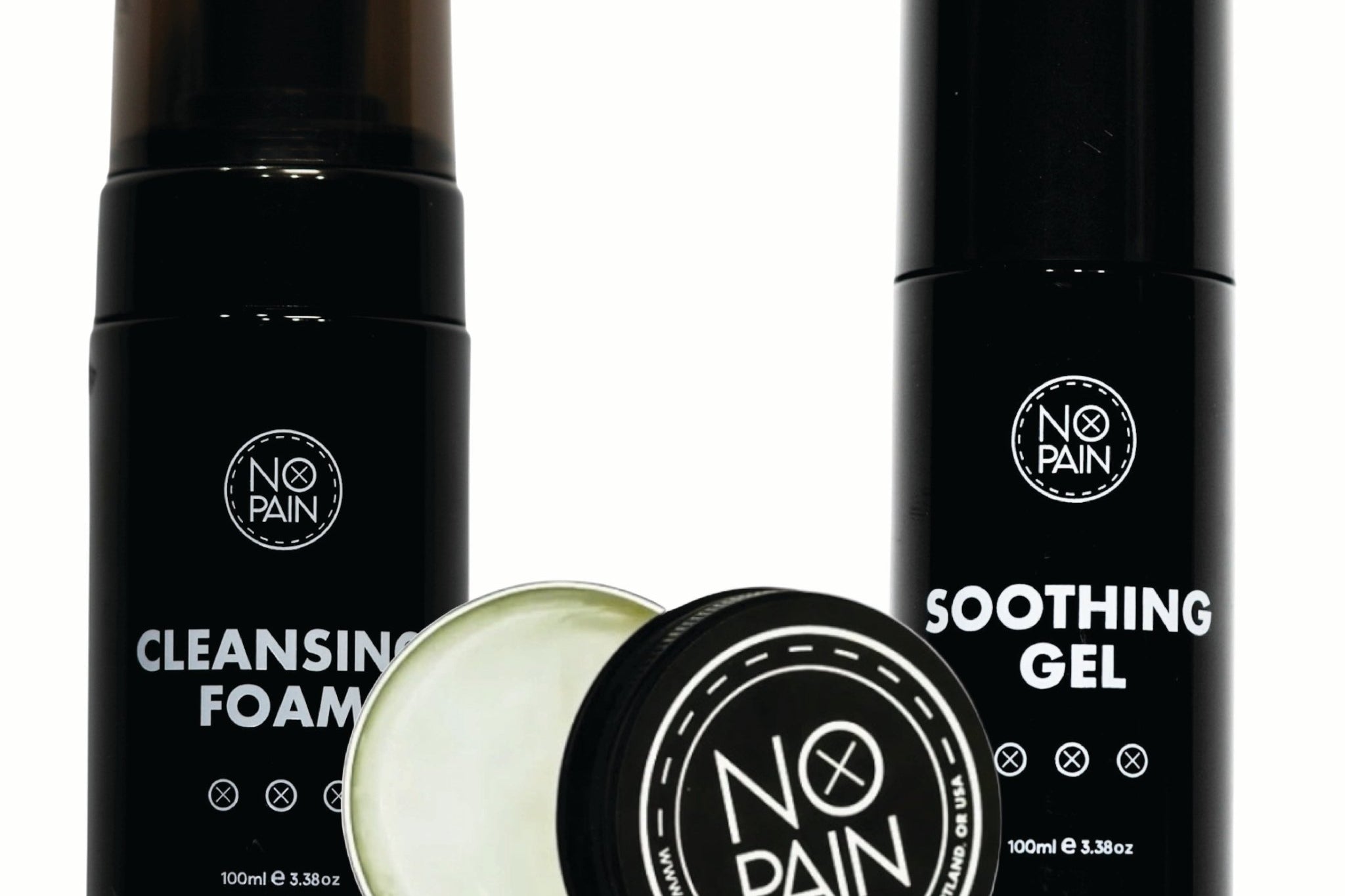
Lightweight cooling gel for the first days of healing. Calms inflammation and reduces the angry, sunburned feeling without sealing the wound or trapping heat the way heavy ointments do. If you're getting a cover-up tattoo after the lightening sessions, the same gel handles the first few days of tattoo healing as well.
Once the skin has closed and the blistering phase is done, typically within one to two weeks, transition to a nourishing balm to support the deeper healing. Keep SPF over the treated area between sessions; laser-treated skin is more photosensitive than normal skin and UV exposure can cause hyperpigmentation that complicates subsequent sessions.
Frequently asked questions
Can you really lighten a tattoo without laser?
Not reliably. Topical creams, scrubs, and home remedies do not reach the dermis where the ink lives. Saline removal can lighten superficial or cosmetic tattoos but is less effective on dense body work. For traditional tattoos that are too dark, laser is the only professionally validated method that consistently produces results.
Do tattoo lightening creams work?
No. Tattoo ink is in the dermis, which sits below the epidermis. No topical cream can penetrate to that depth in a way that affects the ink. Products marketed as "tattoo lightening creams" are either inactive or, in cases where they contain acids or bleaching agents, cause surface damage without touching the ink. They are either ineffective or harmful.
How many laser sessions does it take to lighten a tattoo?
For lightening to the point where a cover-up is feasible, two to four sessions is a reasonable estimate for a standard black ink tattoo. For full removal, most cases take six to fifteen sessions. The variables are ink density, ink color, placement, skin tone, and how aggressively your immune system clears the fragmented pigment. Your laser technician can give you a more specific estimate after assessing the tattoo in person.
Does laser tattoo lightening hurt?
Yes. The sensation is typically described as a rubber band snapping against the skin, repeated rapidly across the treatment area. Larger or denser areas take longer and accumulate more discomfort. Most clinics offer topical numbing cream before the session; ask about it when you book. The pain is short-lived per session and manageable, but it's worth knowing what to expect.
What is saline tattoo removal and does it work?
Saline removal uses a specialized saline solution injected into the skin with a tattoo machine. The saline draws ink particles up to the surface as the skin heals. It's most effective on cosmetic tattoos (microblading, permanent makeup) and recent, superficial traditional tattoos. For older or denser body ink, results are more limited than laser. It's a legitimate option in specific contexts but not a general substitute for laser on standard tattoos.
Can you get a cover-up tattoo without lightening first?
Sometimes. If the original tattoo is relatively light or small and the cover-up design is dark and large enough to fully obscure it, a skilled cover-up artist may be able to work without any laser pre-treatment. If the original tattoo is dark, dense, or large, lightening first opens up the design options for the cover-up considerably. Book a consultation with the cover-up artist before making any decisions. They'll tell you whether pre-treatment is worth it for the design you want.
Heal Every Phase of the Process
The Aftercare Bundle pairs a lightweight soothing gel for the first few days with a nourishing balm for the weeks that follow. Whether you're recovering from a laser session or healing a new cover-up tattoo, both phases of healing are covered.
Shop the Aftercare Bundle →Formulated at Historic Tattoo in Portland, Oregon. 100% money-back guarantee.