
Most tattoo artists book through Instagram DMs or email. Either way, the first message you send does a lot of work: it tells the artist whether you have done your research, whether you know what you want, and whether you will be easy to work with. A clear, complete inquiry gets a response. A vague one gets ignored — not because artists are difficult, but because they receive dozens of messages a week and prioritize the ones that give them something to work with.
Here is what to include, what to leave out, and how to give yourself the best chance of a reply.
In this article
- Before you write anything
- What to include in your message
- What to leave out
- An example inquiry message
- What happens after you send it
- Frequently asked questions
Before You Write Anything
Do not contact an artist about a custom piece until you have spent real time looking at their portfolio. Not a quick scroll — actually looking at their healed work, their preferred subjects, and the styles they execute best. If you are going to ask someone to spend hours on your skin, you should have a genuine understanding of what they do well and why you chose them specifically.
This matters in the message because it shows. An artist can tell immediately whether you picked them because their work is the right fit or because their studio is close and their prices seem reasonable. The former gets you in the door. The latter is easy to spot and easy to deprioritize.
Most artists also post clearly on their profile or website whether their books are open. Check before reaching out. Contacting an artist whose books are closed and asking when they open is a waste of both your time.
What to Include in Your Message
A brief, specific description of the piece. Not the entire meaning behind it — just what it is. A botanical illustration of a moth with a crescent moon, black and grey, medium detail. That tells the artist what they are working with before they have to ask. If you have a general idea but want to collaborate on the design, say that explicitly. Noting that you have a concept but would love their input on the composition is a legitimate and welcome approach.
Size and placement. Give both. About four inches, inner forearm is clear. Somewhere on my arm, not too big is not. Artists price and schedule based on size and placement — without this information, they cannot tell you what something will cost or how long it will take.
Reference images. Attach two to four images that convey the style, mood, or subject matter you have in mind. These are not meant as a blueprint — they are a communication tool. A set of references that shows your visual direction is far more useful than a description alone. If you are emailing, attach the images directly. If you are in DMs, send them in the same thread as your message.
Your timeline. If you have a specific date in mind — a trip, an event, a birthday — say so. Otherwise, mention whether you are flexible. Popular artists book out months in advance. Knowing your flexibility helps them tell you upfront whether the timing works.
Your budget range. This one makes many people uncomfortable, but it saves time on both ends. You do not need an exact number — a range is fine. Budgeting around $400 to $600 for this gives the artist the information they need to tell you whether your expectations align with what the piece will actually cost.
What to Leave Out
Extensive personal backstory. The meaning behind your tattoo matters to you, and the right artist will care about it once you are in the room together. In an initial inquiry, keep it to one sentence if it is relevant to the design. A brief note that it is a memorial for a loved one adds context. A paragraph about their life does not help the artist quote the piece.
Questions about price before you have shared the concept. How much do you charge? as an opening line signals that price is your primary filter, which is not a great first impression. Share the concept, share your budget range, and let them quote from there.
Multiple ideas in one message. If you want two different tattoos, send two separate inquiries or bring it up as a follow-up after you have established the first piece. Pitching three concepts in one message dilutes your inquiry and is harder to respond to cleanly.
Requests to copy another artist's work. Do not send an image of someone else's tattoo and ask to replicate it exactly. Most professional artists will decline. Sending it as a style reference is fine. Asking for an exact copy is not.
An Example Inquiry Message
Here is what a clear, complete inquiry looks like in practice:
Hi [Artist name] — I have been following your work for a while and I love your approach to botanical subjects, especially the texture in your black and grey pieces. I am interested in booking a custom piece: a moth with a crescent moon, detailed black and grey linework, around four inches, inner forearm. I have attached a few references for the style and mood I have in mind. I am flexible on timing but hoping to book within the next two to three months. My budget is around $400 to $500. Let me know if this sounds like something you would be interested in and whether your books are open. Thanks so much.
That message has everything the artist needs: who you are as a client, what you want, where and how big, visual references, when, and how much you have to work with. It takes two minutes to write and dramatically increases your chances of a reply.
What Happens After You Send It
If the artist is interested and their books are open, expect a response within a few days to a week. Many popular artists check their inquiries on a specific schedule rather than in real time. If you have not heard back after ten days, a single brief follow-up is appropriate. If there is still no response, the piece is probably not the right fit for their current work, or their schedule is full.
If they respond with a quote and timeline that work for you, the next step is usually a deposit to hold your appointment and begin the design process. Once you are booked, prepare for the session — which means having your aftercare supplies ready at home before you go in, so you are not scrambling after.
Have Your Aftercare Ready Before the Appointment
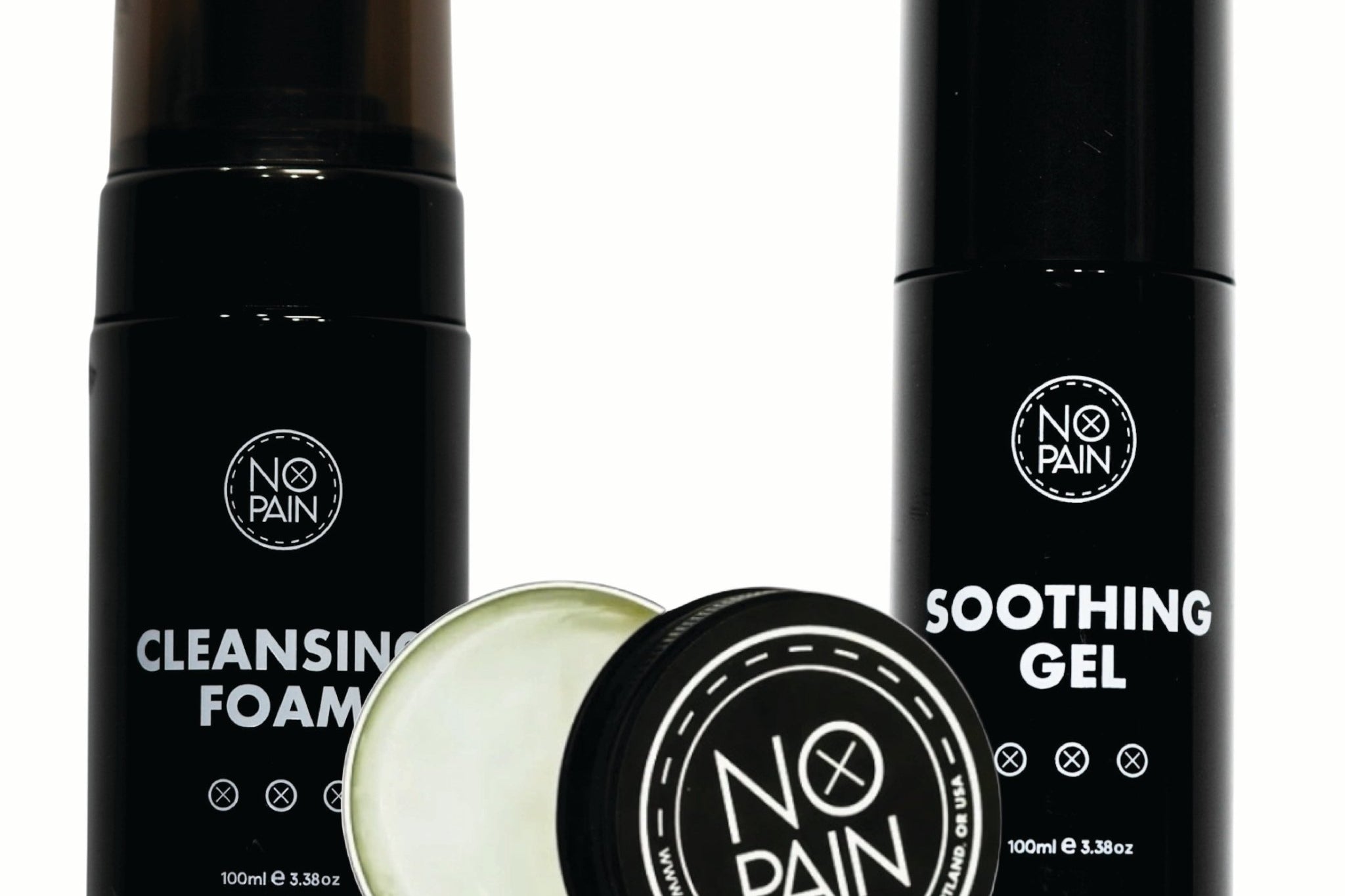
The first hours after your session are the most important for the heal. The Aftercare Bundle has everything you need — Soothing Gel for days 1 to 3 and Aftercare Balm for day 3 onward.
Shop the Aftercare Bundle →Formulated at Historic Tattoo in Portland, Oregon. 100% money-back guarantee.
Frequently asked questions
Should I email or DM a tattoo artist?
Follow whatever contact method the artist lists in their bio. Many artists take bookings through Instagram DMs; others have a booking form or prefer email. When in doubt, DM first and ask where they prefer to take inquiries. Sending to the wrong channel is not a dealbreaker, but it may slow down the response.
How many reference images should I send?
Two to four is ideal. More than that becomes hard to parse; fewer may not communicate your vision clearly. Include a mix: one or two for style and mood, one or two for the specific subject matter. If you have placement references or examples of the skin tone you are working with, those can be useful as well.
What if I do not know exactly what I want yet?
Say that directly and ask whether they offer consultations. Many artists will schedule a brief call or in-person meeting before the booking deposit to work through the concept together. That is a normal part of the custom tattoo process, not a sign that you are a difficult client.
Is it rude to contact multiple artists at once?
No. Reaching out to a few artists whose work you genuinely like is standard practice. What crosses into rude territory is taking the design work from one artist's consultation and bringing it to another to get a lower price. Contact multiple artists, see who responds and whose availability lines up — then commit to one.
What if an artist does not respond?
Popular artists receive far more inquiries than they can take on. A non-response is not personal — it usually means their schedule is full, the piece is not the right fit, or your message got buried. One follow-up after ten days is appropriate. After that, move on and reach out to other artists whose work you like.
How far in advance should I reach out?
For a custom piece, two to four months ahead of when you want to get tattooed is a reasonable starting point for established artists. Highly sought-after artists may book out six to twelve months or more. If you have a specific date in mind — a trip, an event — build in extra lead time and say so in your inquiry.