



Fine line tattooing is a technique that uses very small needle groupings (often just one to three needles) to create thin, precise lines and intricate detail. The result is a style that's quieter than American Traditional, capable of a level of complexity that bold work can't match, and more demanding of both the artist and the aftercare. Here's what it actually means to get a fine line tattoo, how the style behaves over time, and what you need to know before booking.
In this article
- What fine line tattooing actually is
- The technique: needle groupings and single needle
- Design categories that work well in fine line
- How fine line tattoos age
- Finding the right artist
- Placement and pain
- Aftercare for fine line
- Frequently asked questions
What Fine Line Tattooing Actually Is
Fine line is a tattooing approach defined by its linework: thin, precise strokes that produce a look closer to a technical pen drawing or a detailed illustration than to a traditional tattooed image. Where most tattoo styles use bold outlines with heavy line weight, fine line work keeps lines narrow and consistent, often with minimal or no heavy shading.
The aesthetic consequence is a tattoo that reads as delicate, detailed, and relatively understated. Fine line work can sit quietly on the skin in a way that bolder styles don't. This makes it popular for placement on visible areas like wrists, forearms, and collarbone, where people want something present but not immediately dominant.
It's also the style most associated with realism, botanical illustration, fine portraiture, and what's often called "minimalist" tattooing. Those aren't the same thing, but they share the technical foundation: small needle groupings, controlled ink deposit, and linework that depends on precision rather than weight.
The Technique: Needle Groupings and Single Needle
Standard tattooing uses needle groupings of five or more to lay down consistent line weight quickly. Fine line work cuts that number sharply. Most fine line artists work with a 3RL (three-needle round liner) or smaller. Single needle tattooing (1RL) is the most demanding form: one needle point, no redundancy, no room to correct.
The smaller the grouping, the more skill the execution requires. A wobble in a 14-needle magnum line is invisible. The same wobble in a single-needle hairline is permanent and obvious. Fine line artists who do this work well have spent years developing the consistency and pressure control that thin linework demands.
This is also why artist selection matters more in fine line than in almost any other style. The gap between a skilled specialist and someone who does fine line as a secondary style is visible in healed photos. More on this below.
Design Categories That Work Well in Fine Line
Botanical and floral work. Flowers, leaves, botanicals, and organic forms are among the strongest fine line subjects. The style captures organic curves and delicate petal structures in a way that bold linework flattens. Roses, peonies, wildflowers, ferns, and branches all translate well.
Portraits and realism. Single needle and fine line techniques allow for the tonal gradations and subtle detail that portraiture requires. This is high-difficulty territory; realism fine line is the technical ceiling of the style, but when done well, it's among the most striking tattoo work being produced today.
Illustrative and architectural line work. Geometric shapes, architectural subjects, celestial imagery (constellations, moon phases, star maps), and illustrative scenes all benefit from fine line's precision. Clean intersections, tight curves, and precise spacing are all achievable in a way that bolder needle groupings make harder.
Script and lettering. Fine line lettering can be done in very small scales with high legibility. The caveat is that fine line letters spread over time as the dermis shifts and lines widen slightly. Small-scale fine line text should be sized generously enough to remain readable after that natural settling.
Minimalist single-element designs. Single symbols, small animals, simple objects rendered with precision: these are the bread-and-butter of the style's popularity. They're also the category most subject to the longevity issues discussed below, because thin isolated lines have no surrounding context to hold up when they soften.
How Fine Line Tattoos Age
This is the most important section for anyone considering the style, and the one most often glossed over in the initial research phase.
Fine line tattoos fade and spread faster than bold work. This isn't a flaw in the technique: it's physics. A thick line has more ink in the dermis per millimeter of surface area. A thin line has less. Over years of UV exposure, cell turnover, and the immune system's slow removal of tattoo pigment, less ink means more visible change. Lines that were hairline-thin at one year look visibly softer at five years, and potentially blurred at ten without consistent sun protection and touch-up.
Placement makes a real difference. Fine line on the outer arm or thigh, with consistent SPF use, can hold its quality for many years. Fine line on hands, fingers, or feet (all high-friction areas with rapid cell turnover) can look noticeably degraded within two to three years. This isn't a reason to avoid fine line in those placements, but it's a reason to have honest expectations about maintenance frequency.
Color in fine line work fades faster than black. Colored fine line tattoos, especially light colors, pastels, and anything with yellow, follow a faster degradation curve than black and grey. If longevity matters to you, black and grey fine line holds better over time than full-color fine line.
Touch-ups are part of the deal. Well-done fine line from a specialist on good placement, with proper aftercare and sun protection, can stay looking excellent for years. But "forever without maintenance" isn't a realistic expectation for this style. Budget for touch-ups the same way you'd budget for long-term upkeep on anything precision-made.
Finding the Right Artist
This is the most consequential decision in the process. Fine line done by a specialist looks exceptional. Fine line done by a generalist who does it occasionally looks acceptable at first and degrades poorly.
The signal to look for is healed work. Fresh fine line tattoos always look sharp: the lines are clean, the ink is settled, and there has been no time for anything to go wrong. Healed work at six months to two years shows you how the artist's lines actually hold. Look specifically for: line consistency (do the lines stay a uniform weight, or do they vary from pass to pass?), blowout (do any lines have ink spreading outside the intended path?), and whether the detail reads clearly after healing.
Artists who specialize in fine line typically advertise it explicitly and maintain portfolios that are entirely or predominantly in the style. If an artist does American Traditional, realism, and fine line all at the same level of confidence, ask to see their healed fine line specifically. The style demands specialized practice that generalists rarely have at the same level as dedicated specialists.
A consultation before booking is worth doing. Fine line artists often have opinions about minimum viable sizes and design adjustments that make work last better: scaling text up slightly, thickening isolated lines just enough to survive time. An artist who volunteers that kind of feedback during a consultation is someone who's thinking about your tattoo's longevity, not just the initial execution.
Placement and Pain
Fine line work is generally less painful than heavy linework or shading passes, because the needle grouping is smaller and each pass deposits less ink per stroke. This advantage is real, but placement still determines the base pain level. Fine line on the outer forearm is comfortable. Fine line on the ribs, sternum, or collarbone involves the same anatomy regardless of needle size.
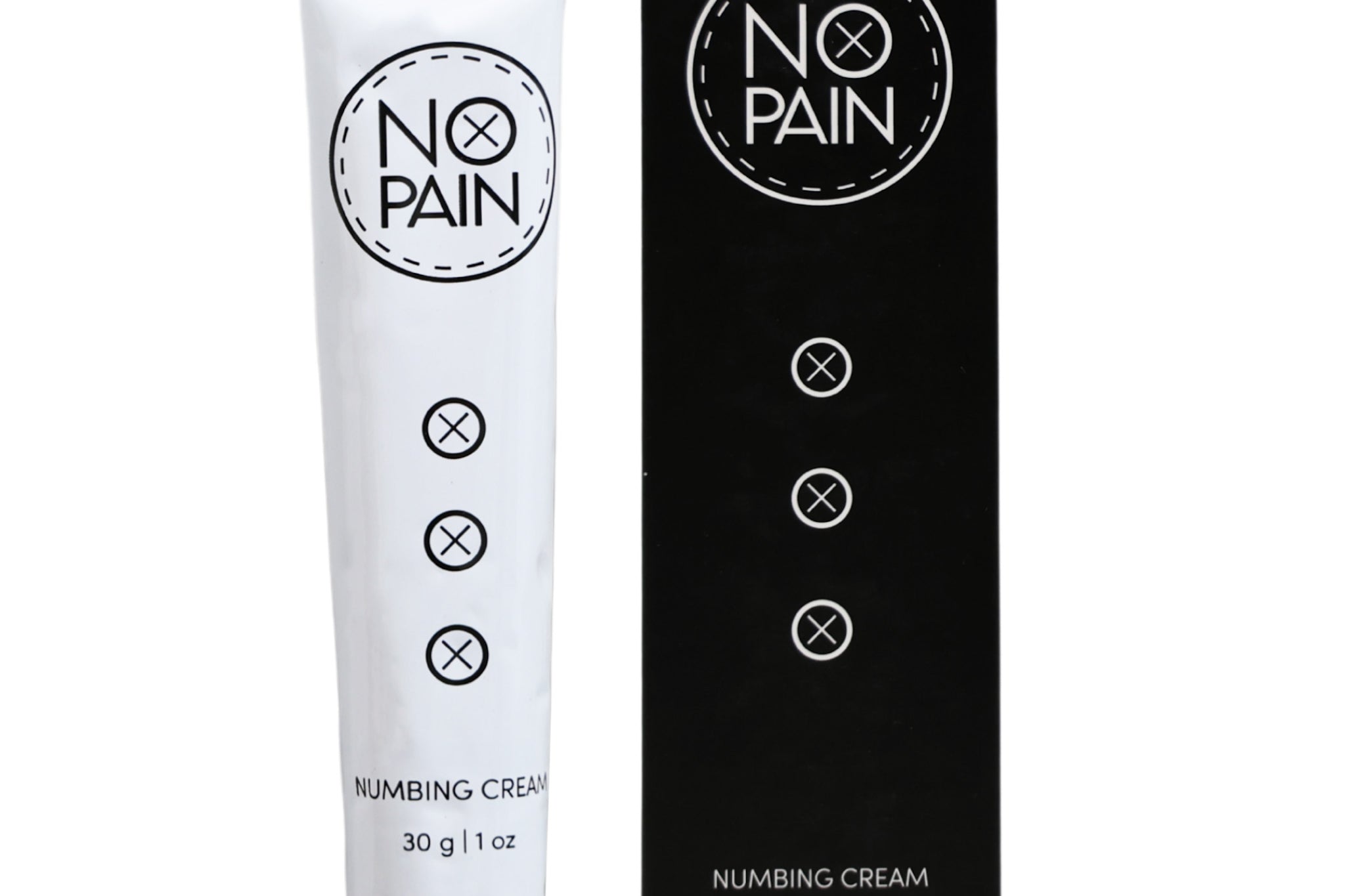
If you're drawn to a fine line design on a higher-pain placement, maximum-strength numbing cream applied correctly before the session takes the sharp edge off the first pass. Fine line often involves longer time on detail work than a quick bold outline would: precision takes time, and the session can run longer than the small scale of the design suggests.

Maximum-strength topical numbing for pre-session application. Thick, slow-absorbing formula that penetrates deeper and lasts longer than thin creams. Apply under wrap 90 to 120 minutes before your appointment. Fine line doesn't have to mean choosing a lower-pain placement. 100% money-back guarantee.
Aftercare for Fine Line
Aftercare matters for every tattoo. For fine line, it matters more. The reason is proportional: a thick bold line has enough ink depth and width that minor scabbing during healing pulls out a small percentage of what's there. A hairline-thin line healed with heavy scabbing can lose the entire line in sections. What was a crisp continuous stroke becomes a dashed or interrupted one.
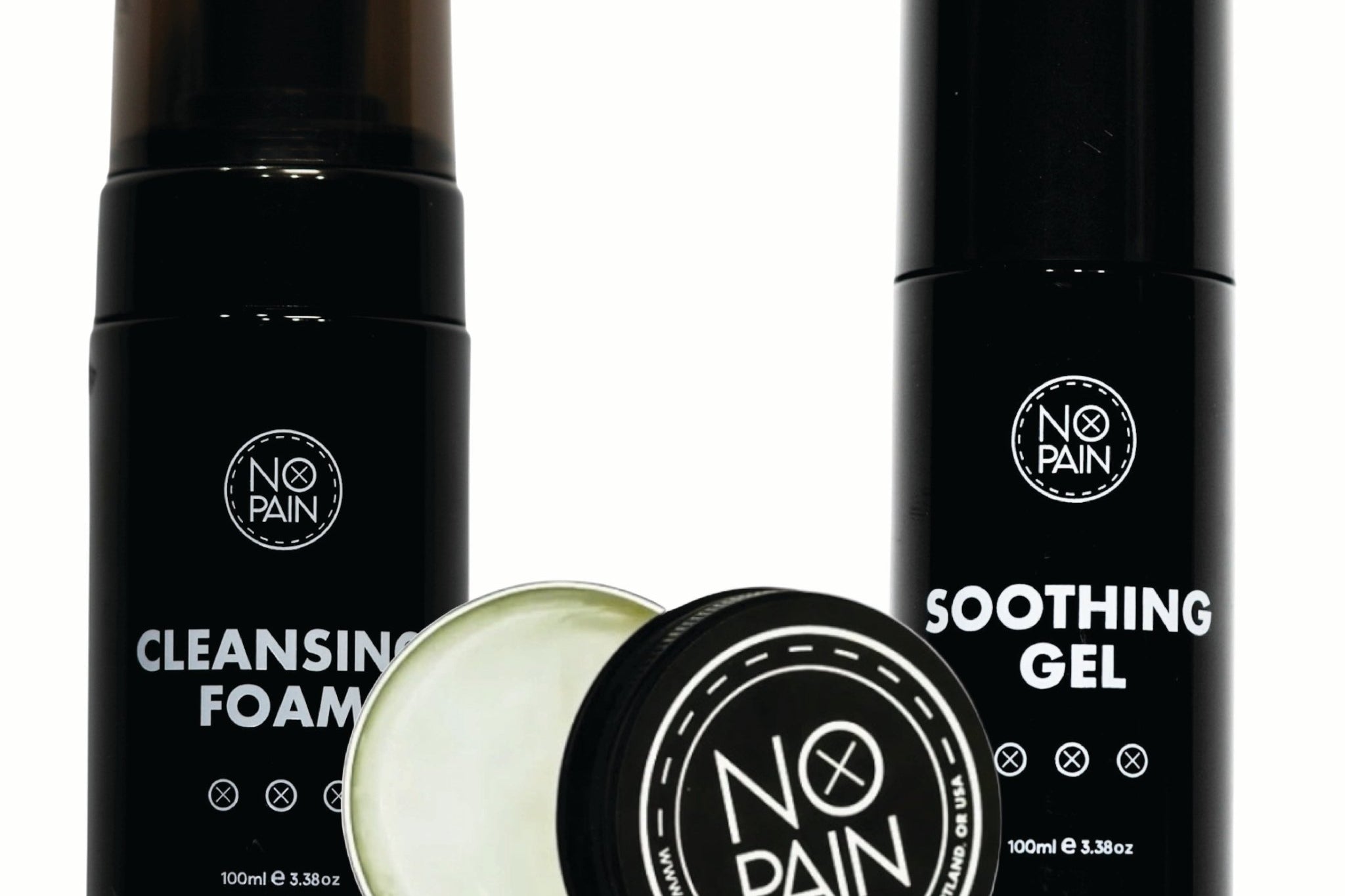
The goal in the first week is to prevent thick scabbing entirely. This means no petroleum products that occlude the wound, no fragrance that irritates the skin, and consistent application of a lightweight gel in the first few days while the skin closes. Once the surface is past the open-wound phase (around day three), switch to a nourishing balm. That keeps the peeling phase hydrated enough that shedding happens as thin flaking rather than thick crust.
Keep fine line out of the sun during healing completely, and use SPF 30 or higher on healed fine line any time it'll see direct sun. This is the single biggest factor in long-term vibrancy. The thinner the lines, the more UV exposure costs you over years.

Lightweight cooling gel that keeps the surface hydrated without blocking airflow. Thin lines can't afford the scabbing that heavier gel or petroleum cause. Use this in the first few days to keep the surface shedding cleanly.

Shea butter balm for the peeling and milky phase. Keeps the new skin layer nourished as it forms, so fine lines heal cleanly and hold their detail.
Fine Line Needs a Clean Heal
Soothing gel for the first few days, aftercare balm from day 3 onward. No petroleum, no fragrance. Thin lines can't afford a rough heal.
Shop the Aftercare Bundle →Formulated at Historic Tattoo in Portland, Oregon. 100% money-back guarantee.
Frequently asked questions
What is a fine line tattoo?
Fine line tattooing is a technique that uses very small needle groupings (typically one to three needles) to create thin, precise lines and intricate detail. The style produces tattoos that look closer to ink illustration than to traditional bold-outline tattooing. It's the basis for minimalist, botanical, single needle, and many realism styles. The trade-off for the delicate look is that thin lines require more maintenance over time than bold work.
Do fine line tattoos fade faster?
Yes, faster than bold linework. Thin lines have less ink per millimeter of skin than thick ones. Over years of UV exposure and cell turnover, that smaller ink deposit shows change more visibly. Fine line on well-protected placement with consistent sun care can hold for many years, but it requires more active maintenance than American Traditional-style work. Touch-ups every few years are typical for people who want the tattoo to stay looking crisp.
Does a fine line tattoo hurt less?
Generally, yes. The smaller needle grouping makes each pass less invasive than heavy linework or dense shading. For most placements, fine line sessions are more comfortable than comparable sessions in bolder styles. Placement still matters: fine line on the ribs involves the same anatomy as any other rib tattoo. If you're getting fine line on a sensitive placement, maximum-strength numbing cream applied correctly before the session takes the sharpest edge off the experience.
How do I find a good fine line tattoo artist?
Search specifically for artists who specialize in fine line rather than generalists who include it in their portfolio. Look at healed work, not just fresh photos: healed work at six months to two years shows whether the artist's lines hold their quality over time. Watch for line consistency (uniform weight across the piece), absence of blowout, and clear detail after healing. Book a consultation before committing so you can see how the artist approaches your specific design.
What placements work best for fine line?
Placements with stable skin that isn't subject to constant friction hold fine line the best: outer arm, outer thigh, upper back, shoulder, calf, and ribcage (if you can manage the session). Placements that cause faster fading in any style (hands, fingers, feet) cause it faster still with fine line. If you want fine line on a high-movement or high-friction placement, the design should be sized accordingly and touch-up expectations set upfront with your artist.
What's the difference between fine line and single needle?
Single needle is a subset of fine line that uses just one needle point (1RL) rather than a small grouping of two or three. It's the most technically demanding form of the style and produces the thinnest possible lines. Single needle work requires exceptional artist skill and is the version most likely to spread or blur over time without diligent sun protection and periodic touch-ups. Both are fine line; single needle is the extreme end of the spectrum.