


All black tattoos fade over time. A fresh black tattoo will never look as dark in thirty years as it does the day it heals. But the pace and extent of that change varies enormously depending on the ink quality, the artist's technique, your placement choices, and how you care for the tattoo after it heals. What's controllable is more than most people realize.
In this article
- Why black ink turns grey
- Why some black ink goes green
- What controls how fast it happens
- How to slow the fade
- When to consider a touch-up
- FAQ
Why Black Ink Turns Grey
Black tattoo ink uses carbon as its primary pigment base. Carbon is stable and UV-resistant compared to colored pigments, which is why black ink holds up longer than almost any other tattoo color. But over years and decades, several processes combine to shift its appearance.
The first is dermal spreading. Ink sits in the dermis, not on the surface of the skin. Over time, the particles of ink spread slightly into the surrounding tissue, which softens the edges of lines and diffuses solid fills. A crisp black line from a decade ago will read as a slightly broader, softer line today. This is the primary reason black tattoos transition from a sharp, solid look to a grey-wash quality over time.
The second is UV degradation. Even carbon-based ink is not completely immune to ultraviolet light. Long-term UV exposure breaks down the pigment particles gradually, reducing their density. This is most visible in areas with constant sun exposure. A tattoo on a forearm that sees daily sun will fade faster than one on the upper back that's usually covered.
The third is the skin itself. The epidermis turns over constantly, and while ink in the dermis doesn't shed with it, the skin above the ink filters and diffuses how it appears. As skin ages and becomes slightly less transparent, the dermis layer reads slightly less clearly through it.
Why Some Black Ink Goes Green
Not all black tattoo inks are pure carbon. Some older formulas and lower-quality inks include iron oxides and other compounds that can oxidize over time and with UV exposure, shifting from black toward green or brown. This is why old tattoos from decades ago sometimes have a distinctly blue-green or olive tone the original owner never intended.
Modern, high-quality black inks from reputable suppliers are formulated to minimize this shift. But it's one of the reasons why artist choice and ink quality matter not just for how the tattoo looks at the end of the session, but for how it looks in twenty years.
What Controls How Fast It Happens
Placement and sun exposure. This is the single biggest variable after ink quality. Placements that see constant sun (forearms, back of neck, shoulders in summer) fade faster than placements that stay covered (upper back, ribs, calf under trousers). The correlation is direct and significant over a decade.
Ink quality and artist technique. An artist using high-quality, single-pigment black ink and depositing it at the correct depth produces results that hold better than work done with substandard ink or inconsistent needle depth. Ink that sits too shallow fades faster. Ink that goes too deep spreads more into the surrounding tissue. The right depth, placed consistently, produces the most stable long-term result.
Skin type. Skin that turns over quickly (as on the hands and feet) contributes to faster fading. Skin that holds ink well tends to have moderate, stable hydration and controlled sun exposure.
Aftercare quality. Proper healing in the first four to six weeks matters more for long-term ink retention than most people realize. A tattoo that heals with thick scabbing can pull surface ink with it when the scabs shed, leaving a faded or patchy result from day one. The best long-term results start with a clean heal.
How to Slow the Fade
SPF every time, consistently. This is the highest-impact habit for any healed tattoo, and especially for black work. Apply SPF 30 or higher to any healed tattoo every time it's going to be exposed to sunlight. Not occasionally — consistently. UV protection does more to preserve black ink long-term than any other single measure.
Keep the skin moisturized. Healthy, hydrated skin above the ink provides a better viewing window for the dermis below. Dry, cracked, or neglected skin makes a tattoo look faded and dull even when the ink itself hasn't changed much. A daily moisturizer on healed tattoos is a worthwhile habit.
Choose covered placements for work you want to keep dark longest. If maximum longevity matters, placements that stay out of the sun most of the day (upper back, ribs, inner arm) hold ink longer than high-exposure placements. This is worth thinking about at the design stage, not after.
Choose an artist who uses quality ink. Ask specifically about the inks they use. Reputable artists using established, single-pigment black inks produce more stable work. Worth asking about at the consultation stage.
When to Consider a Touch-Up
Most solid black tattoos benefit from a reline or touch-up at some point, typically starting in the five to ten year range depending on the factors above. A reline sharpens the outlines. A touch-up adds fresh ink to faded fill areas. Both are standard services that most tattooers offer and can restore a significantly faded piece to something close to its original look.
Before booking a touch-up, make sure the skin is healthy and well-protected. Reworking on sun-damaged skin produces less stable results than reworking on maintained, SPF-protected skin. The best rework results happen on people who've been protecting their ink with consistent sun protection for years.
Start the Fade Clock in the Right Direction
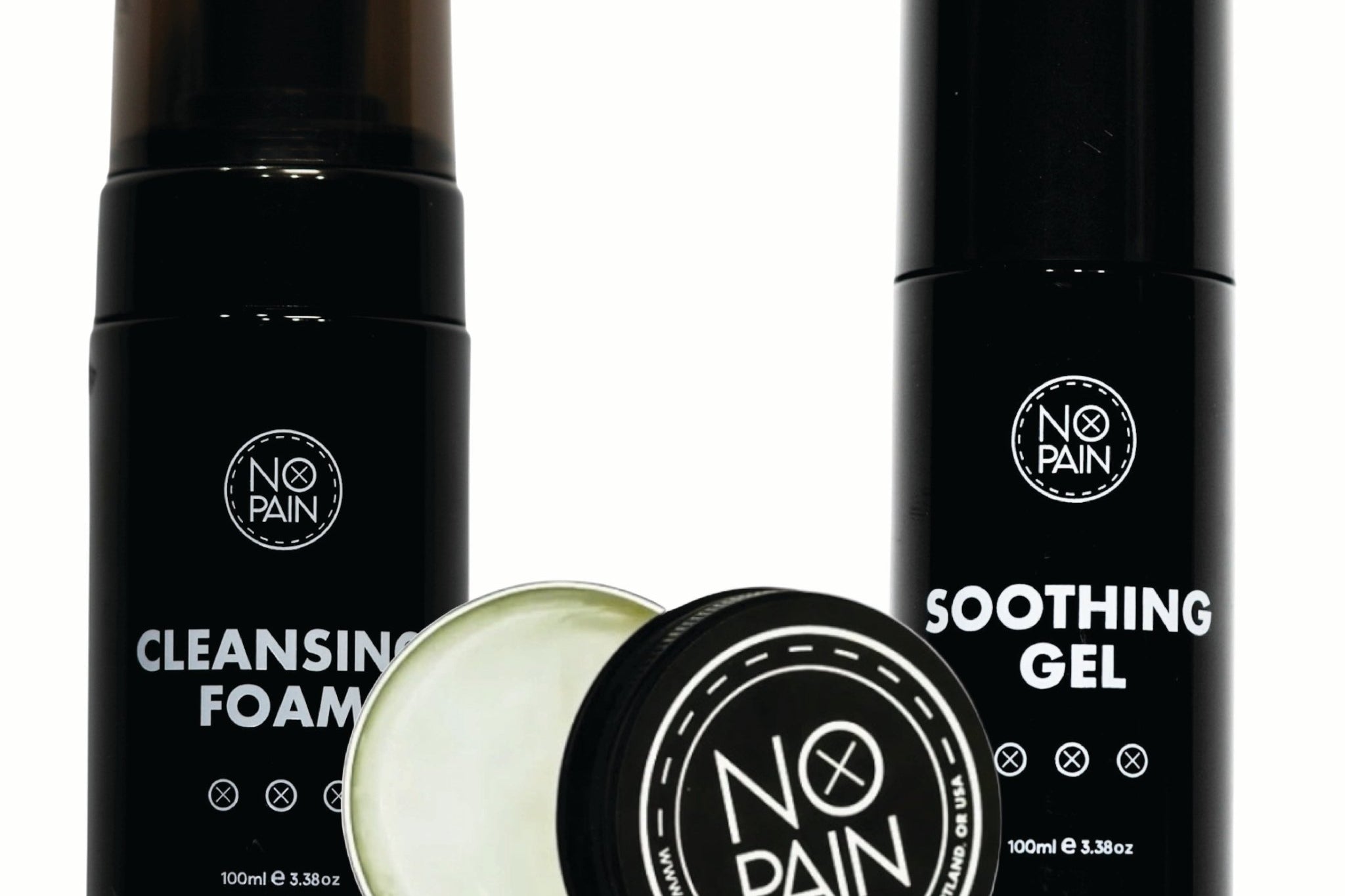
A clean heal is the first step in keeping black ink dark long-term. Soothing gel for the first few days, nourishing balm from day three onward — the two-phase system that gives your ink the best possible start.
Shop the Aftercare Bundle →Formulated at Historic Tattoo in Portland, Oregon. 100% money-back guarantee.
FAQ
Why is my black tattoo turning grey?
Black ink fades to grey over time because the pigment particles in the dermis spread slightly into surrounding tissue (softening sharp lines into broader, more diffuse areas) and because UV exposure degrades carbon pigment gradually. The process is slow, usually noticeable over years rather than months, and happens faster in sun-exposed placements than in covered ones. A black tattoo on an arm that sees daily sun will look noticeably softer in five years than an identically done tattoo kept protected.
Why do old black tattoos turn green?
Older tattoo inks and some lower-quality current inks contain iron oxides and other compounds alongside carbon. Over time and with UV exposure, these compounds oxidize and shift in color, turning from black toward brown, green, or blue-grey. High-quality modern inks are formulated to minimize this, but it can appear in older work or in tattoos done with budget ink.
How do I keep my black tattoo dark?
The two most effective measures are consistent sun protection and clean healing. Apply SPF 30 or higher to your healed tattoo every time it's in the sun. Keep the skin moisturized. Both habits are simple and have a real, cumulative effect on how long black ink stays saturated. Beyond aftercare, choosing an artist who uses high-quality ink and deposits it at the correct depth is the most significant variable, but that decision is made before the needle touches skin.
How long do black tattoos stay dark?
With proper care and sun protection, a solid black tattoo can maintain most of its original density for ten or more years. Without protection, particularly in high-UV placements, noticeable softening can begin in the two to five year range. All black ink fades eventually; the question is the rate. Placement, ink quality, artist technique, and aftercare determine whether a tattoo looks sharp at year five or year fifteen.
Does sun exposure really fade tattoos that much?
Yes. UV light is the primary driver of ink degradation over time. Even carbon-based black ink, the most UV-stable tattoo pigment available, breaks down under sustained UV exposure. The difference between a tattooed forearm that gets daily summer sun versus one consistently protected with SPF is visible and significant over five to ten years. SPF is the single most effective long-term care habit for keeping black ink dark.
When should I get my black tattoo touched up?
Most solid black tattoos benefit from a reline or touch-up at some point in the five to ten year range, though timing depends on placement, sun exposure history, and how cleanly the original healed. Signs a touch-up is worth considering: solid fills have softened to dark grey, lines have spread or blurred noticeably, or detail has been lost in areas that were originally sharp. Before booking, ensure the skin is healthy and well-protected from sun. Touch-ups on sun-damaged skin produce less stable results.