

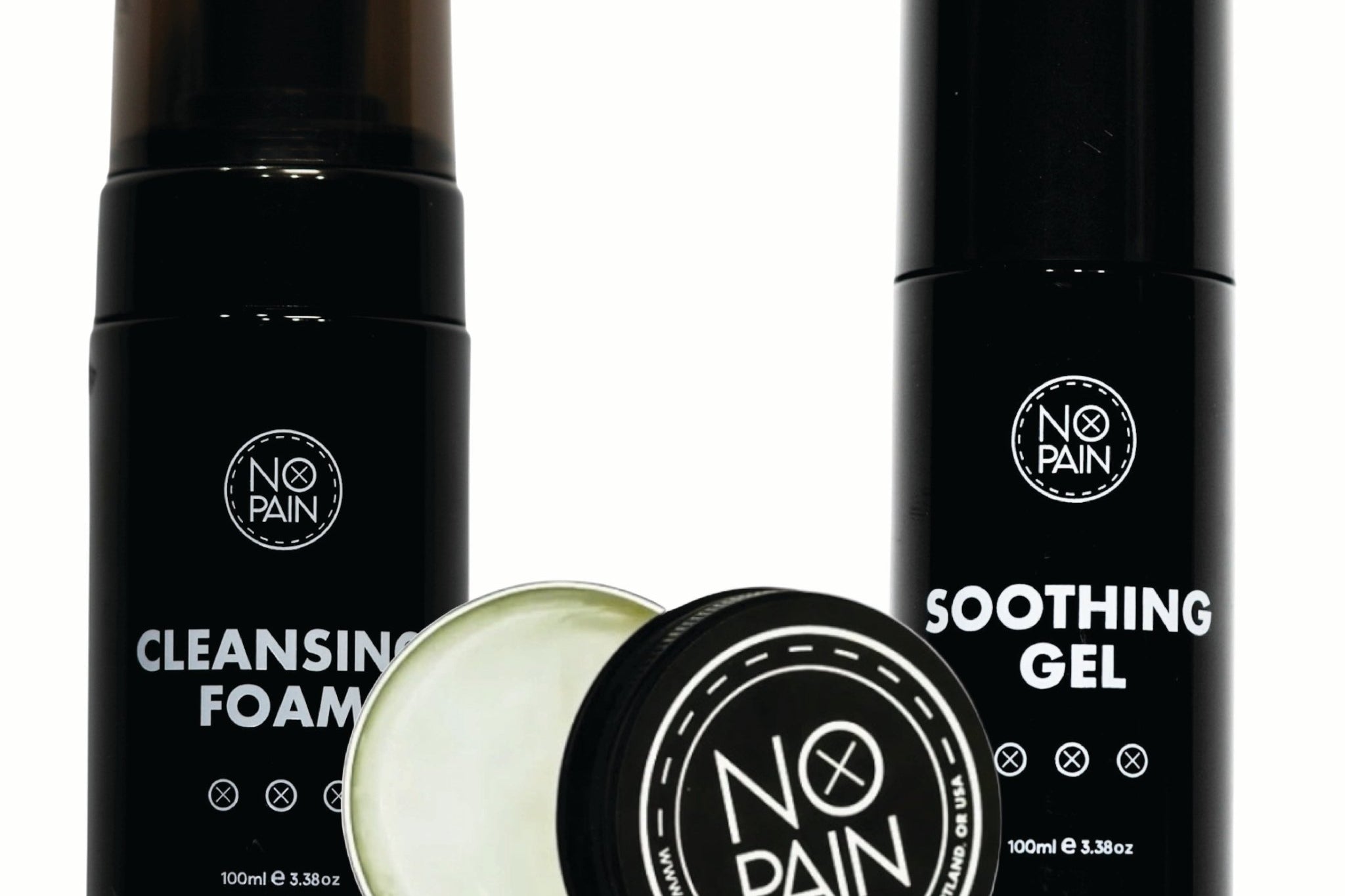

Final Mile Gel™ is a tattoo numbing gel designed for one specific moment: the point mid-session when your pre-session cream has worn off and you've still got work left to do. It's not a pre-session product. It goes on broken skin - skin the needle has already been through - and it absorbs in about 12 minutes to deliver 20 to 30 minutes of renewed numbness. Your artist applies it during a natural break, wipes it away, and picks up where they left off.
If you're planning a session over three hours, this is the tool for the final stretch.
In this article
- Numbing cream vs. numbing gel: two different tools
- When Final Mile Gel™ is the right call
- How to use it mid-session
- What to expect: the honest version
- Frequently asked questions
Numbing Cream vs. Numbing Gel: Two Different Tools
These products solve different problems at different moments. They're not interchangeable, and one doesn't replace the other.
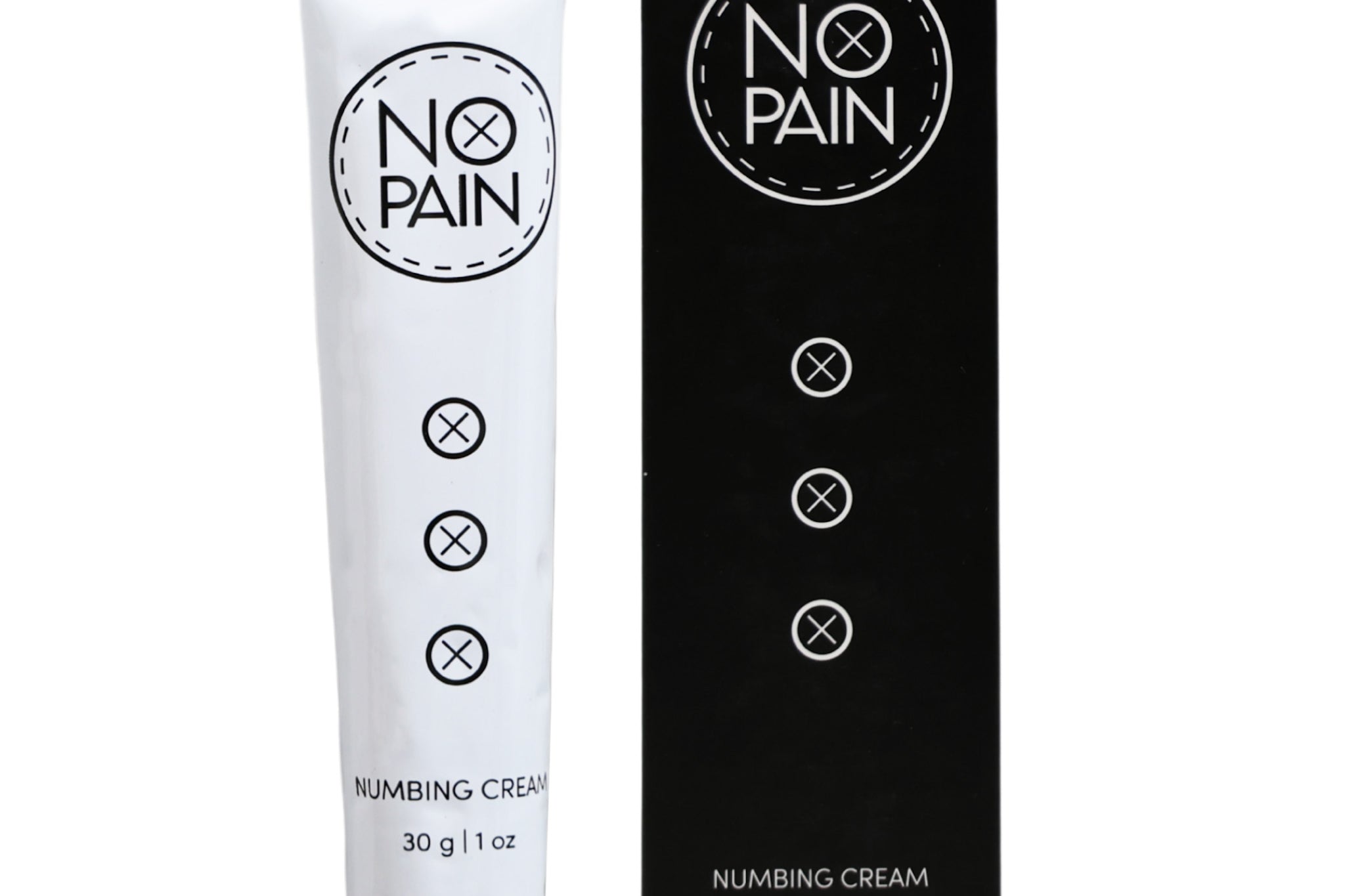
Numbing cream is a pre-session product. You apply it to clean, intact skin at home, wrap it with cling film, and leave it for 90 to 120 minutes before your session starts. It needs that full absorption window to drive the lidocaine deep enough to block tattoo pain at the nerve level. The result is two to four hours of coverage from the point the wrap comes off - enough for most sessions.
Final Mile Gel™ is a mid-session product. It's formulated specifically for broken skin - skin the needle has already opened. Once the outer skin barrier is disrupted, lidocaine can reach the nerve layer much faster than it can through intact skin. That's why the gel absorbs in 12 minutes rather than 90. But it also means the gel won't work as a pre-session product: applied to intact skin before a session, it evaporates too quickly and sits too shallow to produce the depth of numbing a tattoo requires.
Pre-session cream to start. Gel mid-session when the cream fades. That's the two-part system for long sessions.

Maximum strength lidocaine in a thick, slow-absorbing base. Apply at home 90 to 120 minutes before your session for two to four hours of deep coverage. The foundation for any long session.
When Final Mile Gel™ Is the Right Call
Not every session needs it. For a two-hour session on a manageable placement, the pre-session cream usually carries you through. Final Mile Gel™ is for situations where you know you'll be working past that window.
All-day sessions
Sleeves, back pieces, large chest work, anything requiring four or more hours of continuous tattooing. The pre-session cream covers the first half. The gel covers the second. Without it, the later shading passes - often the most technically demanding part of the session - happen on maximally sensitized skin with no coverage left.
Intense shading and color packing
Going over the same area repeatedly makes the skin raw in a way that a single-pass outline doesn't. Shading and color packing are where a lot of clients start struggling, even if they were fine during the outline. The gel resets that baseline so the artist can finish the work cleanly.
High-pain placements
The elbow ditch, inner arm, back of the knee, ribs, and shin don't hold pre-session numbing as long as fleshier spots do. If you're doing a large piece on one of these placements, the coverage thins faster and the later passes hit harder. Having the gel ready means the artist can top up when needed rather than stopping the session.
When the client is starting to struggle
A still client is how you get clean linework, even shading, and consistent color. When a client starts flinching or tensing up, everything gets harder - the lines, the shading, the overall result. Applying the gel before someone reaches the wall is better than waiting until they're tapping out.
How to Use It Mid-Session
The application is straightforward and takes about 15 minutes total.
Step 1 - Communicate with your artist. When you feel the numbing starting to thin, tell your artist. Don't wait until you're in pain. Catching it on the fade is easier than trying to reset after you've already hit the wall. Let them know you have the gel so they can plan for a break.
Step 2 - The artist cleans the area. They'll stop tattooing and wipe down the area with a sterile solution to remove blood and excess ink. The skin needs to be clean before the gel goes on.
Step 3 - Apply a generous layer of Final Mile Gel™. A thick, even coat over the tattooed skin. This is applied directly to the broken skin - that's how it's designed to work.
Step 4 - Wait 12 minutes. That's all it takes on broken skin. The lidocaine reaches the nerve layer quickly through the open surface. No need for cling film wrap.
Step 5 - Resume tattooing. The artist wipes away the excess gel and continues. The renewed numbness window is 20 to 30 minutes.
Step 6 - Reapply or find a stopping point. If 20 to 30 minutes is enough to reach a good natural stopping point in the work, great. If there's more to do, the process can be repeated. Most people find one reapplication gets them through the finish.

Fast-acting lidocaine gel for broken skin. Absorbs in 12 minutes on open skin. Delivers 20-30 minutes of renewed numbness so your artist can push through the final hours of any long session.
What to Expect: The Honest Version
Broken-skin topicals have a real ceiling. Any product claiming to give you an hour or two of renewed numbness from a mid-session application on open skin is not being straight with you. The 20 to 30 minute window is what you get, and it's consistent across the category. What matters is whether that's enough time to get your artist to a good stopping point.
For most sessions, it is. The typical use case is an all-day piece where the artist needs one good push through the final shading or color packing pass. Twenty to thirty minutes of relief at the right moment - before the client taps out - is usually enough to cross that line.
The gel doesn't feel the same as the pre-session cream either. The pre-session cream builds to a deep, consistent numbness across the full area. The gel is faster and lighter - it takes the edge off and drops the pain to a manageable level rather than eliminating it entirely. You'll still feel pressure and some sensation. What it removes is the raw, burning, couldn't-sit-still feeling that hits around hour three or four.
Applied correctly, at the right moment, with the right expectations - it's the difference between finishing the session and calling it short.
Frequently asked questions
What is Final Mile Gel™?
Final Mile Gel™ is a fast-acting lidocaine gel formulated specifically for application on broken skin during a tattoo session. It's designed for the mid-session moment when pre-session numbing cream has worn off and the session isn't finished. It absorbs in about 12 minutes on open skin and delivers 20 to 30 minutes of renewed numbness - enough time for an artist to push through the final shading or color packing passes.
Can I use Final Mile Gel™ before my tattoo session instead of numbing cream?
No. The gel is designed for broken skin and doesn't work the same way on intact skin before a session. Applied to unbroken skin, it evaporates too quickly and sits too shallow to produce the depth of numbing a tattoo requires. The pre-session product is the numbing cream, applied under cling film for 90 to 120 minutes. The gel is for the mid-session top-up only.
How long does the numbing last from Final Mile Gel™?
20 to 30 minutes of renewed coverage per application. That's the realistic window for any topical on broken skin - the open surface means faster absorption but also faster processing. Any product claiming far longer than this from a mid-session broken-skin application is overstating what the mechanism can deliver. The 20 to 30 minute window is consistent and enough for most session finishes. It can be reapplied if needed.
Does my tattoo artist apply it, or do I?
Your artist applies it. Let them know before the session starts that you have it, so they can factor a short break into the plan. When you're ready, they'll stop, clean the area, apply the gel, wait the 12 minutes, then wipe and resume. It doesn't require a long pause - most artists build this into the session without any disruption to the overall flow.
Is Final Mile Gel™ safe to use on fresh tattoo skin?
Yes. It's formulated for exactly this application - lidocaine on open, freshly tattooed skin. Lidocaine on broken skin is standard in professional and clinical settings. Applied correctly during a session, it doesn't affect how the ink settles or how the tattoo heals. Your artist wipes it away before continuing, so there's no residue left in the skin.
Do I need the numbing cream if I'm bringing the gel?
Yes. The gel doesn't work on intact skin before the session, so you still need the cream for the pre-session foundation. Think of them as a two-part system: cream covers the first two to four hours, gel extends coverage past that point when the cream fades. Using the gel without the cream means you start the session with no numbing and only get the gel's shorter window once the needle opens the skin - not the setup you want for a long piece.
Cream First. Gel When You Need It.
Apply the cream at home 90 to 120 minutes before your session. Bring the gel for the point where your artist needs one more push to finish the work. That's the full plan for any long session.
Shop Final Mile Gel™ →Formulated at Historic Tattoo in Portland, Oregon. 100% money-back guarantee.