


In most cases, small pimples or a rash on a new tattoo are not an infection. They are a sign of a correctable problem with your aftercare products — usually heavy or petroleum-based ointments that clog pores on a wound that needs to breathe. But the right response depends on which type of bumps you are dealing with, because the causes are different.
In this article
- The most common cause: clogged pores
- White bumps that won't pop: milia
- Heat rash around the tattoo
- Allergic reaction to ink
- How to tell if it's actually infected
- The 4-step fix
- FAQ
The Most Common Cause: Clogged Pores
The most frequent reason for pimples on a fresh tattoo is that the skin is being suffocated by a thick, occlusive product. A healing tattoo needs to stay moist enough to heal and breathe enough to expel plasma, sweat, and dead cells. Old-school petroleum-based products like Vaseline and Aquaphor seal the surface completely, which traps everything underneath and leads to breakouts.
The result is a cluster of small, painless whiteheads or red pimples in the tattooed area — folliculitis or comedone formation, the same thing that happens when any pore gets blocked, just in a location where the skin is already compromised.
"I dealt with this for years. Every time I used Aquaphor on a fresh tattoo, I'd get a crop of pimples right in the work. It's one of the main reasons I was so determined to create a non-comedogenic alternative." — Michael Hollman, founder, No Pain Tattoo
The fix is simple: stop the occlusive product immediately and switch to something breathable. The pimples typically resolve within a few days once the pores can clear.
White Bumps That Won't Pop: Milia
Milia are tiny white cysts that form just under the skin's surface. They look like small, hard white pearls and they don't respond to pressure — you can't pop them. On a healing tattoo, milia form when dead skin cells get trapped under a closed skin layer rather than shedding normally. This often happens when moisturizer is applied too thick or too often, interfering with normal skin turnover.
Milia on a fresh tattoo are harmless and resolve on their own once aftercare is scaled back and the skin can shed the trapped material naturally. Do not try to extract them. Attempting to do so risks pushing bacteria into a still-open wound and damaging the ink.
Heat Rash Around the Tattoo
A ring of small, prickly red bumps on the skin surrounding (but not on) the tattoo is typically heat rash rather than a reaction to the ink. Heat rash forms when sweat ducts are blocked — often by plastic wrap used during aftercare or by tight clothing trapping heat and moisture against the skin. It is more common in warm weather or on placements that are often covered.
Heat rash fades quickly once the skin can breathe. If you are wrapping your tattoo, limit it to the first 24 hours then switch to open air. Avoid synthetic fabrics directly over the healing area. Heat rash is not an infection and needs no treatment beyond better airflow.
Allergic Reaction to Ink
A genuine allergic reaction to tattoo ink produces a different pattern: raised, itchy skin specifically over one ink color rather than over the whole tattoo. Red ink is most associated with allergic reactions. Older red pigments used mercury sulfide (now largely phased out), and some current organic red pigments are still reactive in certain people. Blue, purple, and green can occasionally cause reactions; black almost never does.
Ink allergy rashes don't look like pimples. They look like a persistently raised, inflamed version of the specific ink color causing the reaction — as if that section of the tattoo is chronically irritated. If your rash maps precisely to one color and the rest of the tattoo is healing normally, ink sensitivity is worth discussing with a dermatologist.
How to Tell If It's Actually Infected
Infection produces different symptoms from any of the above. The signs to watch for: pain that is getting worse rather than better after day three, redness spreading beyond the tattoo border (or red streaks radiating outward), thick colored discharge (yellow, green, or grey) rather than clear plasma, a foul odor, or a fever. Bumps alone — especially painless ones — are rarely a sign of infection. Infected tattoos typically hurt more over time, not less.
If you have several of those signs together, see a doctor. Tattoo infections respond well to antibiotics when caught early and can cause permanent damage to the tattoo and the skin if left untreated.
The 4-Step Fix
Step 1: Stop the current product. If you are using Vaseline, Aquaphor, any petroleum-based ointment, or a heavy scented lotion, stop immediately. That product is almost certainly the cause.
Step 2: Wash the area thoroughly. Use a gentle, fragrance-free liquid soap and wash the tattooed area two to three times a day with cool to lukewarm water. Hot water increases inflammation. Pat dry with a clean paper towel after each wash.
Step 3: Let it breathe. After washing and patting dry, let the tattoo air out for 20 to 30 minutes before applying anything. If the pimples are severe, skip moisturizer for a day as long as the skin doesn't become uncomfortably dry or cracked. Airflow helps the pores clear.
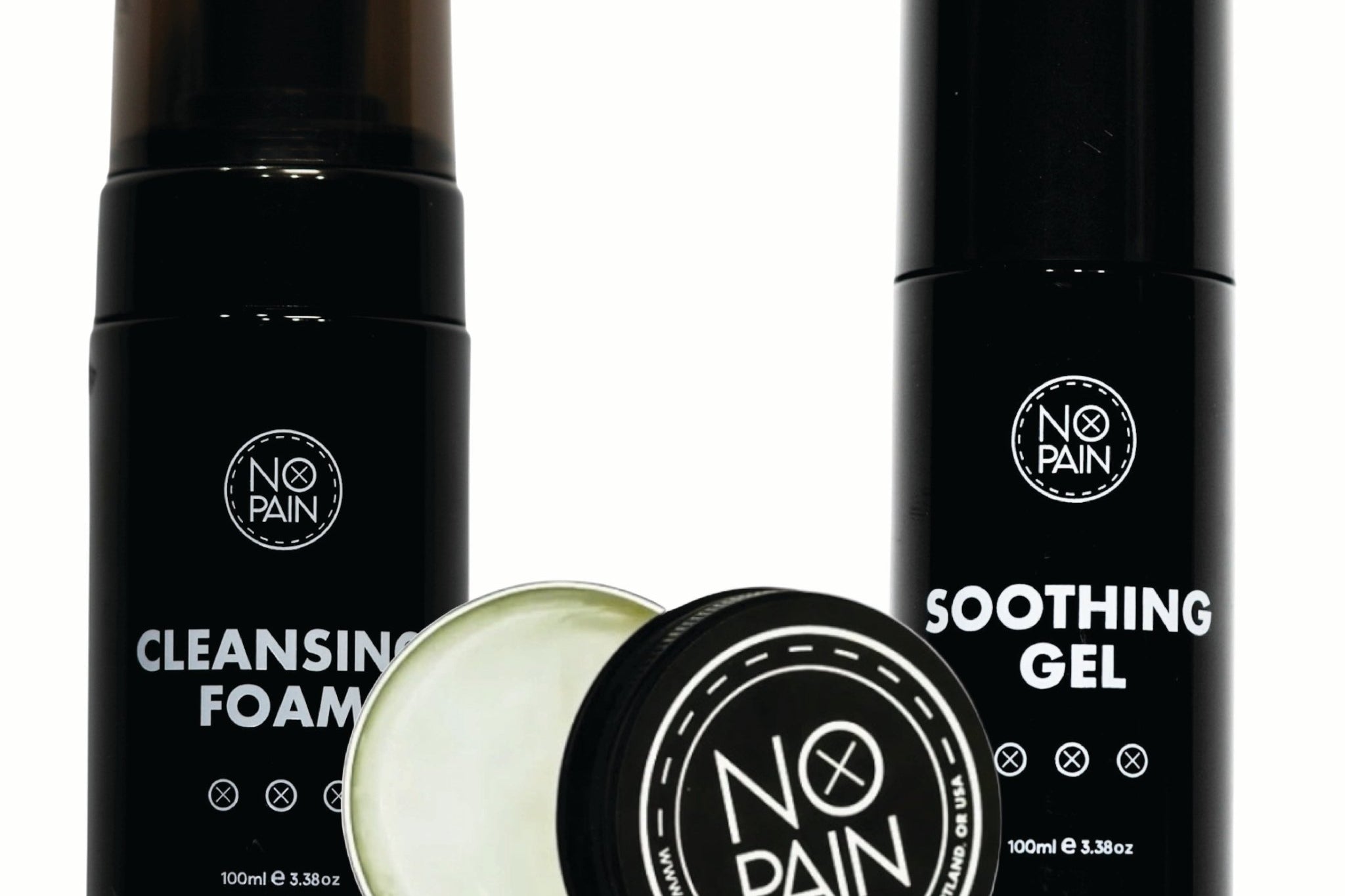
Step 4: Switch to a lightweight, non-comedogenic product. Once the breakout starts to calm, reintroduce moisture with a product that will not clog pores. A soothing gel in the first few days delivers moisture without occlusion. Apply a thin layer — a rice-grain-sized amount — twice daily after washing.

A lightweight, non-comedogenic gel that calms inflammation without clogging pores. The right switch if your tattoo has broken out from a heavy product. Apply a thin layer after each wash in the first few days.
FAQ
Is a rash on my new tattoo normal?
Small pimples or bumps on a new tattoo are common and usually not a cause for concern. The most frequent cause is a product reaction — thick, petroleum-based ointments block pores on a healing wound and produce breakouts. This is not a sign of infection and resolves quickly once you switch to a lighter, non-comedogenic product and let the skin breathe. A spreading rash with worsening pain, colored discharge, or fever is a different matter and should be seen by a doctor.
Why do I have white bumps on my new tattoo?
Small, hard white bumps that can't be popped are usually milia — tiny cysts that form when dead skin cells get trapped under a closed skin layer. On a fresh tattoo, this often happens from applying too much moisturizer too frequently, which interferes with normal skin cell shedding. Milia resolve on their own once aftercare is scaled back. Do not try to extract them. Soft, fluid-filled whiteheads that look like pimples are more likely clogged-pore breakouts from a heavy product.
Can I pop pimples on my healing tattoo?
No. Popping pimples on a healing tattoo can push bacteria into an open wound, turning a minor product reaction into a genuine infection. It can also dislodge ink from that spot, leaving a permanent blank patch or scar in the design. The pimples will resolve on their own within a few days once you stop the offending product, keep the area clean, and switch to a breathable aftercare option.
What does an infected tattoo look like versus a product reaction?
A product reaction produces painless bumps or pimples while everything else about your healing is on track. An infected tattoo feels different: the area is more painful than it was a few days earlier (not less), redness may be spreading beyond the tattoo border, and you may see thick colored discharge rather than clear plasma. Infection often produces fever or flu-like symptoms alongside the local symptoms. A cluster of painless pimples without any of those additional signs is almost always a product issue.
What's the best aftercare when your tattoo breaks out in pimples?
Stop any thick, petroleum-based, or scented product immediately. Wash gently with a fragrance-free liquid soap two to three times per day using cool to lukewarm water. Pat dry and let the tattoo air out for 20 to 30 minutes after each wash. Once the breakout starts to calm, reintroduce moisture with a thin layer of a lightweight, fragrance-free, non-comedogenic product — a soothing gel for the first few days, transitioning to a thin layer of aftercare balm from day three onward.
My tattoo has had a rash for two weeks. Is that still normal?
A rash that persists past two weeks despite switching aftercare products warrants a closer look. If the rash is specifically over one ink color and the rest of the tattoo is healing normally, ink sensitivity is possible — see a dermatologist. If the rash covers the whole tattoo and is accompanied by increasing pain, spreading redness, or discharge, see a doctor. Two weeks is well past the window where a product-reaction rash should have cleared up.
Switch to Products That Won't Clog
Soothing gel for the first few days, nourishing balm from day three onward. Both non-comedogenic, both fragrance-free. The cleanest possible products for skin that's already irritated.
Shop the Aftercare Bundle →Formulated at Historic Tattoo in Portland, Oregon. 100% money-back guarantee.