


You got sun on a fresh tattoo. Whether it was a few minutes on a hot day or a longer exposure you didn't plan for, it happened. Here's what that means for the tattoo and what to do right now to minimize the damage.
In this article
- What a sunburn does to a healing tattoo
- Immediate damage control steps
- What to realistically expect
- How to prevent this going forward
- FAQ
What a Sunburn Does to a Healing Tattoo
A new tattoo is an open wound. The skin has been punctured thousands of times and is actively in the process of closing, forming a new epidermis over the ink, and settling the pigment into the dermis below. This process takes two to four weeks depending on placement and the individual.
Getting UV exposure on this wound creates a second trauma on top of the first. The consequences are serious: intense UV radiation accelerates inflammation in skin that's already inflamed, which produces additional swelling, blistering, and pain beyond what normal healing involves. If blisters form over the tattooed area, they will pull fresh ink out of the skin when they pop or are absorbed. This produces permanent patchy or faded areas in the finished tattoo. Heavy scabbing follows the blistering phase, and thick scabs are notorious for taking ink with them when they shed.
UV radiation also breaks down ink pigment particles directly. Ink that hasn't fully settled in the dermis is particularly vulnerable. The result is permanent fading in the sunburned area, even if blistering doesn't occur.
Immediate Damage Control Steps
Get out of the sun and stay out. The first step is obvious but critical. Remove the tattoo from any further sun exposure immediately and keep it completely covered from direct sunlight until it is fully healed — and then use SPF every time it's exposed after that.
Cool the area gently. Run cool (not cold) water over the affected area for several minutes to draw out the heat. Do not apply ice directly — the cold shock can constrict blood vessels in already-stressed tissue. A clean, cool compress also works.
Wash gently with a fragrance-free cleanser. Use cool water and a mild, fragrance-free liquid soap or dedicated cleansing foam. Apply with light fingertip pressure only, rinse thoroughly, and pat dry carefully with a paper towel. The skin is extremely sensitive right now — any pressure or friction will increase irritation.
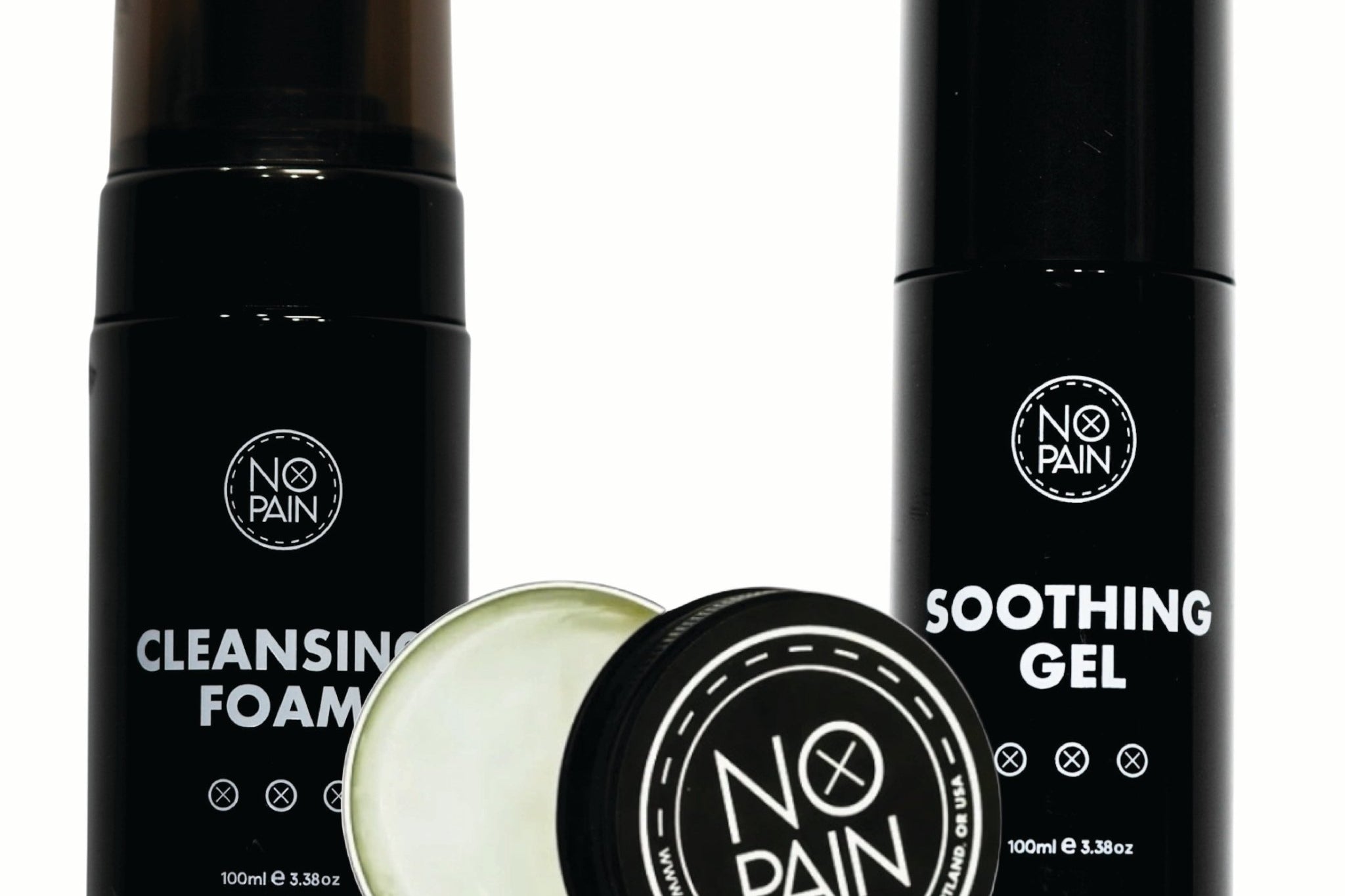
Apply a thin layer of soothing gel. The skin needs to stay moist enough to heal without forming a thick, hard crust, but the product you use must be fragrance-free and gentle enough for an inflamed wound. Standard drugstore aloe vera often contains alcohol and fragrances that will sting. A dedicated tattoo soothing gel designed for open wounds is the right product here. Keep it in the fridge before applying for additional cooling relief.

Fragrance-free, hypoallergenic, and designed for inflamed, traumatized skin. Refrigerate it before applying for additional cooling relief on a sunburned tattoo.
Stay hydrated. Drink water consistently. UV exposure dehydrates the skin from the outside; drinking water supports the healing process from the inside.
Don't pick at anything. Blisters, peeling skin, and scabbing are all part of how the skin responds to combined tattoo and sun trauma. Picking any of it causes additional ink loss and increases infection risk. Let it shed on its own timeline.
What to Realistically Expect
Be realistic about the outcome. A tattoo that gets significant UV exposure during the first two to four weeks of healing will sustain damage. How much damage depends on the intensity and duration of exposure, the phase of healing the tattoo was in, the placement, and the ink colors involved.
Light colors (white, yellow, pastel) are most vulnerable to UV fading and the most likely to be permanently altered. Black ink is more UV-stable but not immune. Vibrant colors sit between these extremes.
In most cases where meaningful sun exposure happens on a fresh tattoo, a touch-up session six to eight weeks after full healing is needed to correct patchy or faded areas. This is not a failure — it's a practical correction for what happened. Most experienced artists will not charge for a touch-up on a healing issue if it was caused by sun exposure, though you should discuss this with your artist directly.
How to Prevent This Going Forward
While the tattoo is still healing: keep it physically covered when outdoors. Loose clothing, a bandage, or UPF-rated fabric placed over the healing area provides complete protection without any chemical exposure from sunscreen (which should not be applied to an open wound).
Once the tattoo is fully healed — no scabbing, no peeling, no shine, skin texture matching the surrounding area — apply SPF 30 or higher to the tattooed skin every time it will be exposed to sunlight. This is the single most effective long-term measure for preserving ink vibrancy. Tattoos on consistently sun-exposed placements (forearm, shoulder, outer calf) that receive daily SPF protection fade significantly more slowly than those that don't.
FAQ
How long should I keep a new tattoo out of the sun?
A minimum of three to four weeks, or until the tattoo is fully healed — whichever is longer. Fully healed means no scabbing, no peeling, no shiny or waxy texture, and the skin feeling identical to the surrounding area. Hands, feet, and joint placements often take longer and need the full four to six weeks of sun protection. After healing is complete, use SPF every time the tattoo will be exposed.
Can I put sunscreen on a new tattoo?
Not while it's healing. Sunscreen contains chemical or mineral UV filters that are appropriate for intact, healed skin. Applying sunscreen to an open wound can cause irritation and interfere with the healing process. The right approach while the tattoo is healing is to keep it physically covered from the sun — clothing or a bandage, not product. Once it's fully healed, broad-spectrum SPF 30 or higher applied before any sun exposure is the right long-term habit.
Will my tattoo be permanently ruined by a sunburn?
Possibly partially. A brief, incidental exposure that doesn't cause blistering is less damaging than an extended burn with blisters. In most cases, a touch-up session after full healing can correct patchy or faded areas. In severe cases with significant blistering and scarring, some damage may be permanent. The best outcome is achieved by doing the damage-control steps immediately, following careful aftercare through the prolonged healing process, and then consulting your artist about a touch-up once everything is stable.
What if the sunburned tattoo blisters?
Do not pop the blisters. A blister is your body's protective mechanism over damaged tissue — the fluid inside protects the skin underneath as it heals. Popping it removes that protection and creates an open wound, which increases infection risk and ink loss significantly. Continue washing gently, keeping the area moisturized with soothing gel, and protecting it from any further sun or friction. The blisters will absorb on their own. Contact your artist after full healing about a touch-up.
Can I swim or go in water if my tattoo got sunburned?
No. Soaking a healing tattoo in any body of water — pool, ocean, lake, bath — draws ink out and introduces bacteria to an open wound. A sunburned healing tattoo that is now doubly compromised has an even higher infection risk from water exposure. Stay out of all water beyond a quick shower until the tattoo is fully healed.
How long will it take to heal after a sunburn?
Longer than a normal tattoo heal. A tattoo without additional trauma takes two to four weeks to reach surface healing. A sunburned tattoo with blistering and additional scabbing can take four to eight weeks or more, depending on the severity. Give it extra time, follow the cleaning and moisturizing routine carefully throughout, and resist any urge to assess the final outcome before it's fully settled.
Support the Heal From Here
Soothing gel for the first few days, nourishing balm from day three onward. The right aftercare to help a difficult heal go as smoothly as possible.
Shop the Aftercare Bundle →Formulated at Historic Tattoo in Portland, Oregon. 100% money-back guarantee.