


Yes, you can get a tattoo if you have psoriasis. Many people with the condition do, and plenty of them have results they're happy with. But psoriasis introduces a specific risk that doesn't apply to most people: the Koebner phenomenon, a reaction where skin trauma can trigger a new psoriasis plaque directly on the injured area. A tattoo is exactly the kind of trauma that can set it off.
That doesn't mean tattoos are off the table. It means the timing, placement, and aftercare decisions are more consequential than they'd be for someone without the condition.
In this guide
- The Koebner phenomenon
- When not to get tattooed
- Placement strategy
- Finding the right artist
- The session
- Aftercare
- FAQ
The Koebner phenomenon
The Koebner phenomenon (also called the Koebner response or isomorphic response) is a well-documented pattern in which new psoriasis plaques develop at sites of skin injury in people who have the condition. Injuries that can trigger it include cuts, burns, insect bites, friction, and tattooing.
Not everyone with psoriasis Koebnerizes. Studies suggest roughly 25 to 50 percent of psoriasis patients show the response. But there's no reliable way to know in advance whether you're in that group, and a Koebner response in a fresh tattoo is a real problem: the flare develops on top of healing ink, which disrupts the heal, affects how the pigment locks in, and can distort the finished piece. The plaque itself may also be harder to treat in that location once the tattoo is there.
This is the central risk to understand before deciding to get tattooed. Everything else flows from here.
When not to get tattooed
Two situations where getting a tattoo is a bad idea regardless of how much you want one:
Active flare-up: Tattooing over or near actively inflamed, scaly, or raised psoriatic skin is off the table. The tissue is already compromised, which makes a bad outcome far more likely, and any reputable artist will decline to work on visibly active skin. Wait until the area is completely calm.
Recently cleared skin: Skin that has just cleared from a plaque may look healed but can still be in an altered state. The Koebner response can occur even when the skin looks normal. Give cleared skin time to fully normalize before tattooing over or near it. Discuss this timing with your dermatologist.
Before booking anything, talk to your dermatologist. They can assess your current condition, your Koebner history, and what state your psoriasis needs to be in before you proceed. A tattoo is permanent; the consultation isn't optional.
Placement strategy
Placement matters more for people with psoriasis than for most. The Koebner response can occur anywhere, but the risk is meaningfully lower on areas of your body that have never or rarely been affected by psoriasis. If your flares consistently appear on your elbows, knees, and scalp, a tattoo on your upper arm or thigh is a different proposition than one on a spot that's historically been affected.
Map your psoriasis history before choosing placement. The areas where you've never had a flare are the better candidates. Discuss your plan with your dermatologist before finalizing anything. They may have insight into which areas of your skin are more stable based on your pattern.
Also consider friction and movement. High-friction areas (hands, feet, elbows, knees) are already more prone to psoriasis flares in many people, and the mechanical irritation of healing in those spots can increase the Koebner risk on top of the normal considerations.
Finding the right artist
Be fully transparent with any artist you're considering. Disclose your psoriasis condition, your current state, and your history with flares before booking. A knowledgeable artist will have questions: Is the skin currently calm? Have you had flares in the proposed area? Are you under dermatological care?
An artist who doesn't ask any of these questions when you disclose a chronic skin condition is not the right artist for this project. You want someone who takes the information seriously and is willing to work within realistic constraints, including rescheduling if your skin isn't in the right state when the appointment comes around.
Asking whether an artist has worked with psoriasis clients before is reasonable. It's not a requirement, but firsthand experience with how psoriatic skin behaves during a session and heal is genuinely useful.
The session
For the session itself, the main practical differences from a typical client are that your skin may react more to the needle trauma and that keeping stress low matters more, since stress is a known psoriasis trigger for many people.
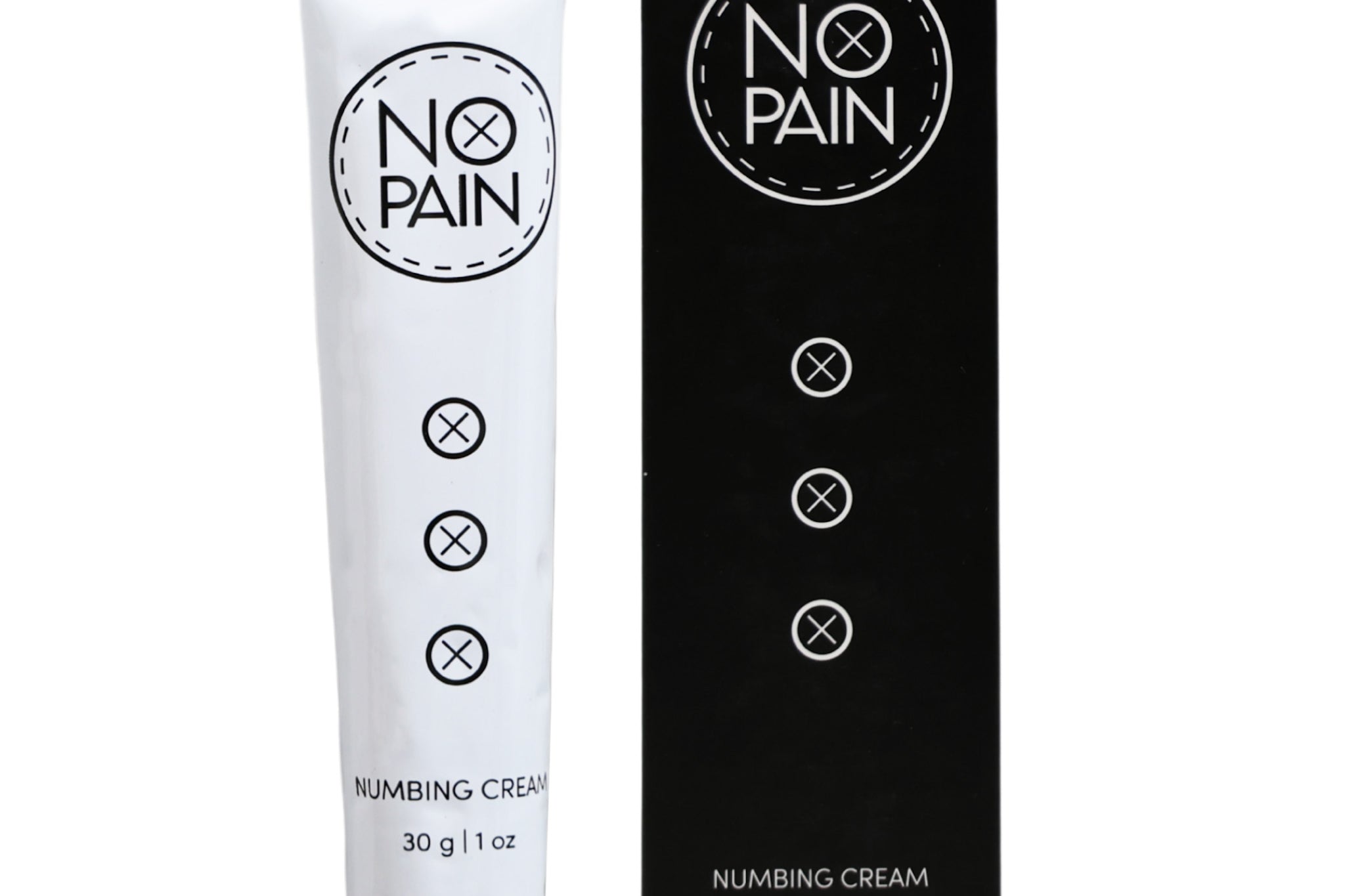
Numbing cream is fine to use and can help on both counts. Reducing pain and stress during a long session is useful for anyone, and there's no interaction between topical anesthetics and psoriasis. Apply maximum strength numbing cream 90 to 120 minutes before the session under wrap. For longer pieces, a numbing spray on broken skin extends the relief mid-session.

Maximum strength numbing cream for pre-session application. Apply 90 to 120 minutes before the session under wrap. Thick, slow-absorbing formula that penetrates deeper into the dermis and lasts longer than thinner creams. Backed by a money-back guarantee.
Shop Numbing Cream: $30.00
Aftercare
Aftercare is where psoriatic skin needs the most careful attention. Your skin is already primed toward inflammation, and the healing process for a fresh tattoo is an extended inflammatory event. The goal is to keep the area clean, calm, and moisturized while minimizing anything that could tip the balance toward a flare.
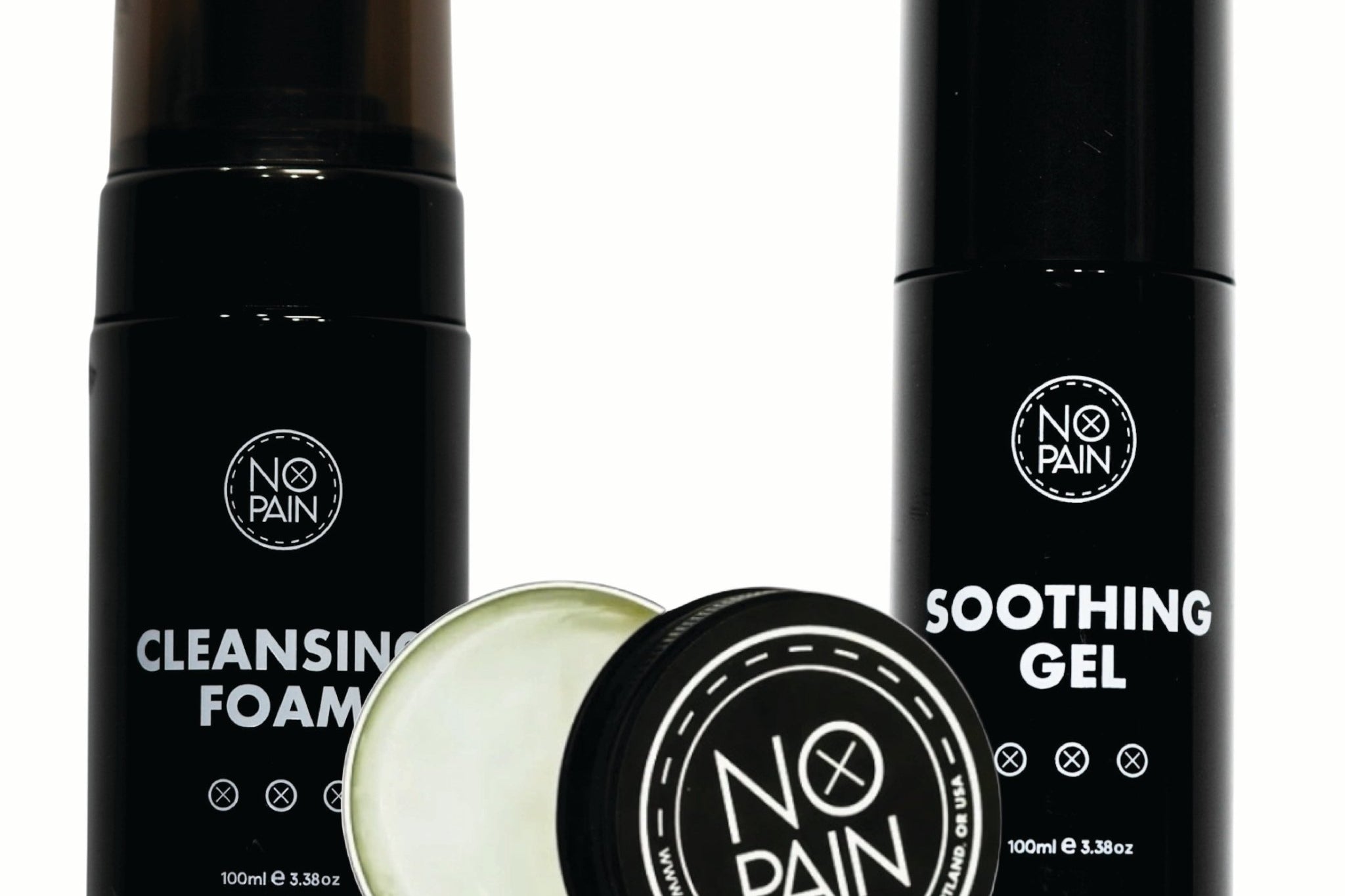
Wash twice a day with a fragrance-free liquid soap: nothing drying, nothing scented. Pat dry gently with a clean paper towel. Apply a thin layer of soothing gel after each wash for the first days to keep inflammation down and the surface hydrated. From day two or three, as peeling begins, transition to an aftercare balm. Keep the piece out of direct sun during healing. Do not pick or scratch at peeling skin. This is mechanical trauma that can trigger a Koebner response in the healing area.
Stay in contact with your dermatologist during the heal. If you notice a new plaque developing on or near the tattoo, get advice early. Some Koebner responses can be managed if caught before they fully develop; waiting to see if it resolves on its own is not always the best approach.

No Pain Tattoo Aftercare Bundle
Soothing gel for the first days of healing, aftercare balm from day two or three onward, and cleansing foam for gentle daily washing. Fragrance-free, non-comedogenic, and designed to keep healing skin calm. Backed by a money-back guarantee.
Shop Aftercare Bundle: $33.60FAQ
Can you get a tattoo with psoriasis?
Yes, in many cases. People with psoriasis get tattoos regularly. The main consideration is the Koebner phenomenon, which can trigger a new psoriasis plaque at the tattoo site in some patients. The risk varies by person, placement, and the state of your skin at the time. Consulting your dermatologist before booking is the right first step, not an optional one.
What is the Koebner phenomenon?
The Koebner phenomenon (or Koebner response) is a reaction in which new psoriasis plaques form at sites of skin injury in people with psoriasis. It's documented in roughly 25 to 50 percent of psoriasis patients. Tattooing is a form of controlled skin trauma, which means it can trigger this response in people who are susceptible. If it occurs, the new plaque develops directly on or around the healing tattoo, which affects both the heal and the finished result.
Where is the safest place to get a tattoo with psoriasis?
Areas where you have never or rarely had a psoriasis flare are lower risk than areas that have historically been affected. High-friction areas (elbows, knees, hands, feet) are generally higher risk regardless. Talk to your dermatologist about your personal flare history before choosing placement. They can help you identify which areas of your skin are most stable.
Can psoriasis ruin a tattoo?
A Koebner response developing on a fresh tattoo can disrupt the heal, affect ink retention, and distort the finished piece. If the plaque appears during the healing window, it can pull ink and create uneven patches that are difficult to correct. This is one reason timing and placement matter: a response on a tattoo that's fully healed is a different situation than one developing while the skin is still healing.
Should I tell my tattoo artist I have psoriasis?
Yes, always. A responsible artist needs to know so they can assess the skin before starting, refuse to work on active or recently flared areas, and understand what to look for during the session. If an artist doesn't take the disclosure seriously, find someone who does. Disclosing protects you from an avoidable bad outcome.
Can psoriasis medications affect tattoo healing?
Some psoriasis treatments can affect skin and healing. Biologics (like TNF inhibitors or IL-17 inhibitors) suppress the immune system, which could theoretically affect healing or infection risk. Topical corticosteroids thin the skin with long-term use. Methotrexate can affect cell turnover. This is another reason to involve your dermatologist before booking. They can advise on whether your current treatment plan affects your tattoo timing and what precautions make sense.