


You're a week into healing when you spot it: a blurry halo around the lines of your tattoo. The ink looks like it's spreading under the skin, soft at the edges where it should be crisp. Your stomach drops.
This is a tattoo blowout, and discovering one mid-heal is genuinely unsettling. The good news is that blowouts are not unfixable—and the very first thing you should do is stop.
Stop. Don't touch it, don't try to fix it, don't panic.
The first rule of discovering a blowout is the hardest one: do nothing corrective right now. You need to wait until the tattoo is fully and completely healed before any intervention is possible—a minimum of four to six weeks from your session date.
Here's why this matters: tattoos look dramatically different while they're still healing. Swelling, redness, and inflammation can make blurry lines look worse than they actually are. The blowout you're seeing now may settle to something far less noticeable once the skin has fully calmed down. Making a decision about correction before you've seen the healed result is premature.
Keep doing your aftercare routine exactly as normal. Clean it, moisturize it, protect it from the sun. A blowout is already done—the only thing that can still go wrong is a bad heal that makes the overall tattoo look worse.
What actually caused this
A blowout happens when the needle penetrates deeper than intended, depositing ink into the layer of fat beneath the dermis rather than within it. The ink migrates and spreads through this soft tissue, creating that characteristic blurry, diffused look around the original lines.
This is a technical error that occurs during the session—not afterward. It's not caused by your aftercare, your moisturizer, your clothing, or anything you did. Certain placements carry higher risk (thin skin over bone, very stretchy skin), and some artists apply pressure more inconsistently than others. None of that changes what you do next.
After healing: your three options
Once the tattoo is fully settled—skin back to normal texture and color, no more peeling or shine—you can assess what you're actually dealing with and choose a path forward.
Laser lightening. For many clients, the goal isn't full removal but strategic cleanup. A few targeted laser sessions can break up the spread ink particles at the edges without touching the original design. This tightens up the lines considerably and, for minor blowouts, can restore a significant amount of the tattoo's original crispness. If the blowout is mild, this is often the most efficient fix.
Rework by a specialist. A skilled artist who specializes in corrections can work with the blowout rather than against it—adding deliberate texture, shading, or a surrounding design that incorporates the spread ink so it reads as intentional. Done well, this turns a visible flaw into a more complex piece.
Cover-up. If the blowout is significant or the design itself isn't working, a larger cover-up may be the right call. A cover-up is always bigger and typically darker than the original tattoo, but in experienced hands it can produce results you love as much as the original plan.
After any correction: your second heal
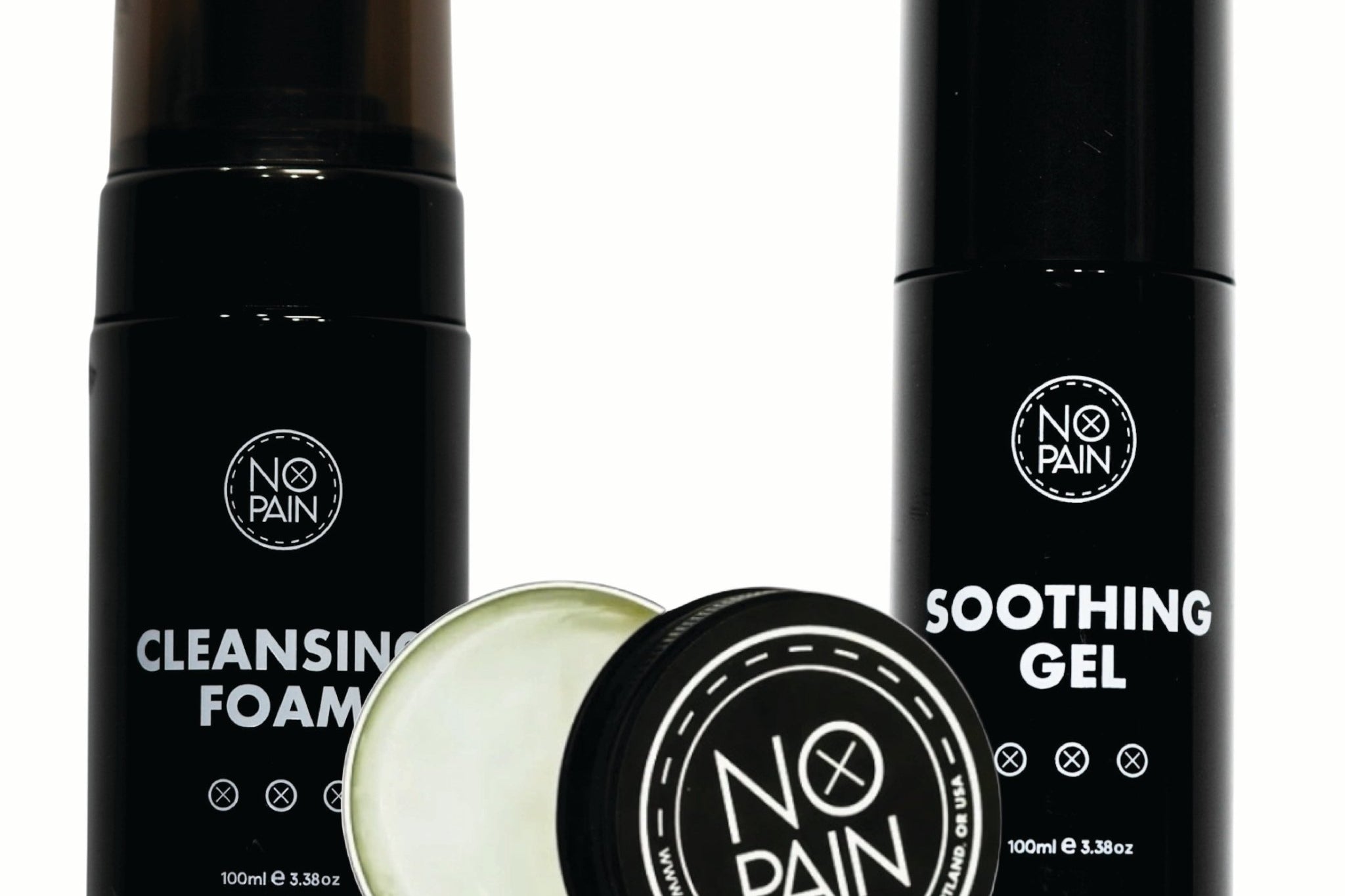
Whether you go through laser or a rework, your skin is back in a healing phase. Treat it accordingly. After a laser session in particular, the No Pain Tattoo Soothing Gel is worth having on hand—its water-based, anti-inflammatory formula calms treated skin and reduces irritation without occlusive ingredients that could trap heat. The No Pain Tattoo Aftercare Bundle gives you the full system for healing a rework or cover-up correctly.
A blowout is a setback, not a dead end. The path from discovery to resolution takes a few months at minimum—patience and a good specialist are your two biggest assets. Most clients who go through correction come out the other side with a piece they're genuinely proud of.