

The quality of ink your artist uses has a direct impact on three things: how your tattoo heals, how bright and saturated it looks once healed, and how well it holds up over years and decades. Yet most clients never think to investigate this — they focus on the artist's portfolio and price, and assume the materials are taken care of.
That assumption is usually correct at reputable studios. But "usually" isn't good enough when you're getting something permanent. Here's how to verify you're in good hands.
Why Ink Quality Matters
Professional tattoo inks from established manufacturers are formulated with stable, lightfast pigments that are rigorously tested for sterility and skin safety. They're designed to heal to a specific color, stay consistent under the skin over time, and resist UV-related fading better than cheaper alternatives.
Low-quality or unregulated inks — often sourced cheaply online, sometimes from manufacturers with no safety testing — can cause unpredictable healing, allergic reactions, infection risk, and rapid fading. The ink market isn't as tightly regulated as many people assume, which is why the reputation and professionalism of the studio matters so much.
Signs Your Artist Is Using Quality Ink
You won't be able to evaluate a bottle of ink by brand name alone — there are dozens of excellent professional manufacturers (Eternal, Intenze, Fusion, Dynamic, Solid Ink, and many others), and experienced artists have strong individual preferences based on what suits their style. Don't worry about memorizing brands. Focus on the signals that indicate professionalism and care.
The biggest signal is the studio itself. Licensed, reputable studios operate under health department oversight and stock their supply rooms from established, professional distributors. An artist working out of a private space without licensing is far more likely to be cutting costs on materials.
Watch the setup process. A professional will pour small amounts of fresh ink from larger bottles into single-use, sterile ink caps at the start of your session. They will never dip a needle directly into a communal bottle. Any leftover ink in the caps is discarded after your session — not poured back. This practice prevents cross-contamination and is standard at every reputable studio.
Ask directly. A confident, professional artist will not be offended by "What inks do you use? Are they vegan-friendly?" — they'll answer without hesitation and often with enthusiasm, because they take pride in their materials. Defensiveness or vagueness in response to that question is a meaningful red flag.
The Ultimate Verification: Look at Healed Work
Fresh tattoos almost always look better than healed ones. The skin is slightly raised and the ink hasn't fully settled, which makes colors appear more vivid and lines appear sharper than they'll be long-term. This means a fresh portfolio tells you less than it seems to.
What you want to find in an artist's portfolio is healed work — photos taken at least a year after the session. Do the blacks still hold depth? Are the colors still saturated or have they gone muted and flat? Are the lines still crisp or have they spread and blurred? The healed results are the real proof of both technique and ink quality, because good work with poor ink and poor work with excellent ink both produce the same disappointing long-term outcome.
Protecting the Investment
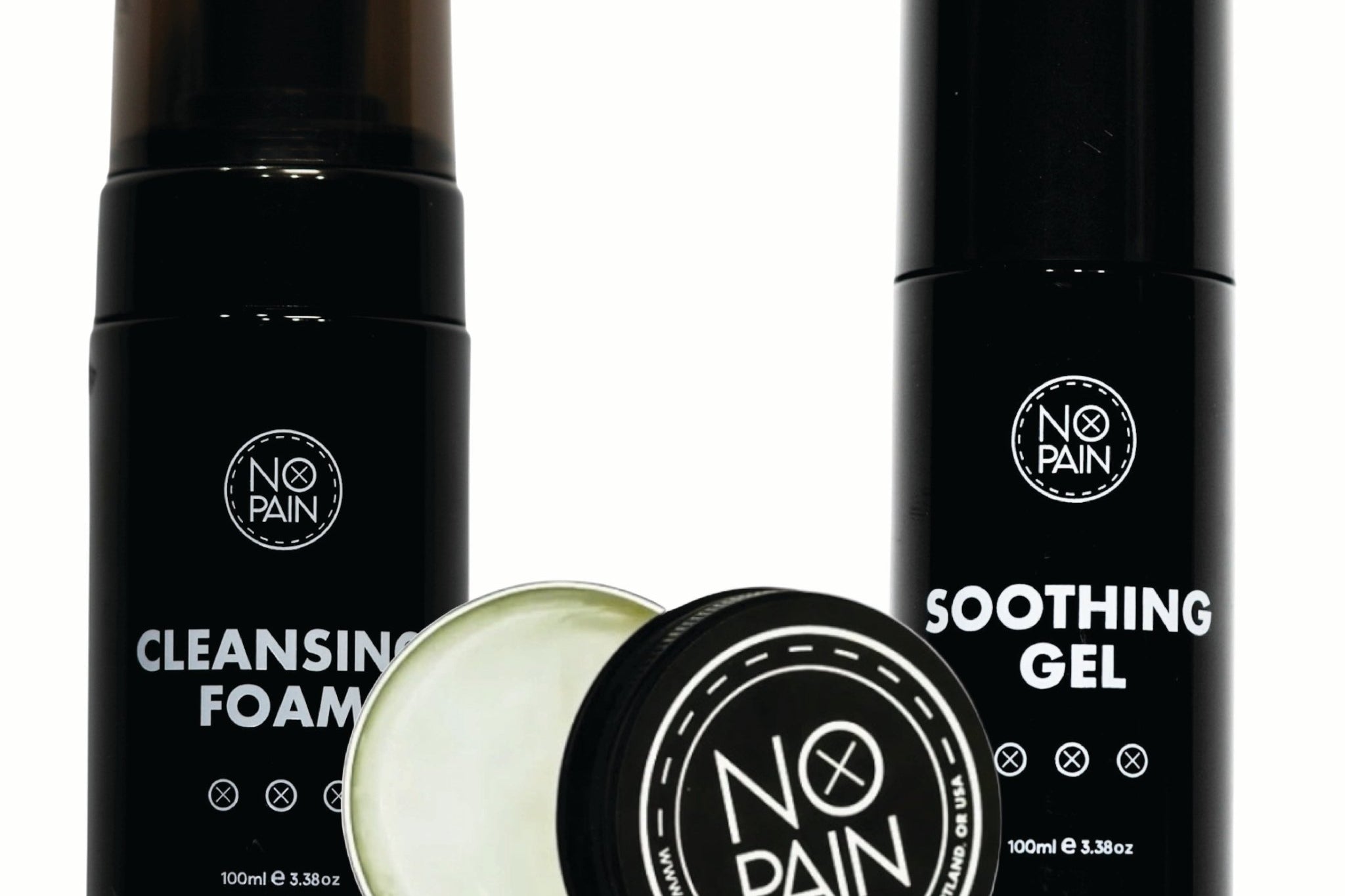
Even the best ink can be undermined by poor aftercare. How a tattoo heals in the first few weeks is the final stage of the inking process — if heavy scabbing pulls ink out during healing, or a rash compromises the skin's recovery, the vibrant pigments the artist laid down won't make it to the surface intact. A quality aftercare balm that keeps healing skin moisturized and protected is the client's equivalent of the artist's commitment to premium materials. No Pain Tattoo Aftercare Balm is formulated to provide exactly this — nourishing the healing skin without harsh additives that can interact with sensitive new ink.
You've invested in a great artist using great materials. Protect the whole investment by treating the healing phase with the same seriousness.