


The ideal tattoo healing environment is clean, low-friction, and low-stress. Work environments are frequently none of those things. Going back to a job while your tattoo heals requires a specific plan that's different depending on what your work actually looks like.
The office or desk job
The risks in an office setting are lower than in physically demanding work, but they're still present. Sitting for long stretches means clothing rubs against a healing tattoo repeatedly—not aggressively, but consistently. Over an eight-hour day, that adds up.
Wear the softest, loosest-fitting clothes permitted by your dress code for the first two to three weeks. Thin cotton is ideal. Avoid any fabric that sits directly against the tattoo under tension. If you need to wear something less forgiving for a meeting, layer a loose cotton garment underneath as a barrier.
Bring your aftercare products. Most people can manage twice-daily washing and moisturizing around a desk job schedule without difficulty—morning before work, and evening at home. The No Pain Tattoo Aftercare Balm travels easily and doesn't require refrigeration if you need a midday application.
Physical or outdoor labor
This is a more demanding healing environment. If your job involves construction, landscaping, warehousing, manual handling, or anything similar, your tattoo is dealing with sweat, grime, abrasion, and UV exposure all day.
The second-skin bandage your artist applied is your most effective protection in this context. Keep it on for as long as your artist recommends—often 24 to 72 hours—because it creates a physical barrier against everything your work environment is throwing at the tattoo.
Once you're out of the bandage and into the standard aftercare phase, add a soft cotton underlayer between your tattoo and your work gear. Cleaning immediately after every shift matters more here than it does for an office worker—sweat and grime on a healing wound need to come off as soon as possible. The No Pain Tattoo Cleansing Foam handles end-of-day cleaning effectively without being harsh on recovering skin.
Food service and customer-facing work
The main risk here is contamination. Food service environments are high-touch, frequently wet, and involve constant hand-washing if your tattoo is on an arm or hand. Keep the tattoo covered throughout your shift with breathable, clean clothing and change that covering if it gets wet or contaminated.
Be extra vigilant about washing the tattoo when you take breaks and again when you get home. The Cleansing Foam is a good choice here because it doesn't require prolonged water contact—it foams, you rinse, and you're done quickly.
Healthcare and clinical work
Medical environments present a particular challenge because the consequences of infection are higher and the skin on your arms is frequently exposed to cleaning agents and physical friction from scrubs and gloves.
Keep the tattoo covered at all times during your shift with clean, long-sleeved clinical wear. Constant friction from scrubs can dry out and irritate a healing tattoo significantly—applying a thin layer of balm before putting on your layers helps reduce that chafing. The lighter the layer, the better; you want protection, not a thick product that could trap heat or interfere with the wound's ability to breathe.
What applies across the board
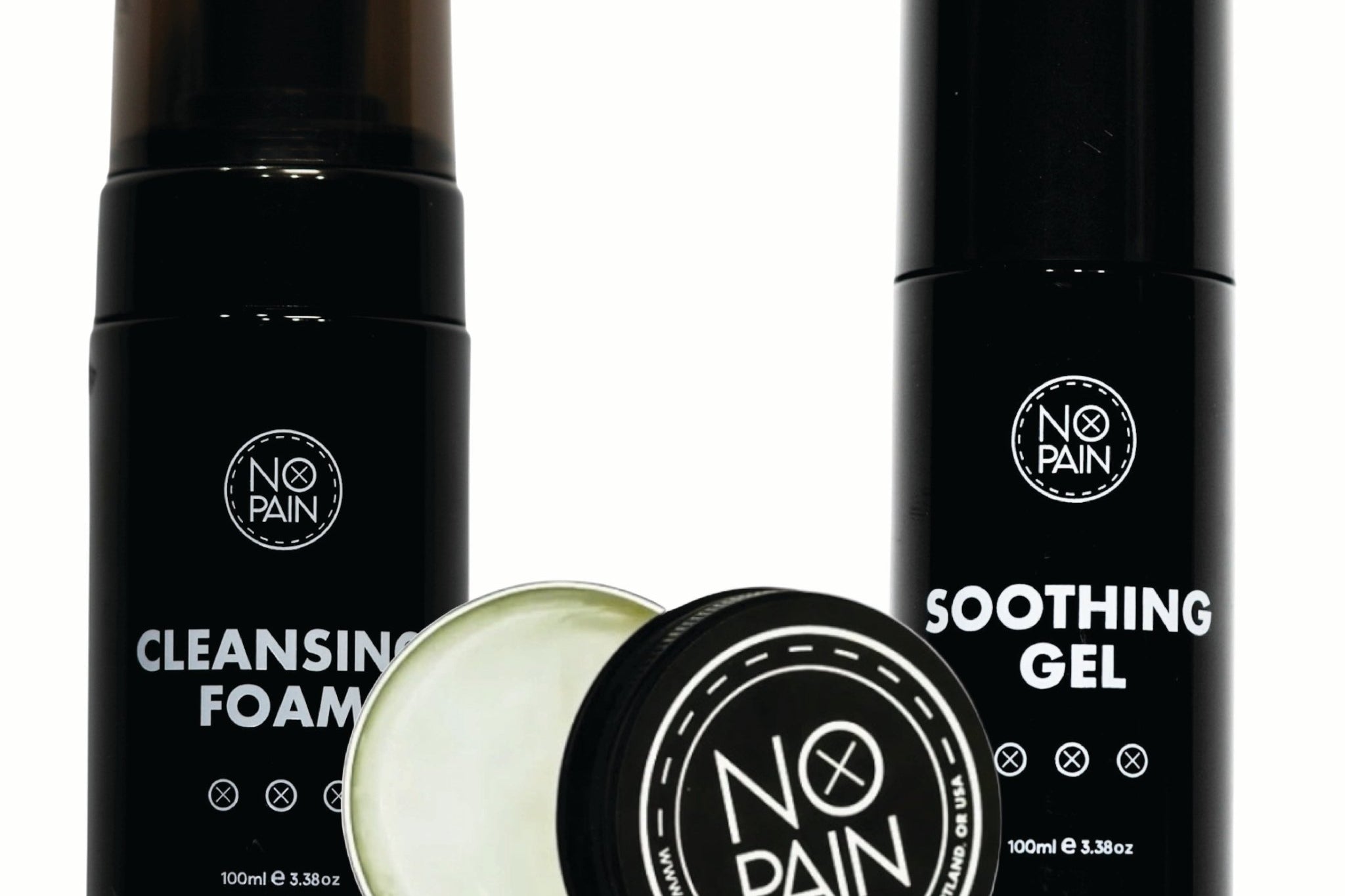
Regardless of job type: keep the tattoo out of prolonged water contact, protect it from friction where possible, clean it properly at the beginning and end of each day, and moisturize appropriately. The No Pain Tattoo Aftercare Bundle gives you everything you need in one package.
If at any point the tattoo looks significantly more inflamed than normal, is producing discharge that isn't clear, smells off, or is accompanied by spreading redness, that's worth a visit to a physician rather than a more aggressive aftercare approach.