


How to Handle Swelling on a New Ankle or Foot Tattoo
Swelling after an ankle or foot tattoo is normal, expected, and in most cases, dramatic. Your foot may look noticeably puffy within hours of leaving the studio. If you were not warned about this, it can be alarming. This guide explains why it happens, how to manage it, and what swelling patterns should actually concern you.
Why Ankle and Foot Tattoos Swell So Much
Two factors work together to make ankle and foot placements particularly prone to pronounced swelling.
Gravity and Fluid Pooling
Your feet are the lowest point of your body. When you tattoo any area, the body sends plasma, fluid, and white blood cells to the site as part of the inflammatory healing response. On most placements, this fluid distributes and drains fairly easily. At the ankle and foot, gravity pulls that same fluid downward and it accumulates in the extremity. Every hour you spend on your feet after the session adds to this pooling effect. The result is swelling that can look far more alarming than equivalent swelling would on your arm or torso.
Thin Skin Over Dense Structure
The foot and ankle have very little subcutaneous tissue between the skin and the underlying bone. The tattooing process on this area is more mechanically taxing than on well-padded placements, which triggers a more intense initial inflammatory response. More trauma to the tissue means more fluid sent to manage it.
What Normal Swelling Looks Like
Normal swelling after an ankle or foot tattoo peaks within the first 24 to 48 hours. The foot or ankle may look noticeably puffy, feel tight, and be warm to the touch. Some clients describe the sensation as their foot feeling like it belongs to someone else. This is all within the expected range.
The swelling should begin to reduce meaningfully after 48 to 72 hours, particularly if you are following an elevation routine. By day five to seven, the major swelling should be mostly resolved even if some residual puffiness remains around the tattoo site.
Swelling accompanied by the normal redness and soreness of a fresh tattoo is expected. Swelling that is expanding beyond the immediate tattoo area, becoming hot and red in a spreading pattern, or accompanied by red streaking is not normal and warrants medical evaluation.
Elevation: The Most Effective Tool
Elevation is the most direct way to reduce ankle and foot tattoo swelling. By raising the foot above heart level, you use gravity to pull fluid away from the extremity and back toward the core where the body can process it.
In practice: when sitting, prop the foot on a stack of pillows on the couch or coffee table. When sleeping, place two or three pillows under the ankle. The goal is to keep the foot elevated as much as possible during the first 48 to 72 hours.
The mistake most people make is elevating inconsistently. A few hours of elevation followed by extended periods on your feet largely negates the benefit. The first two days require a deliberate commitment to keeping the foot up. Plan accordingly: take time off work if possible, have what you need within reach, and treat elevation as the primary task of your recovery.
Aftercare During the Swelling Phase
Swelling does not change the core aftercare protocol, but the combination of inflammation and tight skin makes gentle application and consistent moisturizing more important than usual.
Wash the tattoo gently twice per day with a fragrance-free liquid soap. Pat dry with a paper towel. Do not rub. Apply a soothing gel immediately after each wash during the first three days. The cooling and anti-inflammatory properties reduce the heat and tension of the swollen skin and keep the fresh wound moist.

A cold compress placed near (not on) the tattoo for 10 to 15 minutes at a time can help reduce swelling during the first 48 hours. Wrap a cold pack in a clean cloth so it is not in direct contact with the fresh tattoo. Never apply ice directly to skin.
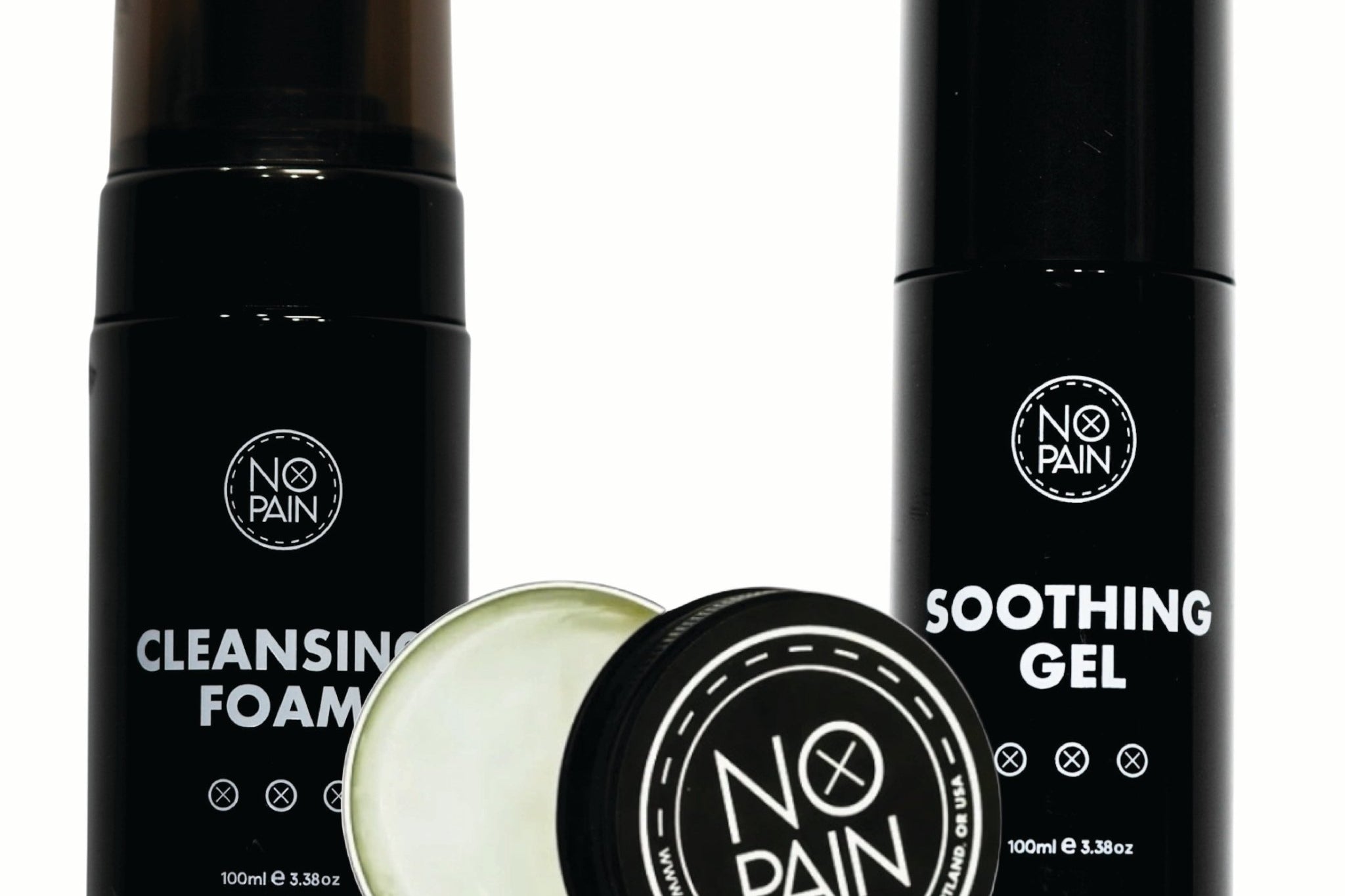
From day three onward, switch to a nourishing balm to support the rest of the heal. The balm provides the moisture barrier needed to prevent the thin skin of the foot and ankle from drying out and cracking as the scab forms.
Gel First, Balm After
The Aftercare Bundle covers both phases of the ankle and foot heal: soothing gel for the swollen first three days, nourishing balm from day three onward.
Shop Aftercare Bundle →Shoes and Socks During Healing
The foot tattoo presents a practical challenge that most other placements do not: you need to put shoes on. Pressure, friction, and lack of airflow from shoes and socks directly over a healing tattoo create problems.
For the first three to five days, wear the loosest, most open footwear you can manage. Sandals or flip-flops that avoid the tattoo area are ideal. If the tattoo is on the top of the foot, a loose sandal that does not cross that area is the best option.
If you must wear closed shoes, put a non-stick dressing over the tattoo to create a barrier against friction and sock fibers. Change the dressing after each wear. Avoid tight socks that cut into the ankle area where the tattoo may be.
Once the surface peeling is complete (around days 10 to 14), normal footwear is generally safe, though continued attention to friction on the tattoo area is worthwhile through the full six-week healing period.
When to Be Concerned
Most ankle and foot tattoo swelling is normal. These signs indicate something beyond normal inflammation that warrants medical evaluation:
Swelling that is expanding beyond the immediate tattoo area and spreading up the leg. Redness that has a well-defined border and is expanding outward (this pattern can indicate infection spreading through the skin). Red streaks radiating from the tattoo site. Swelling accompanied by a fever above 38 degrees C (100.4 degrees F). Pus or discharge that is not the clear plasma of a normal fresh tattoo.
If you observe any of these, contact a healthcare provider promptly. Foot and ankle infections can escalate quickly because of the reduced circulation in the extremities relative to more central body areas.
Frequently Asked Questions
How long does an ankle tattoo stay swollen?
The peak swelling period is the first 24 to 72 hours. Most of the visible puffiness resolves by day four or five, particularly with consistent elevation. Some residual swelling around the tattoo site may persist through the end of the first week. If the swelling is not clearly improving after five days or is worsening, seek medical advice.
Is it normal for a foot tattoo to swell like a balloon?
Yes, and the degree of swelling that ankle and foot tattoos produce routinely surprises people who have not been warned. Puffiness that makes the foot look noticeably larger than normal is within the expected range. The combination of gravity pulling fluids downward and the thin-skinned structure of the foot makes this placement one of the most prone to dramatic visible swelling of any common tattoo location.
Can I walk on my foot after an ankle tattoo?
Limited walking is unavoidable, but you should minimize it as much as possible during the first 48 to 72 hours. Extended periods of standing and walking pump additional fluid into the foot through normal circulatory mechanics and work against the elevation that reduces swelling. If you have a job that requires standing all day, try to schedule your foot or ankle tattoo before a period when you can rest.
Should I ice a swollen foot tattoo?
Do not apply ice directly to the tattoo or the fresh wound. A cold compress wrapped in cloth and placed near (not on) the tattoo is safe. Direct ice application on a fresh tattoo risks skin damage and contamination. The soothing gel provides a safer and more direct way to reduce the heat of the inflammation without the risks of direct cold application.
Why is my foot tattoo more swollen than my other tattoos were?
Gravity. Fluid from the inflammatory healing process pools in the lowest point of the body. On an arm or torso, that fluid distributes and drains more easily. On the foot and ankle, it accumulates. The thin skin and bony structure of the foot also produce more intense initial inflammation than well-padded placements. Both factors combine to make foot and ankle tattoos among the most reliably swollen immediately after the session.
When can I wear normal shoes again after an ankle tattoo?
Loose, open footwear for the first three to five days is the target. Once the acute swelling has subsided and the surface is no longer weeping or in the early scab stage (around days five to seven), closed shoes become manageable with a non-stick dressing over the tattoo. Once the surface has finished peeling (around days 10 to 14), normal footwear is generally safe, though very tight shoes or high-friction styles should be avoided through the six-week mark.