


The references you bring to a tattoo consultation are one of the most important things you do for the project. A well-assembled set of references communicates your vision clearly, helps the artist design something that fits your aesthetic, and reduces the chance of a result that is not what you imagined. Bringing the wrong references — or none at all — leaves the artist guessing and sets both of you up for misalignment.
Here is how to collect, curate, and present references that actually help.
In this article
- What references are actually for
- The four types of references to bring
- How many to bring
- What makes a reference useful
- What to avoid
- How to present them in the consultation
- Frequently asked questions
What References Are Actually For
References are a communication tool, not a blueprint. When you show an artist an image, you are not asking them to copy it — you are showing them the visual vocabulary you connect with. The texture, the mood, the line weight, the level of detail, the balance of positive and negative space. Those qualities are what translate from a reference into your custom design.
A good artist will take what your references communicate, run it through their own style, and produce something original that is informed by your vision rather than defined by it. That process produces better work than copying — both because copying another artist's tattoo is ethically off-limits, and because a design built from scratch for your specific placement and skin will always fit better than one transplanted from someone else's body.
The Four Types of References to Bring
Style references. Images that show the visual style you want — the line work aesthetic, shading approach, level of realism or abstraction, color palette or black-and-grey preference. These might be other tattoos, illustrations, fine art prints, or photographs. The subject matter can be completely different from your tattoo — what you are communicating is style, not subject.
Subject references. Images of the actual thing you want tattooed. If you want a moth, bring multiple photos and illustrations of moths from different angles. If you want a specific plant, bring botanical illustrations. If you want a portrait, bring a high-resolution photo of the person. These give your artist material to work from when building the design.
Placement references. Photos that show where a similar tattoo sits on someone's body — how the composition wraps around a forearm, how a design fills a shoulder blade, how something reads on a ribcage. These are especially useful for pieces where the flow of the body is integral to the design. Your artist knows anatomy, but seeing that you have thought about placement helps the conversation.
What you do not want. This one gets overlooked but is genuinely useful. If you have seen tattoos in a style you want to avoid — heavy black fill, hyper-realism, overly ornate line work — showing those to your artist and saying "not this" communicates just as much as a positive reference. Knowing the boundaries of your vision helps them stay within it.
How Many to Bring
Four to eight references is a good range. Fewer than four may not give enough visual information to work from. More than ten becomes hard to synthesize, and a large, unfocused collection can signal that you have not done the work of narrowing down what you actually want.
Quality over quantity. Four tightly curated images that each illustrate something specific are more useful than a twenty-image Pinterest dump where the same information is repeated and no clear direction emerges.
What Makes a Reference Useful
High resolution. A blurry screenshot from someone's Instagram story does not help your artist see the detail they need to understand what they are looking at. Use full-quality images wherever possible. If you are taking a photo of someone's tattoo on healed skin, get as close and clear a shot as you can.
Healed work. Fresh tattoos look sharp, vivid, and often different from how they will look once healed. Healed examples show the artist how the work actually holds up — which is the version that will live on your skin. If you are drawn to a particular style, finding examples of healed pieces in that style is worth the extra effort.
Specificity about what you like. A reference is most useful when you can articulate what specifically speaks to you about it. "I love how the shading on the petals creates depth here" or "I want this level of line weight but not the heavy fill in the background" tells your artist something actionable. "I just like this" leaves them to guess.
What to Avoid
Asking to copy another tattoo exactly. Do not bring a single image and ask for a direct copy. Beyond the ethical issue of copying another artist's work, a design built for someone else's placement and skin type will not fit your body the way a design made for you will. Bring it as a style or mood reference, not as a template.
Contradictory references. A collection that includes both hyper-realist portrait work and minimal fine-line illustration sends conflicting signals. If your references span very different aesthetics, clarify what common thread you are responding to, or narrow your focus before the consultation.
Quantity without curation. Bringing your entire saved folder of tattoo inspo without narrowing it down wastes consultation time and makes the artist's job harder. Curate before you come in. If you genuinely cannot narrow it down, that is information — it suggests you may need more time to define your vision before committing to a booking.
How to Present Them in the Consultation
Have your references organized and accessible before you sit down. A folder on your phone works well — not a series of screenshots you are swiping through in real time while the artist waits. If you are emailing references ahead of the consultation, label them so the artist knows what role each one plays: "style reference," "subject reference," "placement example."
Walk the artist through what each reference is communicating. Do not hand over the folder and let them interpret it silently. Tell them what you like and what you do not like about each image. The consultation is a conversation — your references are the starting point for that conversation, not a document to be handed off.
After you have talked through the references, ask the artist what their instinct is. What they respond to, what they would do differently, and where they see the piece going. A great artist will have opinions and will bring their perspective to the collaboration. That is what you are paying for.
Get Ready for the Session
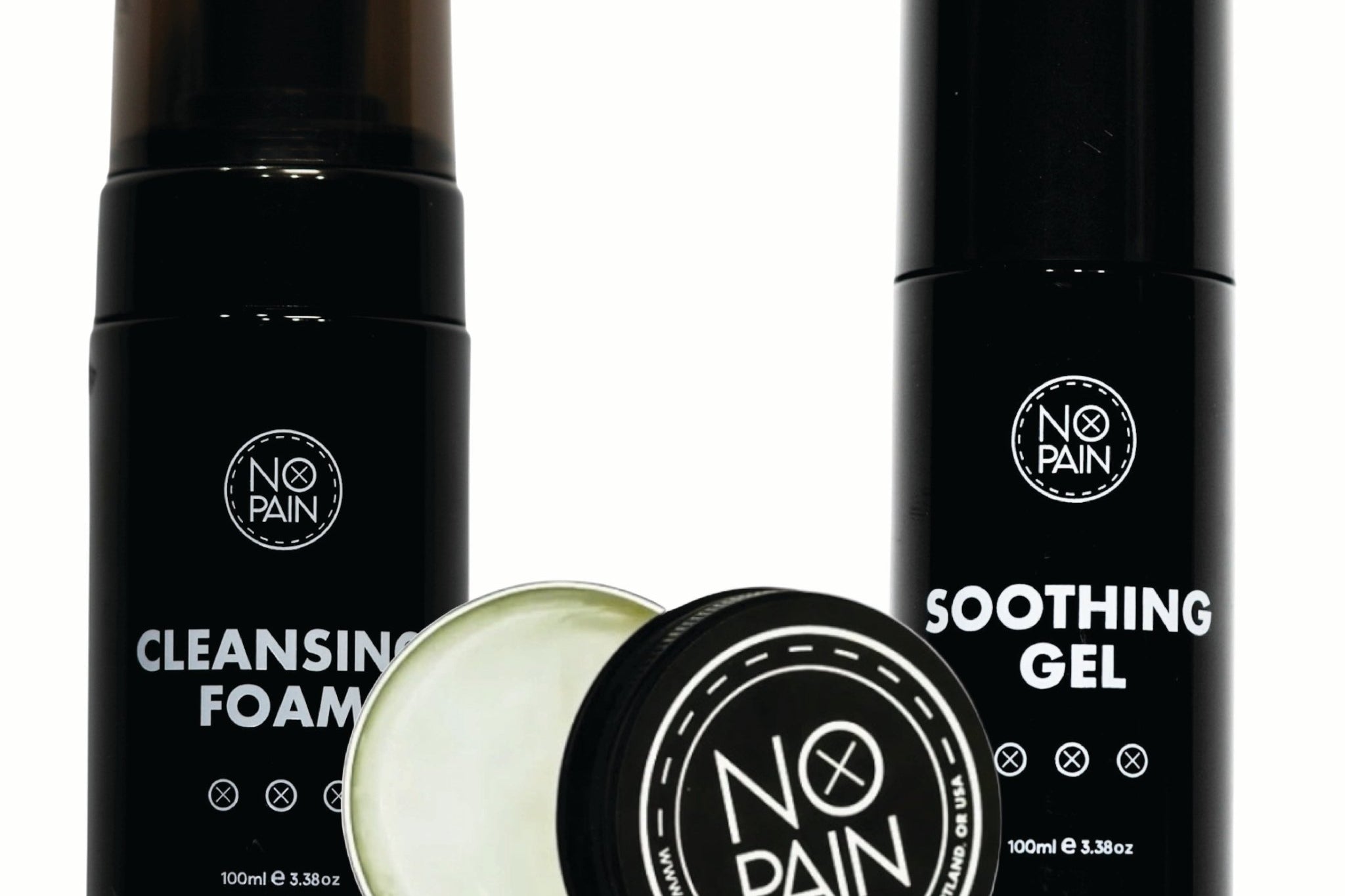
Once the consultation is done and your appointment is booked, have your aftercare ready before the day. The Aftercare Bundle covers the full two-week heal — Soothing Gel for days 1 to 3 and Aftercare Balm for day 3 onward.
Shop the Aftercare Bundle →Formulated at Historic Tattoo in Portland, Oregon. 100% money-back guarantee.
Frequently asked questions
Can I bring a reference of a specific tattoo I want reproduced exactly?
Most professional artists will not reproduce another artist's tattoo exactly. It is considered a violation of the originating artist's creative work, and most established artists decline as a matter of professional ethics. Use the image as a style or mood reference and tell your artist what specifically appeals to you about it — they will build something original from that.
What if I do not have many references — can I still book?
Yes, especially if the concept is simple and the style is clear. But the more complex or custom the piece, the more important good references become. If you are early in the process and your reference folder is thin, spend time on Instagram and tattoo portfolio sites looking at healed work before your consultation. Even two or three very specific, high-quality references are better than a vague verbal description.
Should I bring photos of placement on my own skin?
That can be very helpful, yes. A photo showing the general area on your body — your own forearm, your ribcage, your shoulder — gives the artist a sense of scale, skin tone, and any existing tattoos they will need to work around. If you have a specific vision of placement, a marker sketch on your own skin that you photograph is even more useful.
What if my references are all from different styles?
Figure out what they have in common before your consultation. Usually when someone is drawn to references across different styles, there is a consistent element — the subject matter, the level of detail, the mood or contrast. Identifying that common thread and leading with it in the consultation is more useful than presenting the full range without context.
Can I bring references from non-tattoo sources — paintings, illustrations, photographs?
Absolutely, and these are often more useful than other tattoos as style references. A botanical illustration, an art nouveau print, or a specific photograph can communicate exactly the line quality and detail level you want. Artists regularly work from non-tattoo references. Just be prepared to discuss how you want those qualities translated into a tattoo format.
How do I reference a color palette if I am not sure about colors?
Bring images that show the color mood you want — whether that is warm earthy tones, cool muted blues and greens, or high saturation. Color swatches, photographs, and art prints all work. Your artist can help you determine which colors will translate well into ink and hold up over time. Be open to their guidance — some colors that look great on screen are difficult to achieve in skin.