
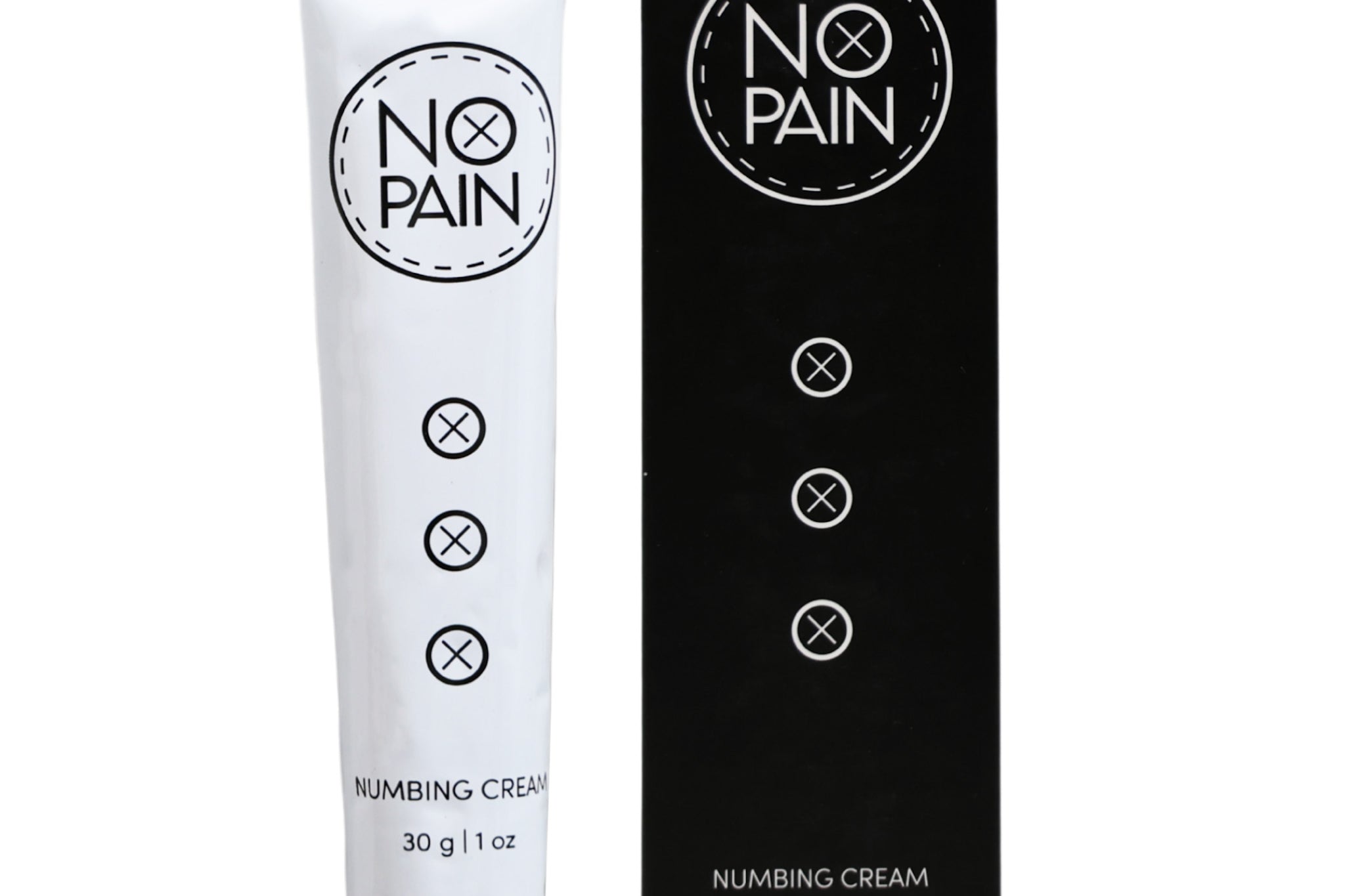

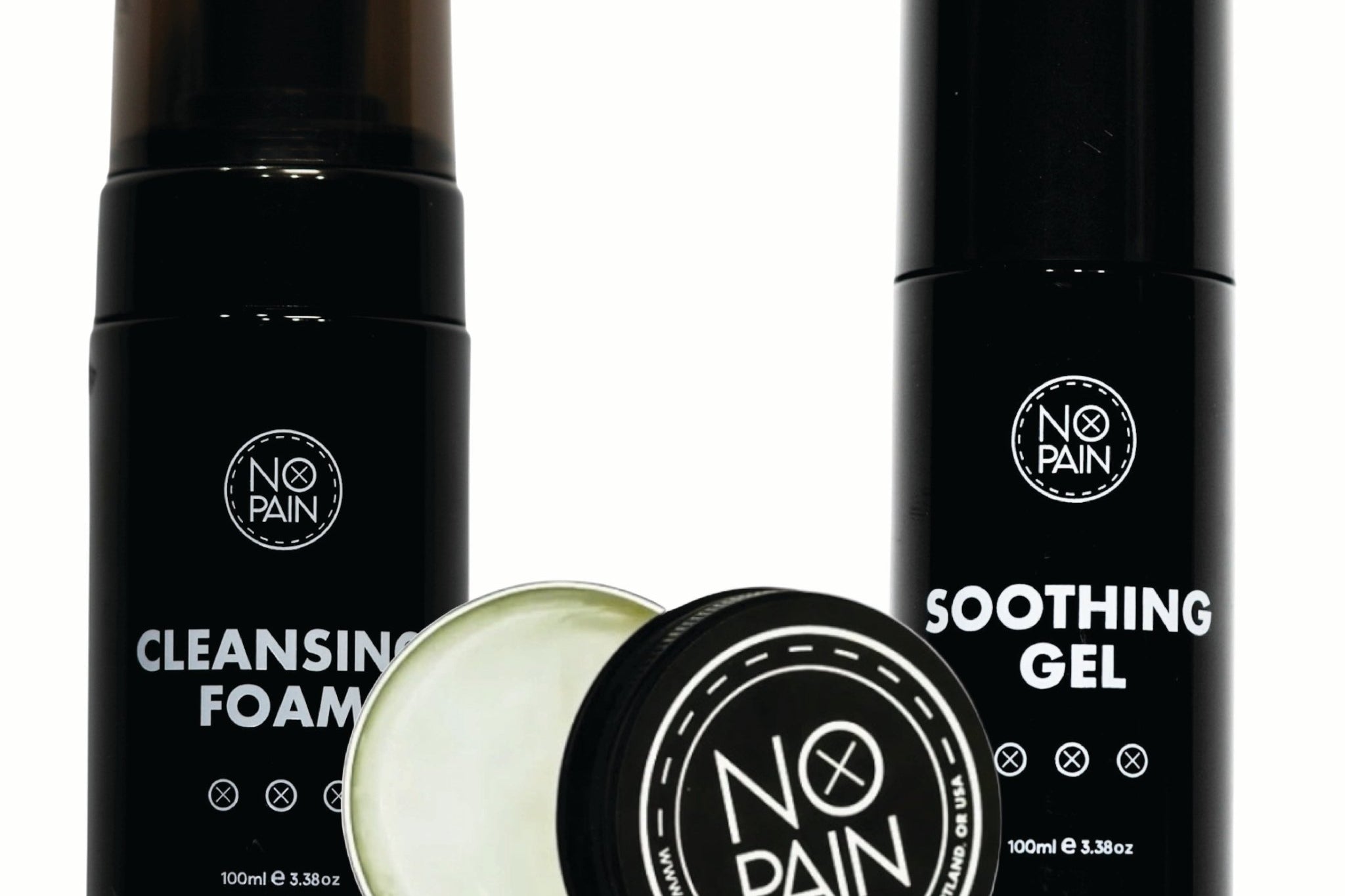


Yes, lidocaine works for tattoos. It's a well-established local anesthetic that temporarily shuts down the nerve signals responsible for pain. Applied correctly under cling film for 90 minutes, it reduces a session that rates 8 or 9 out of 10 down to a 2 or 3 for most people. The mechanism is straightforward, the safety profile is well-documented, and the failure cases almost always come down to application error or the wrong product, not the ingredient itself.
This post explains how lidocaine actually works at the cellular level, what determines how well it performs for tattooing specifically, and what to look for when choosing a cream.
In this article
- How lidocaine stops pain signals
- Why concentration isn't the differentiator
- Why base formula is what actually matters
- How to apply it for maximum effect
- Lidocaine for longer sessions
- Frequently asked questions
How Lidocaine Stops Pain Signals
Pain works through a chain reaction. A tattoo needle entering the skin triggers nerve endings in the dermis. Those nerve endings fire an electrical signal that travels up through the spinal cord to the brain, which interprets it as pain. Interrupt that chain anywhere along the route and the pain doesn't register.
Lidocaine interrupts it at the source. It works by blocking sodium channels in the nerve cell membrane. Sodium channels are what a nerve needs to generate and transmit an electrical signal. When lidocaine molecules bind to those channels, the nerve can't fire. No signal leaves the site. Your brain never receives the message.
The effect is localized and temporary. Lidocaine only affects the nerve endings in the treated area, and only for as long as the molecules remain bound to those channels. As the lidocaine processes out of the tissue over the following hours, the channels recover and normal sensation returns. There's no systemic effect on the rest of the body from a correctly applied topical dose.
What you feel during a numbed session is pressure and vibration from the tattoo machine. That's transmitted mechanically through the tissue rather than through pain-specific nerve pathways, so lidocaine doesn't block it. The sharp, stinging, burning sensation that characterizes tattoo pain disappears. The physical sensation of the machine running across the skin does not.
Why Concentration Isn't the Differentiator
The first thing most people look for when comparing numbing creams is the lidocaine percentage on the label. It's a reasonable instinct, but it misses the most important variable.
Over-the-counter topical anesthetics in the US are regulated. The FDA sets a maximum allowable lidocaine concentration for non-prescription products, and every compliant numbing cream on the market uses that same maximum concentration. A cream labeled "extra strength" or "professional grade" at the same percentage as every other legal product is not stronger. It's marketing.
Products you see online claiming 10%, 15%, or 20% lidocaine are not compliant. They're either mislabeled or manufactured outside FDA oversight, and high-concentration topical lidocaine applied to a large area carries real risks: systemic absorption, cardiac effects, and skin reactions. The FDA has issued warnings on products in this category. A properly formulated cream at the legal maximum, applied correctly, outperforms any of them.
When every compliant product has the same active ingredient at the same concentration, comparing concentrations tells you nothing. What tells you something is the base formula.
Why Base Formula Is What Actually Matters
Lidocaine doesn't act on its own. It's suspended in a carrier formula that controls how the molecule moves through the skin barrier and how long it stays in contact with the nerve endings beneath. That's where cream quality diverges.
Thin, light formulas absorb fast. Fast absorption sounds like a benefit, but for tattooing it creates a short window. The lidocaine reaches the nerve layer quickly, produces surface numbing, and then processes out relatively fast. The effective window might be 30 to 45 minutes from when the wrap comes off. For a quick session on a less sensitive placement, that's borderline. For a three-hour rib piece, it's gone before the shading starts.
A thicker, slower-absorbing formula works differently. The lidocaine is delivered gradually across the full 90-minute application window, building to a deeper level of saturation at the nerve layer and holding longer once the session begins. The effect doesn't peak and burn off. It stays more consistent through outline, first shading pass, and second shading pass.
No Pain Tattoo Numbing Cream is built around this problem. The base is thick and dense, not greasy, not light. It holds the lidocaine at the skin surface while it absorbs slowly, rather than letting it rush through in the first 20 minutes. The formula was developed at Historic Tattoo in Portland across real sessions, with the specific goal of lasting through longer work rather than just numbing the opening passes.

Maximum strength lidocaine in a thick, slow-absorbing base. Builds deep numbness across the full 90-minute application window and holds longer into the session than thin creams. Formulated at Historic Tattoo in Portland.
How to Apply It for Maximum Effect
The science only works if the application gives the lidocaine what it needs: time, depth, and the right environment. The most common reason numbing cream disappoints is application error, not a product problem.
Start with clean, dry skin. Wash the area with mild soap, rinse, and pat dry completely. Any lotion, oil, or product on the surface slows absorption and creates a barrier between the cream and the skin.
Apply a thin first coat and rub it in gently. This primes the skin and starts the absorption process. Think of it as the foundation layer.
Apply a thick second coat on top without rubbing it in. This is the frosting layer. It should sit visibly on the surface. You should not be able to see the skin through it. This coat feeds the absorption process gradually across the full window.
Wrap tightly with cling film and seal the edges. The wrap traps body heat, which raises the skin temperature slightly and opens it up to absorption. It also prevents the cream from drying out and losing contact with the surface. Secure it so it stays in place on the way to the studio.
Wait the full 90 minutes. Most of the effective numbing builds in the second half of that window. Pulling the wrap at 45 minutes gives you a fraction of the possible effect. Leave it until your artist is ready to start and removes it themselves.
For a deeper breakdown of why each step matters and what happens when you skip one, see Does Tattoo Numbing Cream Actually Work?
Lidocaine for Longer Sessions
Pre-session cream is applied to intact skin. Once the needle has broken the skin surface, the outer barrier is disrupted and a fresh application of pre-session cream won't work the same way on open skin. The mechanism changes.
For sessions running longer than two to three hours, a numbing spray formulated for broken skin is applied mid-session by your artist. It reaches the nerve layer quickly through the open skin and resets coverage without stopping the session. Most people find they need it somewhere around the two-hour mark, right as the pre-session numbing starts to thin, typically during the later shading passes when the skin is most sensitized.
The Comfort Bundle pairs the cream with the spray for exactly this scenario. Pre-session cream from home, mid-session spray in your artist's hands.

Pre-session cream plus mid-session spray for broken skin. Covers the full session from first outline to final shading pass. Built for tattoos over two hours.
Frequently asked questions
Does lidocaine actually work for tattoo pain?
Yes. Lidocaine is the active ingredient in every effective tattoo numbing cream. It works by blocking sodium channels in the nerve endings beneath the skin, which prevents the pain signal from being generated and sent to the brain. Applied correctly under cling film for 90 minutes, maximum strength lidocaine reduces tattoo pain by 70 to 90 percent for most people. The cases where it doesn't work almost always trace back to thin application, skipping the wrap, or not waiting long enough.
Is lidocaine safe to use for tattoos?
Yes, when used as directed. Lidocaine has decades of safety data in medical and dental settings. At the concentrations available over the counter, topical lidocaine applied to a normal tattoo area is well within established safety margins. The products to avoid are those claiming concentrations above the OTC maximum, which are non-compliant and carry real risks of systemic absorption at those levels. A compliant cream used correctly is safe.
How long does lidocaine last for a tattoo?
Two to four hours from the point the wrap comes off, for a properly applied maximum strength cream. The effect builds gradually during the application window and holds steadily into the session rather than peaking and dropping sharply. Thinner formulas tend to burn through faster. For sessions over two to three hours, a mid-session spray applied by your artist on broken skin extends coverage through the later passes.
Why do some lidocaine creams work better than others?
The lidocaine concentration in every compliant OTC product is the same. What differs is the base formula. A thick, slow-absorbing base delivers the lidocaine gradually across the full application window and holds it at the nerve layer longer. A thin, fast-absorbing base peaks quickly and burns through in 20 to 30 minutes. The base formula is the product difference, not the concentration.
Can lidocaine affect how a tattoo heals?
No. Lidocaine works at the nerve ending level and has no interaction with tattoo ink or the skin's healing process. Once your artist wipes the cream off before starting, the lidocaine that absorbed into the skin processes out naturally over the following hours. By the time you're home doing aftercare, there's no trace of it left. Healing is identical to a session done without numbing cream.
Does lidocaine affect how the ink goes in?
No. Lidocaine molecules and tattoo pigment particles don't interact. Ink is a large particle that gets mechanically deposited into the dermis by the needle. Lidocaine is a small molecule operating on a different mechanism at a different layer. They don't interfere with each other. For a full breakdown, see Does Tattoo Numbing Cream Affect the Ink or Healing?
The Science Is Settled. The Method Is What's Left.
Maximum strength lidocaine in a thick, slow-absorbing base. Apply the two-coat method, wrap it, wait 90 minutes. The result is not a question.
Shop Numbing Cream →Formulated at Historic Tattoo in Portland, Oregon.