


Yes. Asking your artist to adjust or change a design is normal, and how easy that conversation is depends almost entirely on when you have it. The earlier in the process you speak up, the less disruption it causes — for you, for your artist, and for the final result. The later you wait, the fewer options you have.
In this article
- During the design phase
- At the stencil stage
- Mid-session
- After the tattoo is done
- How to ask clearly and constructively
- Frequently asked questions
During the Design Phase
Once you have booked and paid your deposit, most artists will share a sketch or concept artwork before your appointment. This is the ideal window to request changes. The work exists on paper or digitally — nothing is permanent, and revisions cost the artist time but not material.
Be as specific as possible about what you want adjusted. "Can the flower be larger relative to the leaves?" is more useful than "Something about the proportions feels off." If you have a reference image that illustrates the change you have in mind, share it. The more clearly you can communicate what you want, the more likely the revision lands correctly the first time.
Most artists expect and welcome feedback at this stage. It is part of the collaborative process. What is not welcome is silence during the design phase followed by a total redesign request the morning of the appointment — that puts the artist in an impossible position.
At the Stencil Stage
On the day of the appointment, your artist will apply a stencil transfer of the design to your skin before any needle touches you. This is your last clear opportunity to request changes before anything becomes permanent.
Take this seriously. Look at the stencil in a mirror. Check the placement from different angles. Move around and see how it sits on your body. If the size is wrong, the positioning needs to shift, or something about the design is not working — say so now. Repositioning a stencil or adjusting a design element before the tattoo begins is a routine part of the process. No experienced artist is going to be upset about a stencil adjustment.
If the concern is significant enough that you want to substantially change the design, it may be better to reschedule the tattoo than to proceed with something you are uncertain about. Deposits are generally non-refundable if you cancel, but they are far less expensive than living with a tattoo you do not like.
Mid-Session
Once the tattoo is underway, your options for design changes narrow considerably. The artist has committed needle to skin, and the design is partially permanent. Minor adjustments may still be possible — a line can be thickened, an element can be extended, shading can be added or reduced in areas not yet touched. Complete redesigns are not.
If something is going wrong mid-session and you have a genuine concern — not nerves, but an actual issue with how the design is developing — speak up immediately. An artist who knows about a concern early can address it. An artist who finds out at the end of the session cannot.
After the Tattoo Is Done
Once the tattoo is complete, the design is set. Touch-ups — refining an area, reworking a line, adding saturation to a color — are possible after the tattoo has fully healed (typically six to eight weeks). These address technical issues in the execution, not fundamental changes to the design.
If you genuinely do not like the design after it has healed, cover-ups and laser removal are options, but they are significantly more involved and more expensive than getting the design right before the appointment. Give a new tattoo four to six weeks to fully heal before drawing conclusions about whether you like it — fresh tattoos look different from healed ones, and many clients who are uncertain immediately feel differently after the piece has settled.
How to Ask Clearly and Constructively
Frame requests around what you want rather than what is wrong. "Can we make the stem longer to balance the composition?" is a much more productive opening than "The stem looks weird." The first gives the artist something to work toward. The second requires them to interpret what the problem actually is.
If you have trouble articulating the issue, reference images can help. Find something that shows the direction you want and use it as a conversation tool rather than a blueprint. Saying "I want it to feel more like this" with a clear visual example moves the conversation forward much faster than a verbal description alone.
And if the change you want is significant — a different subject, a totally different style, or a major compositional shift — initiate that conversation well before the appointment. Give your artist the time they need to redesign without compressing it into an emergency.
Protect the Final Result
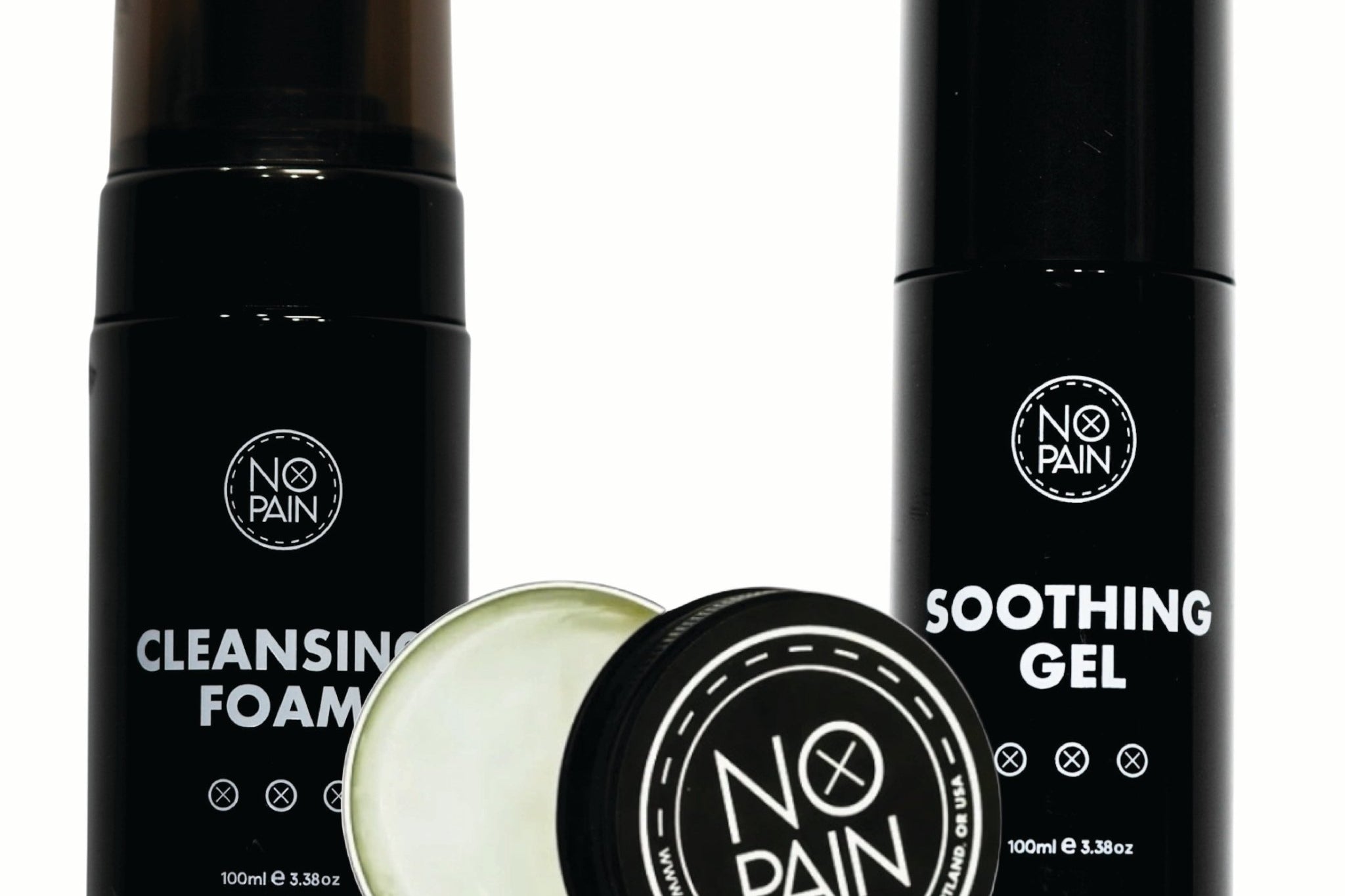
Once you are happy with the design and your appointment is done, the heal is what determines the final outcome. The Aftercare Bundle covers you for the full two weeks — Soothing Gel for the first three days, Aftercare Balm from day three onward.
Shop the Aftercare Bundle →Formulated at Historic Tattoo in Portland, Oregon. 100% money-back guarantee.
Frequently asked questions
What if I want a completely different design after the artist has already drawn something?
That is a conversation to have as early as possible. If the design has not been started yet, the artist can redirect their work, though a new deposit may be required if the change is substantial. If the design is already complete and you are asking for a full overhaul the day before the appointment, expect that to create friction — and to potentially require rescheduling so the artist has time to do the new design properly.
How many revision rounds is it reasonable to ask for?
Studios and individual artists handle this differently. Many build one round of revisions into their process and treat additional rounds as additional work. The best approach is to consolidate your feedback clearly the first time — communicate everything you want adjusted in a single message rather than sending follow-ups one at a time. That is more efficient for the artist and usually produces a better result.
Can I ask for changes on the day of my appointment?
Minor stencil adjustments, yes — that is what the stencil stage is for. Significant design changes on the day of the appointment put pressure on a timeline that cannot easily accommodate them and may require rescheduling. The earlier you raise concerns, the better the outcome for everyone.
What if the artist refuses to make a change I want?
Artists can decline requests they feel compromise the design or their work. If an artist pushes back on a change, it is worth hearing their reasoning — they often have legitimate technical or aesthetic grounds for their position. If after that conversation you genuinely cannot reach agreement, you are not obligated to proceed. Walking away means losing the deposit, but it is better than getting a tattoo you are not satisfied with.
Is there a charge for design revisions?
Depends on the artist and the scope. Minor revisions within a single round are typically included in what the deposit covers. Substantial redesigns, multiple revision rounds, or changes that require the artist to start over may result in additional charges or a new deposit. Ask your artist how they handle revisions before you book so there are no surprises.
What if I change my mind about the placement?
Placement adjustments during the stencil stage are straightforward — the stencil comes off, the area is cleaned, and it goes back on in the new position. That takes a few extra minutes and is completely normal. Changing the placement after the tattoo has begun is not possible without dealing with what is already on your skin. Placement decisions should be finalized at the stencil stage, not mid-session.