


If you do not like your tattoo design, when you find out matters more than almost anything else. Raising a concern before needles touch your skin takes five minutes. Dealing with a tattoo you regret takes years and sometimes thousands of dollars. The right response depends entirely on where you are in the process — so here is what to do at each stage.
In this article
- Before needles: at the stencil stage
- Fresh tattoo: do not judge yet
- After it heals: your real options
- Touch-ups and additions
- Cover-ups
- Laser removal and lightening
- How to talk to your artist about it
- Frequently asked questions
Before Needles: At the Stencil Stage
This is the moment when the design exists on your skin as a removable transfer and nothing has been committed yet. If you do not like it, say so. Right now. Clearly.
Look at the stencil in the mirror. Move around. Check the placement from different angles. If the size is wrong, the composition is off, the positioning needs to shift, or something about the design itself is not working — tell your artist before anything becomes permanent. This is not awkward. It is expected. Repositioning a stencil or adjusting a design before the tattoo begins is a routine part of the process.
Do not let politeness override your judgment here. An artist would far rather spend fifteen minutes adjusting a stencil than have a client leave unhappy with something that is now in their skin permanently. Speak up. Before the first pass.
If the concern is significant enough that you want a different design altogether, it is better to reschedule than to proceed with something you are unsure about. The deposit may not transfer depending on the studio's policy, but the deposit is far less expensive than living with a tattoo you do not like.
Fresh Tattoo: Do Not Judge Yet
If you are reading this in the days immediately after a new tattoo, slow down before drawing any conclusions. Fresh tattoos are unreliable as a preview of the finished result. In the first one to two weeks, swelling distorts the shape, the colors look more vivid or saturated than they will once healed, linework appears thicker due to surrounding redness and inflammation, and the whole piece looks covered by a milky film as the outer skin peels.
What a tattoo looks like at day three is not what it will look like at week six. Decisions made on a fresh tattoo are almost always premature. Heal it correctly — wash it properly, moisturize consistently, keep it out of the sun — and assess it once the skin has fully settled. That takes four to six weeks minimum.
After It Heals: Your Real Options
Once the tattoo is fully healed and you have given it time to settle, and you still do not like it, you have real options. None of them are instant, and some are expensive — but all of them are viable depending on the nature of the problem.
The most important thing is to figure out what specifically you do not like. Is it a technical issue — lines that are not crisp, color that healed patchy? Is it a design issue — proportions that feel wrong, an element that does not work? Is it a placement issue — it sits differently on your body than you imagined? Or is it a concept issue — you have changed your mind about what you want? Each of these points toward a different solution.
Touch-Ups and Additions
If the issue is technical — ink that healed unevenly, a line that lost crispness, an area that needs more saturation — a touch-up session is the right approach. Most artists include one complimentary touch-up at the six to eight week mark to correct technical issues from the heal. If you are past that window, touch-ups are available as paid work at the artist's regular rate.
If the issue is that the piece feels incomplete, adding to it is often the right move. A tattoo that feels too sparse can benefit from background fill, shading, or additional elements that give the design more weight and context. Additions are treated as new work and priced accordingly.
Cover-Ups
If the tattoo has a fundamental problem — a design you no longer want, an execution that went genuinely wrong, or a piece that no longer fits who you are — a cover-up is possible in many cases. The new design has to work with the existing ink rather than against it: it needs to be larger and generally darker than the piece underneath, and the artist has to design around what is already there rather than starting from scratch.
Not every tattoo can be covered by a cover-up alone. Very dark, dense, or large pieces are harder to conceal without laser lightening first. An artist who specializes in cover-ups can tell you honestly what is achievable given your existing tattoo and what, if anything, needs to happen before the cover-up can begin.
Laser Removal and Lightening
Laser removal fades tattoo ink by breaking down the pigment particles so the body can clear them. Complete removal takes multiple sessions — typically six to twelve for a fully saturated piece — and is not quick or painless. But it is effective, and it dramatically expands your cover-up options on pieces that would otherwise be too dark or dense to cover cleanly.
Laser lightening — partial rather than complete removal — is often a better strategy than trying to remove a tattoo entirely before a cover-up. Three to four sessions of lightening can fade a piece enough that the cover-up artist has significantly more freedom in designing the new work.
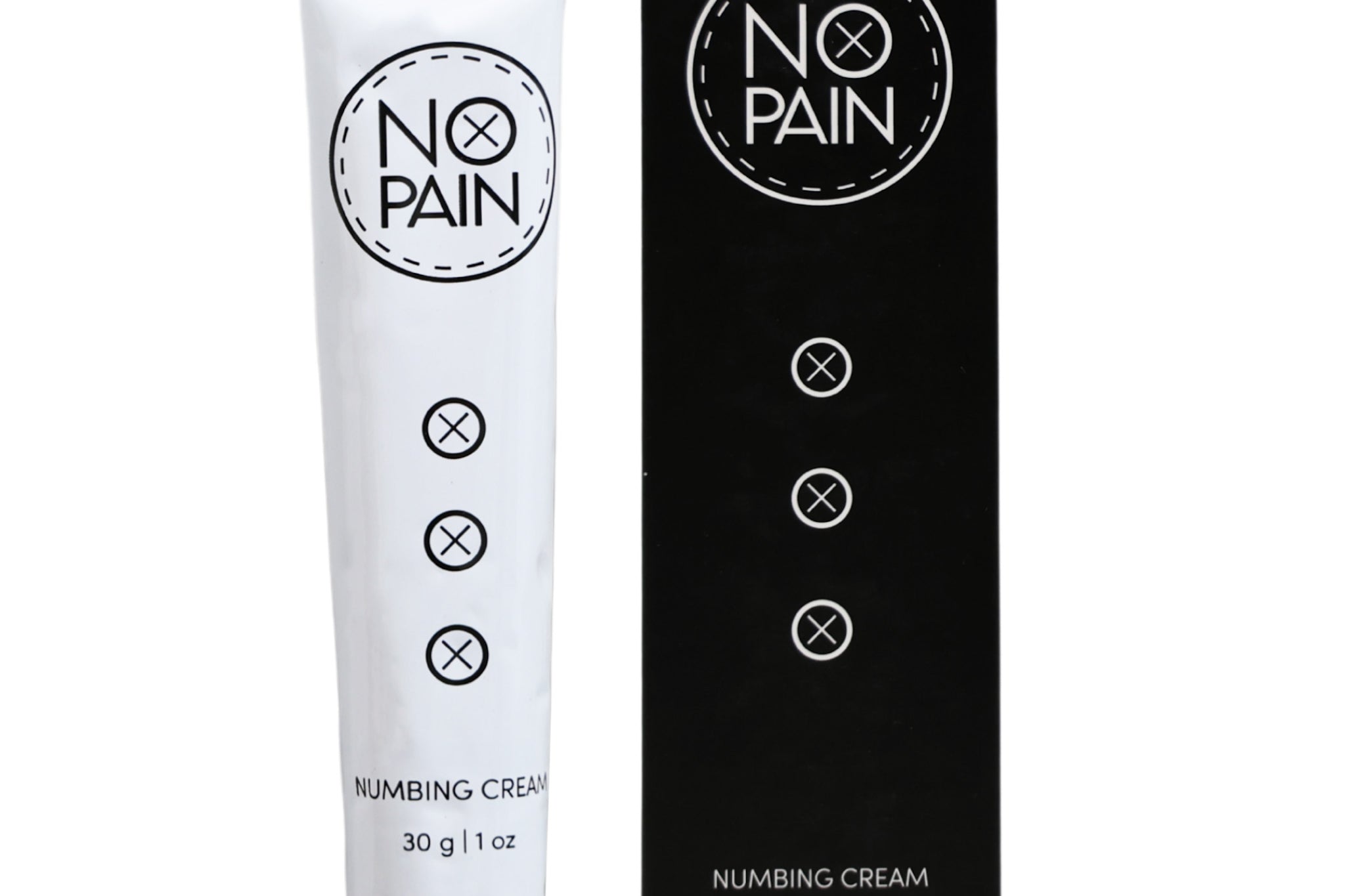
For either approach, the session involves a laser applied to the tattooed area, which produces significant discomfort. A numbing cream applied before the session reduces that discomfort substantially.

Maximum-strength lidocaine cream that deeply numbs skin before procedures. Apply 90 to 120 minutes before your session with plastic wrap for full coverage through the appointment.
How to Talk to Your Artist About It
If the tattoo came from the same artist you are still working with, the conversation can feel uncomfortable. Keep it focused on what is not working and what you want to achieve, rather than on fault or blame. "The shading in this section healed a bit patchy — can we look at fixing it?" is a productive opening. "I hate how this turned out" is not useful for either of you.
Most artists want to know if something went wrong in the heal — it is feedback they can learn from, and it is generally in their interest to produce a result their clients are proud of. A healed photo sent to your artist at the six to eight week mark, with a note about anything you want to discuss, is the right protocol for most studios.
If the dissatisfaction is about the design rather than the execution — you changed your mind about what you wanted, not that the artist did poor work — own that clearly. The solution path will look different, and framing it honestly will make the conversation much more productive.
Frequently asked questions
Is it normal to not like a tattoo right after getting it?
Yes, and it often resolves once the tattoo heals. Fresh tattoos look different from finished, healed ones — swollen, saturated, and covered in a milky film as the surface peels. Give it four to six weeks before deciding how you feel about it. Many tattoos that felt wrong immediately look exactly right once healed.
What if I do not like the placement more than the design?
Placement cannot be changed after the tattoo is done. This is one of the strongest arguments for spending real time with the stencil before committing. If the placement is truly bothering you, a cover-up in a new location is possible in theory, but it is a significant undertaking. Talk to a cover-up specialist about what is feasible given the size and darkness of the existing piece.
Can I go to a different artist to fix a tattoo?
Yes. You are not obligated to go back to the original artist, especially if the relationship has broken down or if you do not feel confident in their ability to fix the issue. When approaching a new artist about a rework or cover-up, be honest about the history — they need to see and understand the existing work to design around it effectively.
How long do I need to wait before getting a cover-up?
The tattoo needs to be fully healed before any cover-up work can begin — at minimum six to eight weeks, often longer for large or dense pieces. Some cover-up artists prefer to work on tattoos that have had at least a year to settle, as the ink shifts and softens over time in ways that make cover-up design easier. If you are also planning laser lightening before the cover-up, add the time for those sessions and additional healing between them.
What if the artist refuses to fix a problem with the tattoo?
If the issue is a technical error in the execution — not just a design you changed your mind about — and the artist refuses to address it, you have options: document everything with photos, review your communications with the studio about what was agreed, and consider escalating to the studio owner. In cases of serious negligence, consumer protection avenues may apply. This situation is uncommon at legitimate studios, which generally want to produce good work and protect their reputation.
Is it okay to ask for a refund if I am unhappy with the tattoo?
Tattoo studios generally do not offer refunds — the service has been performed and cannot be undone. What most reputable studios do offer is an opportunity to correct technical issues through a follow-up session. If the problem is poor execution rather than a design change of heart, that is a reasonable expectation to have. For significant disputes, consult the studio's policy and, if necessary, your local consumer protection guidelines.