


All tattoos fade over time, but they don't all fade at the same rate. Some colors are far more vulnerable to UV breakdown, immune response, and ink spread than others. Knowing which colors are at risk and why helps you make better decisions when planning a piece and taking care of it afterward.
Here's a full breakdown by color, from most fragile to most resilient, followed by the two things that have the most impact on how your tattoo ages.
In this guide
- Color fading rankings
- Why some colors fade faster
- Phase 1: The initial heal
- Phase 2: Long-term protection
- FAQ
Color fading rankings
Most vulnerable: white and pastel inks
White ink is the most fragile color in tattooing. The pigment is less densely packed than other colors and tends to sit more superficially in the dermis. On sun-exposed skin, white fades fast and can take on a yellowish cast as the skin's own melanin production overtakes the lighter pigment. Pastels (soft pink, baby blue, mint green, lavender) share the same vulnerability because they're made by diluting standard pigments with white: same fragility, different tint.
High risk: yellow and orange
Bright warm colors are among the first to show visible fading. Yellow and orange pigments have chemical compositions that are more susceptible to UV breakdown than cooler, darker colors. A brilliant yellow can turn into a pale, barely-visible wash within a few years on an exposed placement without consistent sun protection.
Moderate risk: red and vibrant pink
Modern red inks are more stable than they were decades ago, but they remain UV-sensitive. Red pigments are also more likely than most colors to trigger minor immune responses in some people, which can affect how the tattoo heals and how much pigment gets locked in. A red piece that heals with heavy inflammation may retain less color than the same piece on someone with no reaction.
Lower risk: green and blue
Deeper greens and blues are more resilient. The pigments are denser and hold up better against UV radiation, particularly dark shades like forest green or navy blue. Lighter versions (sky blue, lime green) are more vulnerable, but still generally outlast yellows and whites at similar exposure levels.
Most resilient: black and grey
Black ink is typically carbon-based, making it the densest and most UV-resistant pigment used in tattooing. This is why the outline is usually the last element of a tattoo to fade, and why black and grey work is widely known for its longevity relative to color work. Grey wash tattoos, while lighter, still outlast most color inks in comparable conditions.
Why some colors fade faster
Fading happens through three main mechanisms. First, UV exposure: sunlight breaks down pigment molecules over time, and different pigments have different tolerances for this. Light, warm colors (white, yellow, orange) have less UV-stable chemical structures than darker, cooler colors. Second, immune clearance: the body continuously works to remove foreign particles from the skin, including tattoo pigment. Lighter, smaller pigment particles are cleared more efficiently. Third, ink depth and density: pigments that sit shallower in the dermis or are less densely packed fade faster because they have less ink in reserve as the outermost particles are cleared.
Placement multiplies all three factors. A yellow forearm tattoo with daily sun exposure will fade far faster than the same design on the upper back. Friction areas (hands, feet, ankles) accelerate mechanical fading on top of UV and immune factors.
Phase 1: The initial heal
How a tattoo heals in the first few weeks determines how much pigment gets locked in for the long run. Heavy scabbing pulls ink out of the skin. Infection or serious inflammation disrupts the dermis while it's trying to settle the pigment. A clean, smooth heal preserves color; a rough one can leave a patchy, washed-out result that no amount of long-term care will fix.
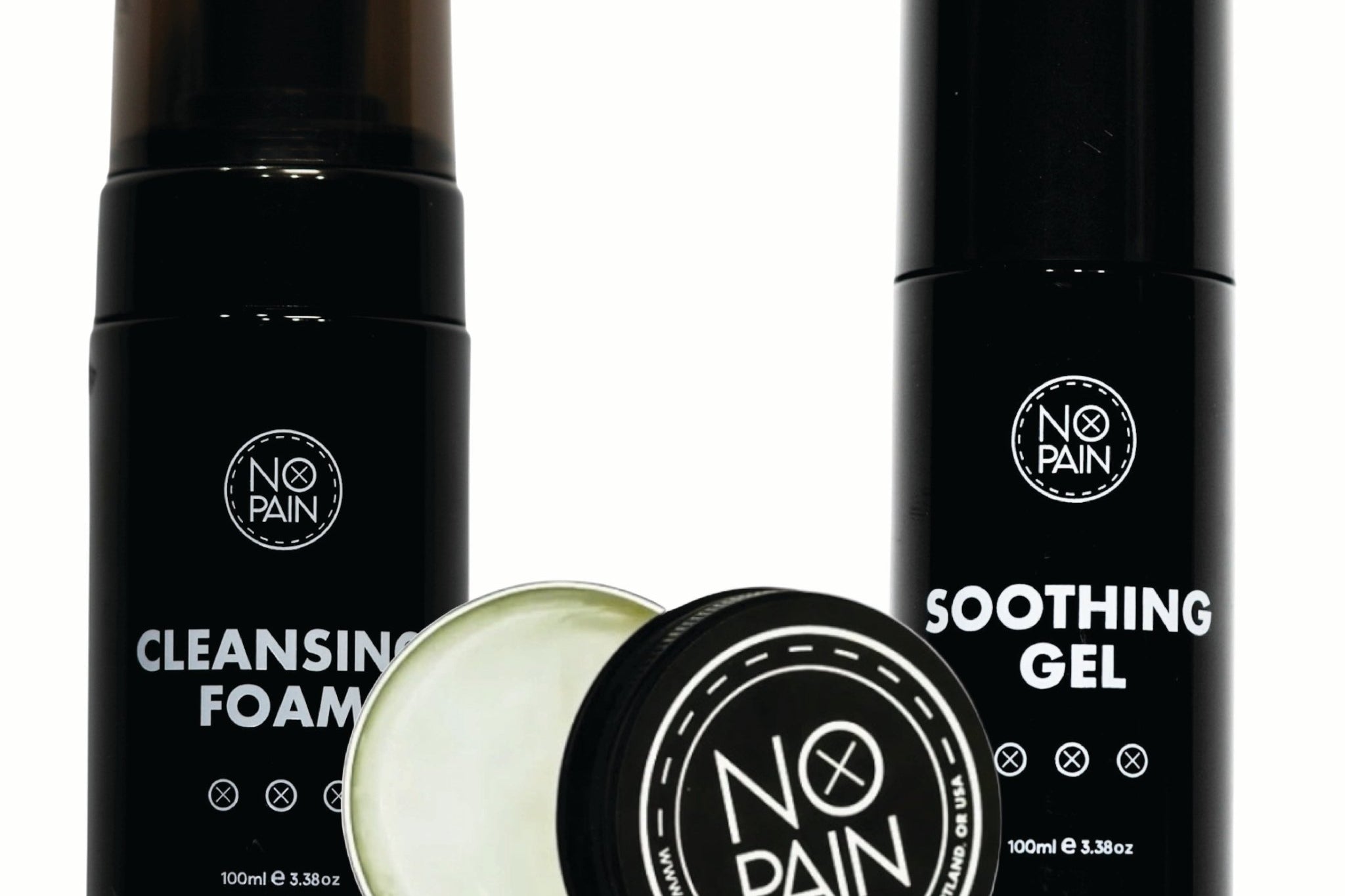
The protocol: wash twice a day with a fragrance-free liquid soap, apply a thin layer of soothing gel after each wash for the first days, then transition to an aftercare balm from day two or three as peeling starts. Don't pick at flaking skin. Keep the piece out of direct sun until it's healed.

Non-occlusive, non-comedogenic gel for the first days of healing. Keeps the wound surface hydrated and calm without trapping moisture or clogging pores. Backed by a money-back guarantee.
Shop Soothing Gel: $15.00

Oil-and-butter base, no petroleum, non-comedogenic. Keeps healing skin nourished from day two or three through full healing. Backed by a money-back guarantee.
Shop Aftercare Balm: from $12.00

No Pain Tattoo Aftercare Bundle
Soothing gel for the first days, aftercare balm from day two or three onward, and cleansing foam for daily washing. Everything your color tattoo needs to heal cleanly and lock in as much pigment as possible. Backed by a money-back guarantee.
Shop Aftercare Bundle: $33.60Phase 2: Long-term protection
Once the tattoo is healed, the main job is UV protection. Sun exposure is the single largest driver of color fading in healed tattoos. Every hour of unprotected sun exposure degrades pigment. This accumulates invisibly over years and then shows up all at once as a washed-out, faded piece.
Apply a broad-spectrum SPF 30+ sunscreen any time the tattoo will be in the sun. This applies even on overcast days: UV penetrates cloud cover. If the tattoo is in a placement that's routinely exposed (forearm, shoulder, ankle), sunscreen should become a habit rather than an occasional consideration.
General skin health matters too. Well-moisturized skin displays ink more clearly and vividly than dry, flaking skin. A simple body moisturizer applied a few times a week on healed tattoos keeps the surface looking its best. The aftercare balm works well as a long-term maintenance product on healed ink.
FAQ
Do color tattoos fade faster than black and grey?
Yes, generally. Color tattoos, especially light and warm colors (white, yellow, orange, pastel), fade faster than black and grey work because the pigments are less UV-stable and often less densely packed. Black and grey work ages more predictably and tends to hold its contrast longer. This is one reason black and grey realism is often recommended for pieces where longevity is a priority.
What is the longest-lasting tattoo color?
Black ink is the longest-lasting. It's typically carbon-based, which makes the pigment particles dense and highly resistant to UV breakdown compared to color pigments. Dark blues and dark greens come next. Light, warm colors (white, yellow, pastel) are the shortest-lasting.
Can you prevent a color tattoo from fading?
You can slow it but not stop it entirely. The most impactful actions are: healing the tattoo cleanly (no heavy scabbing, no picking), applying sunscreen every time it's in the sun after it's healed, and keeping the skin moisturized long-term. Placement also matters: a color tattoo on the upper back will outlast the same design on the forearm or ankle because of the difference in sun exposure and friction.
Does tattoo placement affect how fast colors fade?
Yes, placement is one of the biggest factors. High sun-exposure areas (forearms, shoulders, ankles, hands) fade faster than sheltered areas (upper back, ribs, inner arm). High-friction areas (fingers, palms, feet) also experience accelerated mechanical fading regardless of sun exposure. If you want a color tattoo to age well, a sheltered, low-friction placement with consistent sun protection is the best combination.
Do white tattoos turn yellow?
They can. On lighter skin tones, white ink often fades to a cream or ivory color over time rather than disappearing entirely. On darker skin tones or skin that tans, the melanin in the surrounding skin can visually overtake the white pigment, making it appear yellow, grey, or indistinct. White ink also tends to pick up the surrounding skin's undertones as it fades, which varies person to person.
How often do color tattoos need to be touched up?
It varies by color, placement, and how well the tattoo was cared for. Light colors on sun-exposed placements may need touch-ups every five to eight years. Dark colors in sheltered placements can go fifteen years or more with no touch-up needed. A reputable artist can look at your piece and give you an honest assessment of where it's headed and when a touch-up would make sense.