


How Often Should You Moisturize Your Healed Tattoos?
Once a tattoo has fully healed, the urgent aftercare schedule ends. You no longer need to wash on a timer or apply gel twice a day. But a fully healed tattoo still benefits from regular moisturizing, and neglecting it over time is one of the quieter ways tattoos fade and lose their definition.
This guide covers how often to moisturize a healed tattoo, what products to use, and what a long-term skin care routine actually looks like for inked skin.
How Often to Moisturize a Healed Tattoo
Once fully healed, one to two times per day is the right target for most people. Morning and evening, or just once in the evening, works well as a routine. The goal is to keep the skin consistently hydrated rather than chasing dryness reactively.
The exact frequency depends on your skin type and environment. People with naturally dry skin, those living in cold or low-humidity climates, and anyone who spends significant time in air-conditioned environments tend to need more frequent moisturizing. People with naturally oily skin in humid climates can often maintain their tattoos well with once-daily application.
What to avoid: applying thick occlusive products multiple times per day on healed skin rarely adds benefit and can block pores. More is not always better. Consistent, moderate moisturizing is more effective than irregular heavy application.
Why Moisturizing Still Matters After Healing
Ink lives in the dermis, but the way that tattoo looks from the outside is determined by the condition of the skin sitting over it. Dry, compromised skin scatters light differently than healthy, hydrated skin. The result is a tattoo that looks duller, less saturated, and older than it is.
Over years, consistently dry skin leads to micro-cracks and increased cell turnover at a rate that gradually blurs fine lines and softens the edge definition of a tattoo. The ink itself does not move, but the skin through which you see it changes. Keeping the skin well-moisturized slows this process.
This is especially relevant for black and grey tattoos, where fine linework and subtle shading depend on clean contrast, and for color tattoos where saturation is one of the first things to suffer when skin becomes dry and ashy.
What to Use on a Healed Tattoo
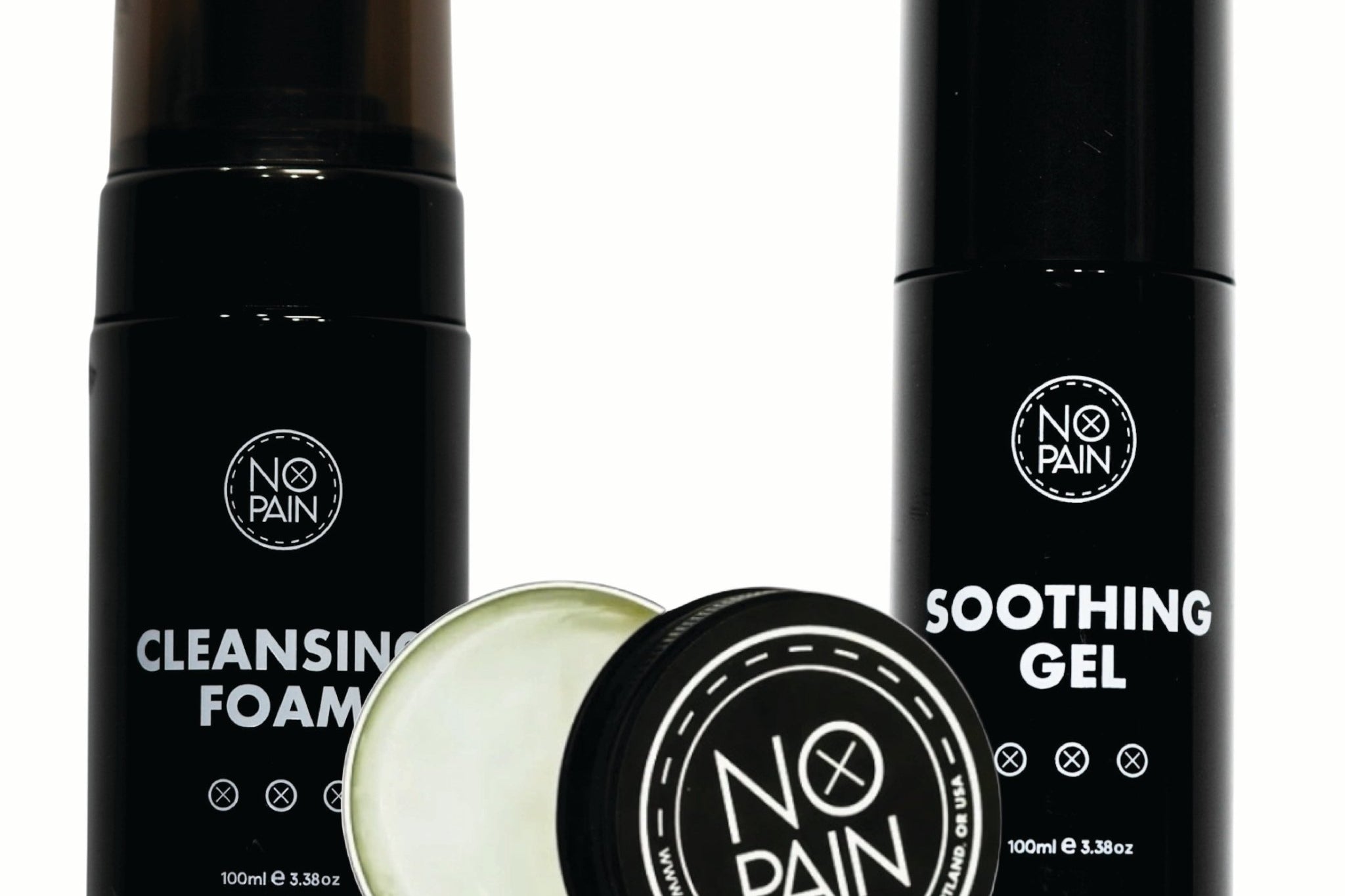
For long-term maintenance, you want a moisturizer that hydrates effectively without clogging pores or leaving a heavy residue. The aftercare balm used during the healing phase works well for this purpose and is one of the most practical choices for ongoing tattoo care.

General-purpose body lotions work too, with some caveats. Avoid products with heavy fragrance, which can cause skin sensitivity over repeated long-term use. Avoid anything with alcohol high on the ingredient list, as these are net-drying and counterproductive. Look for products that list a humectant (such as glycerin or hyaluronic acid) alongside an emollient (such as shea butter or jojoba oil) for a balance of moisture attraction and barrier support.
Petroleum-based products like Vaseline are fine as an emergency fix for very dry patches but are not ideal for daily use on large tattooed areas. They are occlusive rather than nourishing and do not add moisture, only trap what is already present.
Sun Protection for Healed Tattoos
Moisturizing and sun protection work together for long-term tattoo preservation. UV exposure is the primary environmental cause of tattoo fading. The radiation breaks down the ink particles over time and degrades the surrounding skin structure that gives the tattoo its visible definition.
Apply a broad-spectrum SPF 30 or higher on any tattooed area that will see prolonged sun exposure. This is especially important during summer months, for outdoor workers, and for anyone who spends significant time near water or at altitude where UV intensity is higher.
Physical sunscreens (zinc oxide or titanium dioxide) are gentler on tattooed skin than chemical formulations, particularly on tattoos that are a year or less old. Either type is effective; the key is actually applying it consistently rather than debating which formula to use.
Signs Your Tattoo Needs More Moisture
Your skin provides clear signals when it needs more hydration. For tattooed skin specifically, the most useful indicators are:
The tattoo looks ashy or dull in good lighting conditions where it used to look vibrant. The skin over the tattoo feels tight or rough to the touch. You can see dry flaking or micro-scaling on the tattooed area. Colors appear washed out or black linework looks faded even though the tattoo is not old enough for that level of natural aging.
If any of these apply, increase your moisturizing frequency for a week and observe whether the appearance improves. Skin that is chronically dehydrated often responds visibly within a few days of consistent care.
Frequently Asked Questions
Can you over-moisturize a healed tattoo?
Over-moisturizing is less of a concern on fully healed tattoos than during the healing phase. The risk of sealing in infection or disrupting scab formation is gone. That said, applying very heavy occlusive products multiple times daily can trap bacteria against the skin and contribute to breakouts or folliculitis over heavily tattooed areas. Once or twice daily with a lightweight balm or lotion is sufficient.
Do healed tattoos need special moisturizer or is regular body lotion fine?
Regular body lotion is fine provided it is fragrance-free and does not contain high concentrations of alcohol. Tattoo-specific balms and aftercare products are formulated to work well on inked skin, but they are not required. The more important variable is consistency of application, not the specific brand.
Does moisturizing actually prevent tattoo fading?
Moisturizing helps preserve the skin quality that determines how clearly your tattoo shows, but it does not prevent the gradual natural fading that all tattoos experience over time. Sun protection is a more direct tool against premature fading, because UV is the primary external accelerant. Moisturizing and sun protection together give tattooed skin the best long-term environment.
Should I moisturize more in winter?
Yes. Cold air holds less moisture than warm air, and indoor heating drops humidity further. Both factors strip moisture from skin faster in winter. If you moisturize once daily during summer, move to twice daily during the colder months, particularly for tattoos on areas that are exposed to cold or frequently washed (hands, wrists, forearms).
My tattoo is years old. Does it still need moisturizing?
Yes. The benefit of moisturizing does not diminish with tattoo age. Older tattoos on dry, neglected skin show their age faster than those on consistently hydrated skin. If you have older tattoos that have become dull or lost some definition, a consistent moisturizing routine can improve their appearance, though it will not reverse deep fading.
What is the best time of day to moisturize a healed tattoo?
After a shower or bath is the most effective time, while the skin is still slightly damp. Applying moisturizer at this point helps seal in the water from the wash rather than starting from a dry baseline. If you moisturize twice daily, post-shower and before bed are practical slots that fit naturally into most routines.