


Foot Tattoo Healing: A Complete Survival Guide
Foot tattoos are one of the most rewarding placements you can choose, and one of the most demanding to heal. Gravity, friction from socks and shoes, and the near-constant moisture inside footwear create a perfect environment for healing problems. This guide covers everything you need to know to get through the process without losing ink or developing an infection.
The bottom line: foot tattoo healing takes two to four weeks on the surface and up to three months in the deeper layers. The first two weeks are the most demanding. Your main jobs are controlling swelling, protecting the tattoo from shoe friction, and keeping the area meticulously clean.
Why Foot Tattoos Are Hard to Heal
Gravity and swelling
The foot is the lowest point of the body. Fluid naturally pools there, which means swelling after a foot tattoo can be significant, especially during the first three days. The skin stretches, tightens, and becomes sensitive. For people who are on their feet all day, this swelling can be intense enough to make walking uncomfortable.
Shoe friction
Unless you can stay barefoot or in open sandals for two full weeks, your healing tattoo will spend most of the day pressed against a sock and shoe interior. The rubbing causes irritation, pulls off healing flakes early, and can introduce bacteria into a wound that is still open at the microscopic level. This friction is the top cause of ink loss on foot tattoos.
Moisture and bacteria
The inside of a shoe is warm and humid. This environment encourages bacterial growth. A foot tattoo that spends the day trapped in a sock and shoe without proper aftercare is at higher risk of infection than tattoos on almost any other placement.
Skin thickness variation
The top of the foot has thin skin over bones and tendons, similar to the top of the hand. The sides and ankle area have somewhat more tissue. Ink tends to hold better in the fleshier areas and may need touch-ups in the bony zones.
Controlling Swelling in the First 72 Hours
Elevation is your most important tool in the first three days. Whenever you can, keep your foot propped up above heart level. This helps fluid drain back toward the body rather than pooling in the tattooed area.
After cleaning, apply a soothing gel to the freshly tattooed skin. A quality aftercare gel reduces the inflammatory response, relieves the burning sensation, and creates a thin protective barrier while the skin weeps plasma in the early hours.

Avoid standing or walking for long stretches in the first 24 to 48 hours if at all possible. Each step pumps blood and fluid into the tattooed tissue and slows the reduction of swelling.
Wearing Shoes With a New Foot Tattoo
The ideal scenario is avoiding closed-toe shoes for the first week. Loose sandals or flip-flops that do not touch the tattoo are the best option. If your life or job makes shoes unavoidable, follow this approach:
Before putting on shoes
- Wash the tattoo gently and pat it completely dry. Sealing moisture inside a shoe is a setup for infection.
- Apply a thin layer of aftercare balm. This creates a lubricating barrier between the healing skin and your sock, reducing the friction damage from each step you take.
- Choose the loosest, softest socks you own. Avoid tight elastic, rough textures, or synthetic materials that do not breathe.
- Wear the most spacious shoes you have. Extra room means less direct pressure on the tattooed area.
When you get home
- Remove your shoes and socks immediately.
- Wash the tattoo to remove sweat and any bacteria that accumulated during the day.
- Pat dry, then apply a thin layer of balm and let the skin breathe for the rest of the evening.

Cleaning Routine for a Foot Tattoo
Foot tattoos need to be cleaned more often than tattoos in lower-risk locations. Three times a day is the minimum during the first week: morning, after removing shoes for the day, and before bed. Use lukewarm water and a gentle, fragrance-free cleanser. Do not soak the foot. Rinse and pat dry with a clean paper towel each time.
Do not submerge a healing foot tattoo in any body of water, including baths, pools, hot tubs, lakes, or the ocean. Submersion introduces large amounts of bacteria into an open wound and greatly increases infection risk. Showers are fine as long as you keep the water flowing and do not stand with the tattooed area in pooled water.
Week-by-Week Foot Tattoo Healing Timeline
Days 1 to 3
Swelling, redness, and tenderness are at their peak. The skin weeps clear or slightly ink-tinted plasma. Elevate the foot whenever possible. Clean three times a day. Apply soothing gel after each clean. Stay off your feet as much as your life allows.
Days 4 to 7
Swelling begins to subside. The skin starts to feel tight as the first layer of healing skin forms. Transition from soothing gel to aftercare balm for moisturizing. If you must wear shoes, apply balm before putting them on.
Days 8 to 14
Peeling begins. The itch peaks. This is the most critical phase for avoiding ink loss. Do not pick, scratch, or pull flaking skin. Let it shed on its own. Keep the area moisturized with a thin layer of balm applied two to three times daily and after every shoe removal.
Weeks 3 to 4
Surface healing is nearly complete. The skin may still look slightly shiny or feel a little different in texture. Continue moisturizing daily. Avoid intense friction on the area, such as rough sock material or tight shoes. Assess the tattoo at the six-week mark for any areas that need a touch-up.
Recommended Products
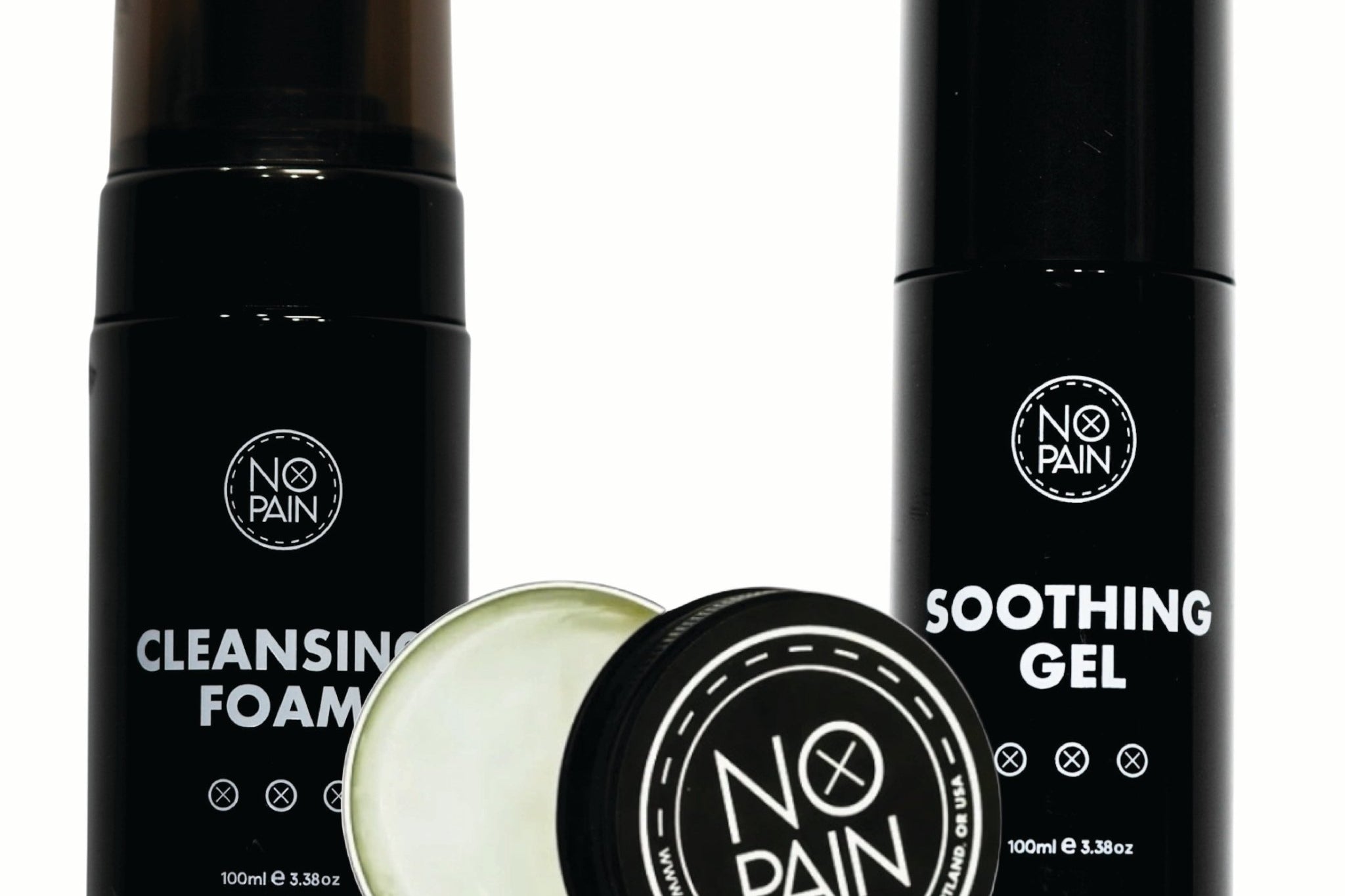
The full Aftercare Bundle gives you everything needed for a foot tattoo heal: soothing gel for the swelling phase, cleansing foam for the daily washes, and balm for the peeling phase and the pre-shoe barrier routine.

Frequently Asked Questions
How long does a foot tattoo take to heal?
The surface skin closes in two to three weeks. Full healing of the deeper tissue layers takes up to three months. Most people see the final result, including any patchy spots, at around the six-week mark.
Can I wear socks with a new foot tattoo?
Yes, but choose clean, soft, loose-fitting socks and apply a thin layer of aftercare balm before putting them on. The balm reduces friction and helps protect the healing skin. Replace the balm and wash the tattoo every time you take your socks off.
Why is my foot tattoo so swollen?
Swelling in the foot is more severe than in other placements because gravity draws fluid downward. Elevation reduces the pooling. If the swelling is extreme, painful, warm to the touch, and accompanied by redness spreading beyond the tattoo, see a doctor to rule out infection.
How do I sleep with a new foot tattoo?
Sleep with your foot elevated on a pillow. This drains fluid away from the tattooed area and reduces morning stiffness and swelling. Keep sheets and blankets clean. A loose pillowcase over your foot, or sleeping with a clean breathable sock, keeps the tattoo from sticking to bedding.
When can I go swimming after a foot tattoo?
Wait a minimum of four weeks and confirm the surface is fully healed with no open or flaking areas before swimming. The ocean, pools, and hot tubs all carry bacteria that can infect a healing tattoo.
Will my foot tattoo fade quickly?
Foot tattoos fade faster than most other placements due to the constant movement and friction. Top-of-foot placements, especially over the toes and in bony areas, tend to fade the fastest. Regular moisturizing and SPF on healed skin extend the life of the tattoo, and touch-ups after the first session are common.