

Most of the soreness from a new tattoo is gone within two to four days. Day one is the peak: the skin is inflamed, warm, and actively hurting in the way that a fresh wound hurts. By day three or four, that constant ache has faded to sensitivity. By day five, most people have stopped noticing it outside of direct pressure.
What trips people up is that the healing arc is not linear. Each stage produces a different sensation, and people who expect the discomfort to steadily decrease in a straight line get surprised when day three produces a new type of tightness, or when the peeling phase on days six through ten brings back itching that is its own kind of uncomfortable. Here is the full timeline, stage by stage.
In this article
- Day-by-day soreness timeline
- What makes soreness last longer
- Normal soreness vs. a problem
- How to manage the pain
- Frequently asked questions
Day-by-Day Soreness Timeline
Day 1: Peak inflammation
The first 24 hours are the worst. The tattoo session is a controlled wound: the needle has punctured the epidermis thousands of times to deposit ink into the dermis. Your immune system responds immediately with an inflammatory cascade, sending blood flow and immune cells to the site. The result is a tattoo that looks red, feels warm to the touch, is swollen, and aches with the kind of generalized throbbing soreness you associate with a bad scrape or sunburn.
The soreness is real and it is normal. For large pieces or dense color work, it can feel significant on day one. For small, light linework, it may be more of a mild sunburn-like tenderness. Either way, day one is as bad as it gets.
Days 2 to 3: The tightening phase
The acute inflammation starts to recede, but this phase introduces something most people do not expect: tightness. As the surface skin begins to dry out and the early scabbing process starts, the area feels tight and sometimes slightly stiff, particularly around larger pieces. The constant throbbing usually stops, but the skin feels stretched and reactive to movement. A tattoo near a joint or on skin that flexes will feel this more than one on a flat surface.
The skin also begins to weep less. In the first day or two, the tattoo may have been releasing plasma and ink residue. As that stops and the surface dries, the tightening sensation becomes the dominant feeling. Some people find days two and three less painful but more uncomfortable in a different way than day one.
Days 4 to 6: Settling and the start of peeling
By day four, most people notice the soreness has stepped down to sensitivity. The tattoo is tender if you press on it or if clothing rubs it, but it is no longer hurting on its own. This is also when peeling starts for most people. The outer epidermis, which was damaged during the session, begins to shed in thin, papery flakes. The skin underneath the peeling layer may feel itchy rather than sore, which is a different kind of discomfort.
This itch comes from the nerve endings in the healing skin activating as new cells proliferate. It can feel intense and persistent. Scratching breaks the healing surface and can pull out ink, so this is the phase where aftercare matters most for the final result.
Days 7 to 14: Peeling and the milky stage
Significant soreness is gone for most people by this point. What remains is the itch and the visual strangeness of the peeling and then milky healing stages. Some people notice the skin is still slightly sensitive to touch during heavy peeling, particularly in dense areas. This is not soreness in the way days one through three were; it is more surface-level reactivity from the fresh skin beneath the flaking layer.
By the end of the second week, even that sensitivity has typically resolved. The tattoo looks healed at the surface, though the skin is still maturing in the dermis for another four to six weeks.
What Makes Soreness Last Longer
Placement
This is the biggest variable. Tattoos over bony areas with thin skin, like the ribs, shin, spine, elbow ditch, or inner wrist, tend to produce more intense soreness that lasts longer than tattoos on well-padded, low-movement areas like the outer arm or calf. The inflammatory response is proportional to the trauma, and bony areas experience more pronounced needle impact. Movement compounds this: a tattoo near a joint that you bend dozens of times per hour is being mechanically stressed throughout the healing period in a way that a tattoo on the upper arm is not.
Session length and ink density
A three-hour session of dense blackwork or heavily saturated color puts significantly more trauma into the skin than a 30-minute small linework piece. More needle passes mean a stronger inflammatory response and more surface-level tissue disruption. Large pieces over multiple sessions often produce more soreness from each session than a single short sitting.
Individual healing rate
Some people heal faster than others. Age, general health, hydration level before the session, and how well you sleep all affect how quickly the inflammatory response resolves. Going into your appointment well-fed, well-hydrated, and rested gives your body the resources it needs to clear the inflammation faster.
Normal Soreness vs. a Problem
Normal tattoo soreness follows a consistent pattern: it is worst on day one and steadily improves from there. The trajectory matters as much as the intensity. A day-one soreness level of 7 out of 10 that becomes a 4 on day two and a 2 on day three is normal. Pain that does not improve, or that gets worse after the first 48 hours, is the signal to pay attention to.
Signs that something beyond normal soreness is happening: redness that is spreading outward beyond the tattoo border rather than staying contained to it; swelling that is increasing after day two rather than decreasing; discharge that is thick, opaque, yellow or green (normal weeping in the first day or two is thin, dark, and ink-tinged); pain that is worsening on days three through five; and warmth that is intensifying rather than fading. Any of these in combination warrant medical attention. Infections in fresh tattoos are uncommon but they do progress, and catching one early matters.
How to Manage the Pain
The first-day soreness responds well to a few practical measures. Elevating the tattooed area reduces swelling, particularly for tattoos on arms or legs. Keeping it clean prevents the additional inflammation that would come from infection, which matters more than people often realize. And applying a soothing product directly to the area addresses the heat and tenderness at the surface level.
The most effective single thing you can do for a sore fresh tattoo is apply a cooling, anti-inflammatory gel immediately after cleaning. This takes the edge off the heat and the aching and makes the first two days significantly more comfortable. It also supports the skin as it begins the healing process rather than leaving it dry and reactive.

Lightweight cooling formula that calms the heat, redness, and aching of fresh tattoo inflammation. Apply after washing to bring the soreness level down through the first two to three days. Also handles the itch during the peeling phase. Formulated at Historic Tattoo in Portland.
Once you are through the first few days of active soreness and into the peeling and milky stages, the care shifts from reducing inflammation to keeping the new skin moisturized. Dry skin during the peeling phase cracks, which makes the itching worse and can interfere with how cleanly the surface heals. A light aftercare balm from day four through the end of healing covers the second half of the process.

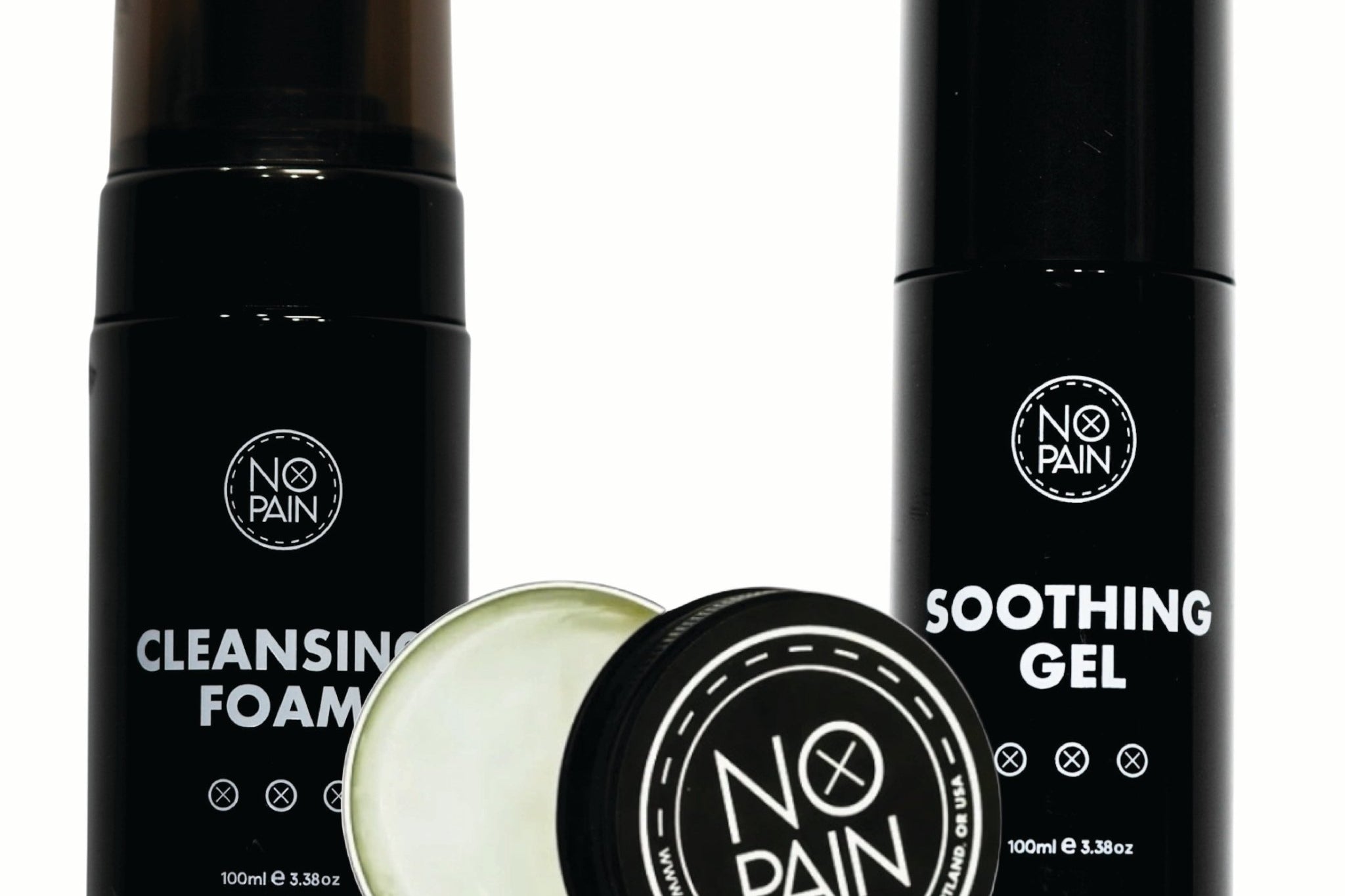
Cleansing foam, soothing gel, and aftercare balm: the full routine from session day through the end of healing. Gel for the soreness and itch, balm for the peeling and milky stages. Formulated at Historic Tattoo in Portland.
Frequently asked questions
How long does a tattoo hurt?
Most of the active soreness from a new tattoo is gone within two to four days. Day one is the peak, when the skin is most inflamed and most tender. By day three the throbbing ache has usually stepped down to sensitivity. By day five most people have stopped noticing the soreness outside of direct pressure on the area. What follows is a different kind of discomfort: itching during the peeling phase from days four through fourteen, and some surface sensitivity while the new skin matures. But the hurting-like-a-wound phase is typically short.
Is it normal for a tattoo to still be sore on day three?
Yes, soreness on day three is normal, particularly for larger pieces, dense work, or tattoos on bony high-movement placements. The key is whether the soreness is improving or worsening. Soreness that is clearly decreasing from what it was on day one is following the normal trajectory. Soreness that is getting worse after the first 48 hours, or that is accompanied by spreading redness, increasing warmth, or unusual discharge, is the pattern that warrants attention.
Why is my tattoo still hurting after a week?
Significant soreness of the wound-like variety should not still be present at the one-week mark. If the tattoo is still genuinely painful after a week, rather than itchy or surface-sensitive from the peeling process, that is outside the normal healing arc and worth having looked at. Itching and surface sensitivity during peeling are normal at the one-week mark. Active pain that is comparable to the first few days is not.
Why is my tattoo hurting when I touch it?
Sensitivity to direct pressure is normal for longer than the active soreness phase. Even after the constant aching fades, the skin in and around the tattoo can remain tender to firm pressure for a week or two while the deeper layers continue to heal. This is especially true for dense tattoos and for placements that see regular contact from clothing or adjacent body parts. The soreness to touch should gradually improve; if it is instead intensifying after the first few days, check for other signs of infection.
Can a healed tattoo start hurting again?
Yes, and this is more common than most people realize. A healed tattoo can ache, itch, or feel raised during illness, when the body is running a fever, after sun exposure, or during periods of stress. The immune system is in a permanent low-level relationship with the ink particles in your dermis, and anything that activates the immune system systemically can produce a local flare in the tattoo. Red ink is the most likely to produce this kind of response, but it can happen with any color. A healed tattoo that periodically feels sore or swollen is almost always an immune response rather than an infection, particularly if it is happening alongside feeling unwell.
How do I make a sore tattoo feel better?
For the first two to three days, the most effective things are elevation of the area if it is on a limb (this reduces swelling), keeping the tattoo clean to prevent the additional inflammation that comes with infection, and applying a cooling soothing gel after washing to address the heat and tenderness at the surface. Avoid anything that adds pressure, friction, or moisture to the area. Loose clothing over the tattoo makes a real difference on day one and two. Avoid submerging it in water. Sleep on the opposite side if the tattoo is in a position where bedding would press against it all night.
Take the Edge Off From Day One
Cooling soothing gel for the first few days of soreness, aftercare balm for the peeling stage that follows. The complete routine for a comfortable heal.
Shop Aftercare Kit →Formulated at Historic Tattoo in Portland, Oregon.